

Eight-treasure sweet porridge 八宝甜稀饭
A spoonable Xi’an Hui-fang sweet porridge built around soft rice, beans, fruit, and a floral-sour note from rose and hawthorn in one documented local version. Its mix is not fixed: ask what is in the bowl before ordering.
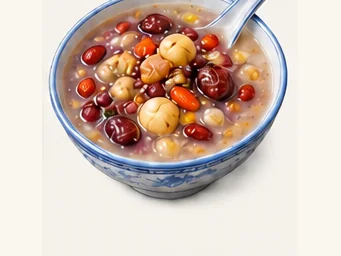
Eight-treasure sweet porridge is a Xi’an food experience, especially associated in local food writing with the Hui-fang quarter, but it is not established as an invention exclusive to the city. A 2018 report on Hui-fang describes a local shop’s bowl; a separate home recipe calls its version Shaanxi eight-treasure porridge. Together they place the dish in a wider Shaanxi and Chinese sweet-porridge family, not a single standardized recipe or origin story.
The base is rice—often glutinous rice for a clingy, soft body—slowly cooked with a changing assortment of beans, nuts, dried fruit, and other additions. In the particular Hui-fang preparation described in the report, lotus seeds and peanuts are soaked and cooked ahead because they take longer; dates and rose paste go into the pot before the rice, while hawthorn cake and raisins add fruitiness. The cook stirs as the rice thickens and finishes the porridge with a starch slurry. That sequence describes this shop’s reported method, not a rule for every Xi’an kitchen.
Expect a warm, spoonable bowl rather than a uniform purée: tender grains and soft beans sit alongside occasional chewy raisins, nutty peanuts, and pieces of hawthorn cake. The rice tastes mild and starchy; rose gives the reported local version a floral perfume, while hawthorn brings a bright sweet-sour edge. Some shops may use a different combination—one Shaanxi home recipe, for example, lists red dates, lotus seeds, lily, peanuts, raisins, rose paste, hawthorn cake, fermented-rice wine, or osmanthus as optional choices. “Eight treasures” is a name, not a reliable eight-item ingredient list. The wider porridge tradition likewise draws on different grains, beans, and other seed foods rather than a fixed formula.
Eat it by the spoonful while warm if that is how the shop serves it. Before ordering, ask “里面有什么料?有花生或其他坚果吗?是玫瑰味还是桂花味?” (“What ingredients are in it? Does it contain peanuts or other nuts? Is it rose- or osmanthus-flavoured?”). Check the actual bowl for allergens and sweetness; the recipe varies by kitchen.
Where to eat it
You can find Eight-treasure sweet porridge all over Xi’an, so there is no need to seek out one particular restaurant. To find one near you, search for “八宝甜稀饭” in Meituan (美团) or Amap (高德地图) and check recent reviews, distance and opening hours.
More dishes to compare
Explore related local specialties and compare their names, preparation notes and ordering guidance.
Egg and fermented-rice soup 蛋花醪糟 →
Sweet fermented rice is warmed with water, and beaten egg is poured in to form delicate ribbons. Sugar and additional aromatics vary between shops. The soup is lightly sweet and tangy, with soft rice grains and tender egg threads. Fermentation contributes an aroma distinct from a plain sweet rice porridge.
Xi'an osmanthus rice wine 黄桂稠酒 →
The fermented preparation is processed into a cloudy, thick drink and may be served warm. Alcohol content varies by product and fermentation. Expect a sweet grain flavour and osmanthus aroma with an alcoholic component. A milky appearance does not imply dairy.
Sources & reading
Recipes and servings vary between kitchens.