

Flash-boiled tripe 爆肚
Baodu (爆肚) is a Beijing-associated dish of beef or lamb tripe, sliced by cut and briefly scalded in hot water until tender-crisp. It is served hot with a savory sesame-based dip; the cuts vary in chew and tenderness, so ask what is available and enjoy each piece soon after it arrives.
Tap any red Chinese text to hear it in Mandarin.
What baodu is
The name 爆肚 Bàodǔ is usually rendered baodu or “flash-boiled tripe.” It is not a fried dish: the defining method is a very brief dip in hot water. Beijing sources describe versions made from beef and lamb stomach, with the stomach section determining the cut and its texture. A Beijing government guide similarly describes baodu as beef or sheep stomach quickly scalded in hot water and eaten with a special dipping sauce.
Cuts, cooking and texture
Baodu is less a single cut than a way of preparing several kinds of tripe. Shops may list beef and lamb cuts separately and use names such as 百叶 (baiye, leafy tripe), 散丹 (sandan), 肚板 (duban) and 肚仁 (duren). The names and lists vary by shop. One Beijing shop describes a 13-variety selection; that is a particular shop’s offering, not a fixed citywide standard.
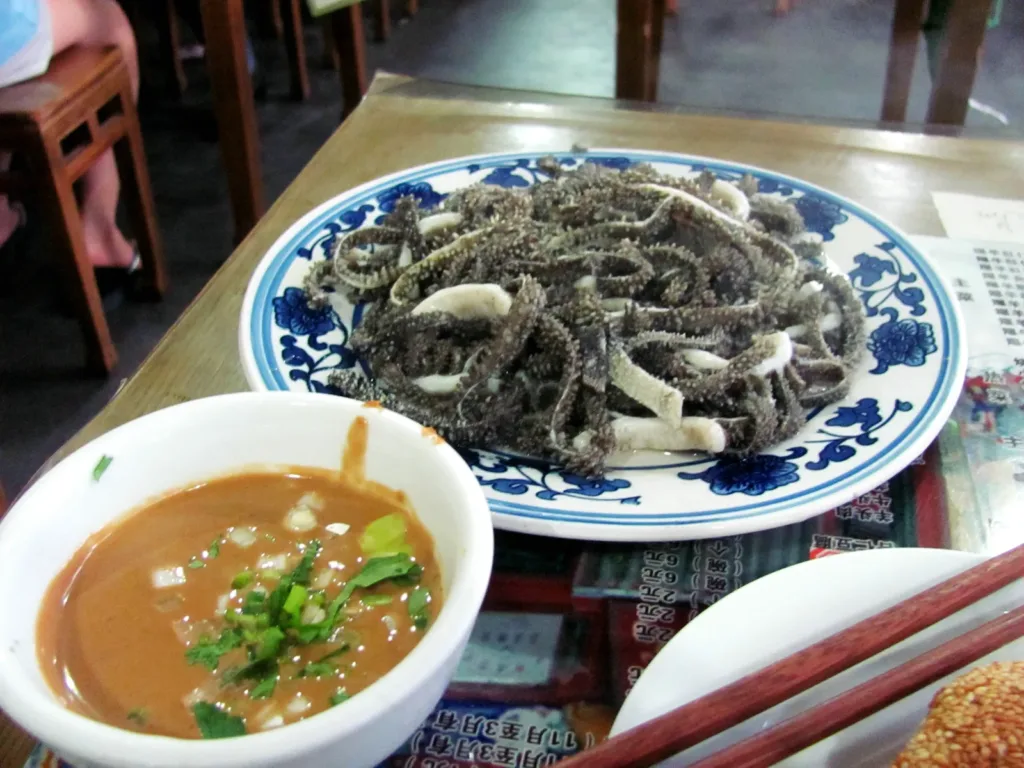
The tripe is cleaned, cut, and plunged into hot water for only a short time. Exact timing depends on the cut and the cook. The aim is to heat it through without leaving it in the water long enough to turn tough. In the bowl, expect pale gray to brown pieces, sometimes with a folded or ridged surface. Thin, textured cuts can feel springy and crisp; thicker or different sections may need more chewing, while especially tender pieces have a softer bite.
The dip and how to eat it
A sesame-based dipping sauce is common, but the mix is not identical everywhere. A Beijing food report lists sesame paste with possible additions including vinegar, chili oil, soy sauce, fermented bean curd, sesame oil, cilantro and scallion. The seasoning should add savory, tangy or spicy notes without hiding the tripe’s clean, fresh flavor. Ask for the dip separately if you want to control how much coats each piece.
Eat baodu while it is hot. Pick up a piece with chopsticks, dip lightly, and taste it before adding more sauce. If several cuts are offered, a Beijing dining account describes eating chewier pieces before more tender ones, leaving the softest cut for last; it is a useful tasting order, not a rule.
Ordering notes
Show 爆肚 Bàodǔ when ordering. If the menu separates the cuts, ask which are beef and which are lamb, and which are crispest or most tender. 有羊肚吗? Yǒu yángdǔ ma? means “Do you have lamb tripe?” 哪种最脆? Nǎ zhǒng zuì cuì? asks “Which one is the crispest?”
Tripe is the central ingredient. Sesame is common in the dip, while individual shops may add soy, chili, vinegar, garlic or other seasonings. Ask about the particular plate if you avoid one of these ingredients; the sauce and its recipe are shop-specific.
Where to eat it
You can find Baodu all over Beijing, so there is no need to seek out one particular restaurant. To find one near you, search for “爆肚” in Meituan (美团) or Amap (高德地图) and check recent reviews, distance and opening hours.
More dishes to compare
Explore related local specialties and compare their names, preparation notes and ordering guidance.
Luzhu bread-and-offal stew 卤煮火烧 →
Pork intestine and other offal simmer in a seasoned broth with firm wheat bread and fried tofu. The bread is cut so its interior can soak up the cooking liquid. Expect a full-bodied, offal-forward bowl: soft bread, porous tofu and chewy meat contrast with the salty broth.
Chaogan 炒肝 →
Pork intestines and pieces of liver cook in a glossy, starch-thickened broth with plenty of garlic. Despite the name, the finished dish is ladled into a bowl rather than served as a dry liver stir-fry. Expect soft offal, a gelatinous gravy and a pronounced garlic aroma. It is richly savory rather than delicately seasoned.
Sources & reading
Recipes and servings vary between kitchens.
Image credits & notes (1)
- A serving of baodu with sesame-based dipping sauce. Unmodified. Photo: AddisWangPhoto: CC BY-SA 3.0