

Fresh-and-cured pork soup 腌笃鲜
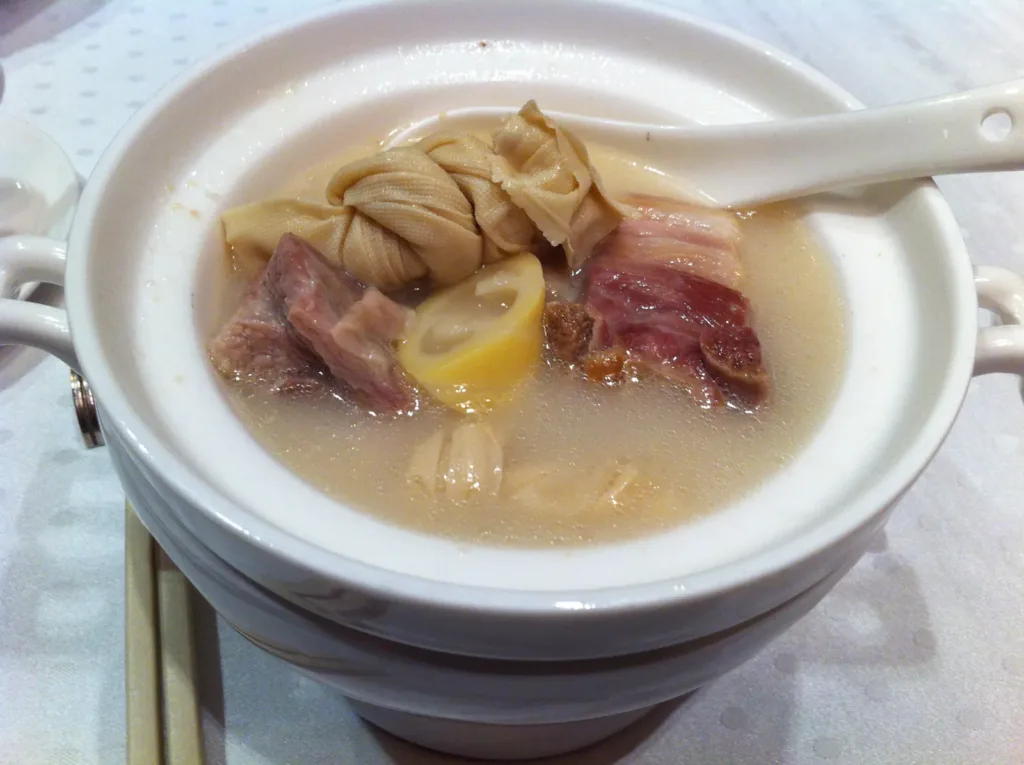
A Jiangnan spring soup closely associated with Shanghai, yanduxian simmers salted pork, fresh pork and bamboo shoots into a deeply savoury broth. Look for tender shoots, soft pork and, in some versions, tofu-skin knots that soak up the soup.
Tap any red Chinese text to hear it in Mandarin.
Fact-checked 21 October 2026.
What the name describes
腌笃鲜 (yān dǔ xiān) brings three elements together: yān is cured or salted pork, dǔ evokes the slow simmer, and xiān points to fresh meat and bamboo shoots. It is a seasonal Jiangnan dish and a familiar part of Shanghai benbang cooking—not a dish that needs to be claimed as Shanghai’s exclusive invention. A Shanghai report traces the preparation to Jiangnan rural cooking before it became popular among Shanghai residents.
The core is a pairing of cured pork, fresh pork and bamboo shoots. Fresh pork may be belly, ribs or pork knuckle; family and regional recipes choose different cuts. Spring bamboo shoots are the seasonal reference, while some recipes use winter bamboo. The cured ingredient may be salted pork or, in some kitchens, ham.
How the soup is built
Recipes vary in sequence, but the slow cooking is central. One traditional method blanches the bamboo to remove bitterness and blanches the pork separately. Fresh pork begins simmering first; cured pork and bamboo go in later. Other recipes blanch the meats together, simmer them, and add bamboo and tofu-skin knots in stages. These are examples rather than a single binding formula.
As it cooks, the cured pork seasons the broth while the fresh pork lends body. Long simmering softens the meat and lets the shoots take up the savoury cooking liquid. Ginger, scallion or a little cooking wine may appear in home recipes, but a well-balanced pot can rely on the meat and bamboo for its main flavour. Since cured pork varies in saltiness, some recipes soak it first and recommend tasting before adding more salt.
What to expect in the bowl
Expect a broth that can look light and clear or more concentrated, depending on the recipe and cooking method. Its flavour is savoury and rounded, with a cured-meat aroma rather than a chilli-led heat. Fresh bamboo should be tender but still have a slight bite; fresh pork becomes soft, while the cured pieces stay more distinctly seasoned. The contrast is the point: cured and fresh meat enrich the soup, and bamboo gives it a clean, gently sweet edge.
Some versions add 百叶结 (bǎiyè jié), knotted sheets of tofu skin. They absorb broth and bring a soft, springy texture. Glass noodles, napa cabbage and other extras occur in individual family recipes, but they are additions, not requirements for every bowl.
Ordering and eating
Show 腌笃鲜 yāndǔxiān when ordering; the Chinese name is more useful than relying on an English menu translation. It is usually presented as a soup to share: serve some broth and solids into each bowl, and eat it with rice or as part of a meal. If you want tofu-skin knots or fresh spring shoots in particular, ask whether they are included and being used that day. Recipes and menus differ, and these sources do not establish any restaurant’s current availability.
This is a pork-based dish, and cured pork contributes salt. Ask about the specific pot if you avoid pork, need to limit salt, or want to know whether a restaurant adds stock or other ingredients. The name alone does not guarantee a fixed recipe.
More dishes to compare
Explore related local specialties and compare their names, preparation notes and ordering guidance.
Sizzling shredded eel 响油鳝糊 →
Eel is cooked and cut into fine strips, then combined with a seasoned sauce. Hot oil is poured over aromatics near serving time, producing the characteristic sizzling finish. The eel is tender and slippery, with a rich savory coating. Garlic, scallion and white pepper often give the final aroma its lift.
Red-braised pork belly 红烧肉 →
Pork belly is cut into chunks and slowly braised with soy sauce, sugar and aromatics until the sauce reduces. Shanghai-style versions often give noticeable weight to sweetness and a glossy finish. The lean meat becomes tender while the fat turns soft and yielding. Sweetness, salt and rich pork flavor should remain in balance.
Sources & reading
Recipes and servings vary between kitchens.
Image credits & notes (1)
- An illustrative bowl of yanduxian. This photograph was taken in Beijing, not Shanghai. Photo: N509FZPhoto: CC BY-SA 4.0