

Large Yellow Croaker Soup 大黄鱼汤
Large Yellow Croaker Soup is featured among the local specialties of Fujian.
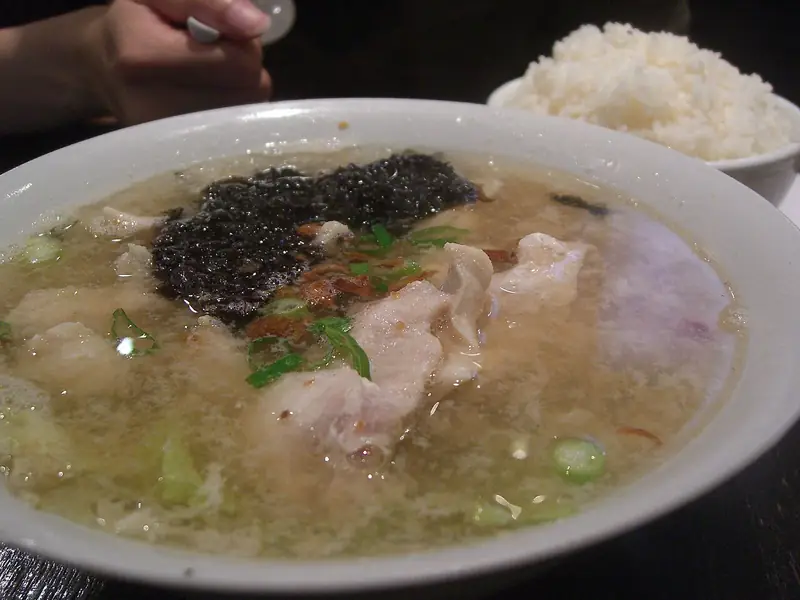

Photo adjustments
Full frame retained; EXIF orientation normalized, proportionally resized to at most 800 pixels and converted to WebP. No generated pixels or subject changes. Cards may crop the display.
Large Yellow Croaker Soup (大黄鱼汤) is a soup of large yellow croaker as cooked in Ningde (宁德), the city on the north-east Fujian coast that China News Service calls China's 'capital of the large yellow croaker'. The Ningde Ocean and Fisheries Bureau (宁德市海洋与渔业局) publishes a version called 'tonic yellow croaker soup' (滋补黄鱼汤), in which one fish is simmered with goji berries, Chinese angelica root (当归) and codonopsis root (党参).
How it is made
The bureau's recipe uses one fish, together with 10 g of goji berries, 8 g of angelica, 6 g of codonopsis, a piece of old ginger and spring onion. The fish is first treated to take away its fishy smell. Spring onion, ginger, goji, angelica and codonopsis go into the pot for one to two minutes and are seasoned with a little salt; then the fish goes in with MSG and chicken bouillon powder, and the covered pot simmers over a medium flame for six to seven minutes. Cooking wine goes in last, just before the soup is served.
Where it comes from
The large yellow croaker is also called huanggua yu (黄瓜鱼, 'cucumber fish'), the name the Ningde bureau's recipe uses for it. China News Service describes it as golden-bodied with white, tender flesh, and says Ningde has Guanjingyang (官井洋), the only inner-bay spawning ground of the species in China. After breakthroughs in hatching and farming from the mid-1980s the fish, once close to exhaustion, came back to ordinary tables, and it is now a common home dish in the city. The same report lists yellow croaker soup alongside steamed and red-braised croaker, croaker jelly and croaker with fine wheat noodles (面线), and quotes a local saying: 'no wine, no feast; no fish, no banquet' (无酒不成席,无鱼不是宴).
How it is eaten
The bureau presents the soup as a tonic dish. It says the fish itself has medicinal value and that the goji, angelica and codonopsis are added to 'replenish qi and nourish the blood' (益气补血).
Sources & reading
Written from the linked sources and checked sentence by sentence against quoted extracts by a separate reviewer on 2026-09-26. Recipes and servings vary between kitchens.