

Fuzhou Wok-Edge Rice-Sheet Soup 锅边糊
Fuzhou Wok-Edge Rice-Sheet Soup is featured among the local specialties of Fujian.
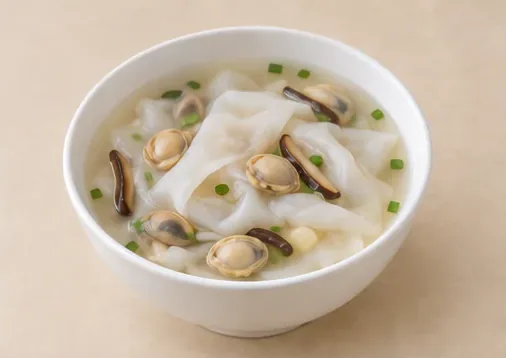
Guo bian hu, also called ding bian hu, is defined by where the rice batter cooks. The batter is poured around the hot inner wall of a wok, above a simmering soup, and allowed to form a thin sheet. The cook then scrapes the set rice skin into the liquid. Repeating this process produces irregular, lightly curled white pieces rather than a bowl of uniformly cut noodles. The official Fujian account identifies clam liquor as a traditional source of savoury depth.
Flavour, texture & local variations
Mushroom, dried seafood and alliums support that broth; the published method also uses fish sauce and cooked fish pieces. Its stated texture is thin, tender and slippery, while the soup remains clear rather than becoming a thick rice porridge. This distinction helps when ordering because the word hu can otherwise suggest a paste. The source records breakfast pairings with fried dough, oyster fritters and other crisp snacks. Those accompaniments provide a useful contrast to the soft rice sheets, and they can be ordered separately according to how substantial a breakfast you want.
How it is prepared
Rice batter sets on the wok wall, is scraped into clam-based soup and cooked with seasonings.
Ingredients to check
Rice batter, clam liquor and meat, shiitake, dried seafood, scallion, garlic and fish sauce.
Ordering this dish
Start with the soup itself, then add a crisp side if needed; tell the vendor about shellfish or fish restrictions before ordering.
Sources & reading
Identity and the described preparation reviewed against the linked government culinary sources on 9 September 2026. The illustrated preparation is a documented example; vendors may use different ingredients and presentation. Ordering suggestions are editorial guidance. No recipe testing, exclusive origin, current availability or dietary certification is claimed.
Recipes and servings vary between kitchens.