

Fine Wheat Vermicelli 线面
Fine Wheat Vermicelli is featured among the local specialties of Fujian.
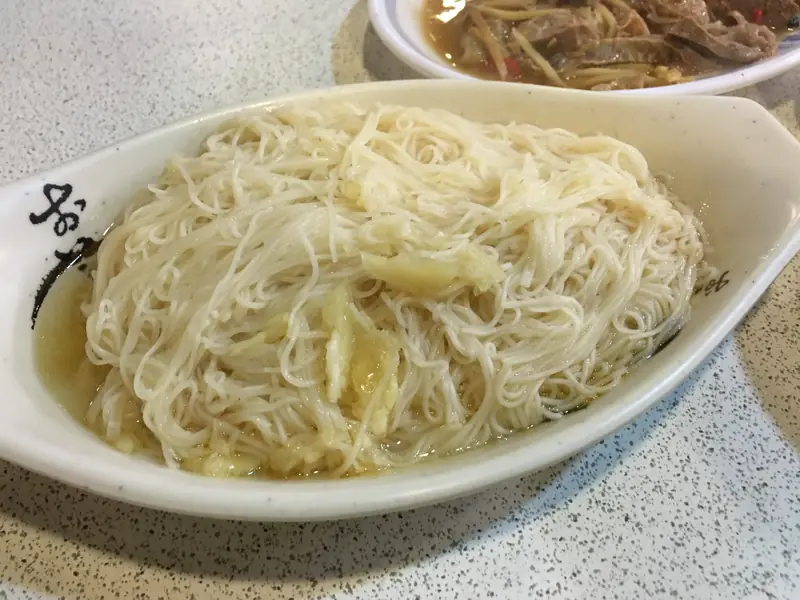
Photo adjustments
EXIF orientation normalized; resized without changing aspect ratio; converted to WebP. No subject edits.
Fine Wheat Vermicelli (线面) is the very thin, long, hand-pulled wheat noodle of Fuzhou (福州), dried and tied in bundles. In Fuzhou it is also called 'peace noodles' (太平面), 'long-life noodles' (长寿面) and 'happy-occasion noodles' (喜面), and a bowl of it with duck eggs marks birthdays, weddings and the first day of the lunar new year.
Where it comes from
The Minqing (闽清) county government traces the noodle to northern wheat-noodle making, brought to Fuzhou at the end of the Tang dynasty. Early noodles were pulled straight down, hence 'hanging noodles' (挂面), and came out thick and short like rope, hence 'rope noodles' (索面); as the craft improved they became as fine as silk and as long as thread, hence 'thread noodles'. The county dates the making to the Song dynasty, more than 800 years ago. Minqing's hand-making technique entered Fuzhou's municipal heritage list in 2015 and Fujian's fifth provincial list in 2017. The China Intangible Cultural Heritage Network dates the Minhou (闽侯) tradition to 684, under Empress Wu Zetian (武则天). Fuzhou News names the villages of Gu'er (鼓二) and Gusan (鼓三) in Houyu (后屿) and Guanyuanli (关源里) in Minhou as the places where hand-made noodles were once most concentrated.
How it is made
Makers use good wheat flour with salt, cooking oil and sweet potato starch, and watch the sun, temperature and wind. The dough is mixed, rolled into strands, rested, wound onto rods, pulled out and dried in the open; the process takes 9 to 11 hours, and the finished noodle is fine enough to thread a needle. In Minqing, Lin Zhihua (林至华) had developed his own 17-step hand method by the end of the Qing, and his family has made noodles for a century since. Fuzhou noodle makers honour the goddess Jiutian Xuannü (九天玄女) as the founder of their craft.
How it is eaten
A Fuzhou bowl starts with a pot of stock made from chicken, duck, pork ribs or mutton. The noodles are dropped into boiling water, lifted out when it boils again, then soaked in the stock and finished with a splash of old rice wine (老酒). Two duck eggs go on top, because the Fuzhou word for duck egg sounds like 'pressing down disorder' (压乱), a wish for safety and smooth going. The noodles cook quickly, do not turn mushy when boiled longer, and are soft, springy and smooth without sticking to the teeth. When a baby is born or an elder has a birthday, visitors bring noodles tied with red string and duck eggs in a red bag.
Sources & reading
Written from the linked sources and checked sentence by sentence against quoted extracts by a separate reviewer on 2026-09-26. Recipes and servings vary between kitchens.