

Ginger duck 姜母鸭
A Minnan duck pot where mature ginger is braised with duck until its aroma permeates the meat and the cooking juices reduce to a savory coating.
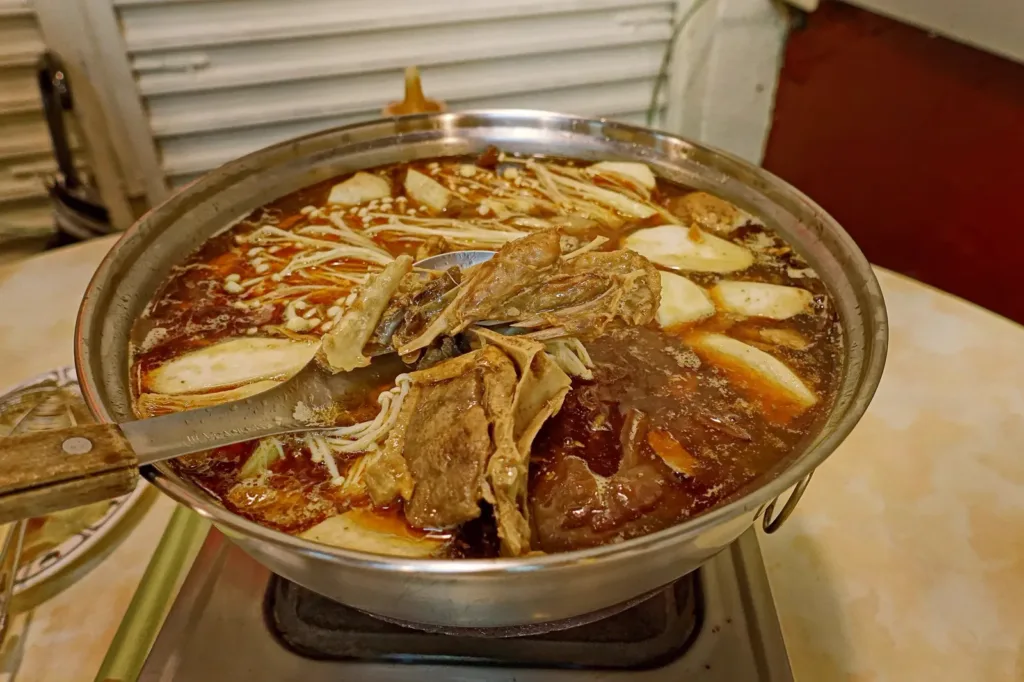
City-card summary: A Minnan duck pot where mature ginger is braised with duck until its aroma permeates the meat and the cooking juices reduce to a savory coating.
What it is
Ginger duck is a dish associated with southern Fujian’s Minnan food culture, not a single restaurant or a fixed recipe. Its name can mislead: “ginger mother” (姜母) refers to mature ginger, not necessarily a female duck. One Xiamen airport food-guide entry describes a local commercial version using red-faced Muscovy duck and ginger aged more than three years. Xiamen’s group standard for the packaged product likewise names fresh Zhengfan duck and ginger as its main ingredients. These describe a particular product standard and one marketed example; they do not establish that every kitchen follows the same specification.
How the pot develops its flavor
In descriptions of Xiamen-style ginger duck, sliced mature ginger is cooked with duck in a clay pot, with sesame oil, cooking wine and seasonings; the braise continues until the sauce is substantially reduced. Rather than a bowl of clear soup, the result is a richly scented pot: the duck turns tender, ginger contributes a sharp, warm aroma, and reduced juices coat the meat. The Xiamen packaged-food standard describes its target product as ginger-fragrant and tender.
The balance is not uniform from one kitchen to another. The exact duck cut, seasoning and amount of liquid can differ, so ask what comes in the pot rather than assuming a particular formula. “姜母鸭” is the useful Chinese name to show when ordering. For a shared meal, ask the restaurant about pot size and whether it serves rice; plain rice is a practical way to balance the concentrated sauce.
Ordering and dietary checks
Duck is the central ingredient, so this is not a vegetarian dish. Some documented preparations use sesame oil and rice wine, and seasonings vary. If you avoid alcohol, sesame, soy or other ingredients, ask the specific kitchen about its recipe and cross-contact; the dish name alone cannot establish that a serving is allergen-free, halal, or alcohol-free.
Where to eat it
You can find Ginger duck all over Fujian, so there is no need to seek out one particular restaurant. To find one near you, search for “姜母鸭” in Meituan (美团) or Amap (高德地图) and check recent reviews, distance and opening hours.
More dishes to compare
Explore related local specialties and compare their names, preparation notes and ordering guidance.
Tong'an wrapped braised pork 同安封肉 →
A large piece of pork is seasoned and slowly cooked in a wrapped or enclosed preparation until very soft. Aromatics and accompanying ingredients vary, but the meat remains the centerpiece. Tender lean meat and yielding fat absorb a rich savory sauce, giving a much softer texture than roast pork.
Yongding marinated duck feet 永定泡鸭爪 →
The feet are cooked first and then allowed to take up the marinade. This produces a chilled or room-temperature snack rather than a hot braised main course. Expect springy skin and tendons with a sharp, savoury seasoning. The bones remain part of the snack.
Sources & reading
Recipes and servings vary between kitchens.
Image credits & notes (1)
- A ginger duck hot pot with duck pieces and ginger, photographed on 6 September 2016. The photographer’s location is not specified, so this illustrates the regional dish and is not identified as a photograph from Xiamen. Photo: Mk2010Photo: CC BY-SA 4.0