

Baijiao Sea Bass 白蕉海鲈
Baijiao Sea Bass is featured among the local specialties of Guangdong.
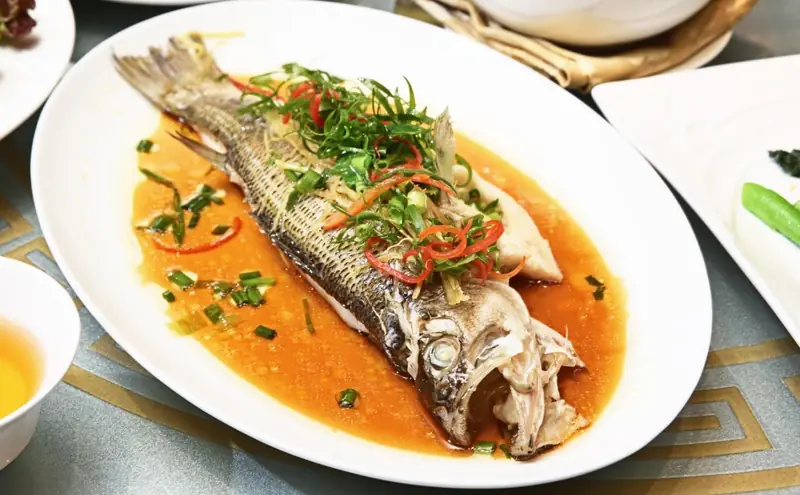
Photo adjustments
EXIF orientation normalized; resized without changing aspect ratio; converted to WebP. No subject edits.
Baijiao Sea Bass (白蕉海鲈) is the sea bass raised in the fish ponds of Baijiao town (白蕉镇) in Doumen District (斗门区), Zhuhai (珠海). In 2009 it became Zhuhai's first agricultural product protected as a national geographical indication, and in 2011 Baijiao was named 'China's Home of Sea Bass' (中国海鲈之乡). Chefs from Baijiao cook it steamed, in soup, deep-fried and boiled with chilli.
Where it comes from
The fish is the species known in Chinese as hualu (花鲈), a sea bass that breeds and grows along the coast and favours the brackish water of river mouths. Baijiao lies at the Pearl River (珠江) mouth between the Modaomen (磨刀门) and Jitimen (鸡啼门) outlets, where channels of the Xi River (西江) system meet the sea. The protected geographical-indication area covers the whole of present-day Doumen District.
Some Doumen farmers began raising the fish from wild-caught fry in the late 1980s; today the fry come from places such as Fujian and Shandong. Since 2019 a Zhaoxin village (昭信村) farmer has kept newly harvested fish in circulating-water holding tanks for about ten days, a step called diaoshui (吊水), to cut the muddy taste. A Tanka (疍家) boat people's technique for salting Baijiao sea bass is on Doumen District's intangible heritage list.
Flavour and texture
A freshly landed fish is long and slender, with shiny scales, clear eyes and a thick body. The flesh is fine and short-fibred and breaks up easily, and the skin carries a slippery layer of mucus. At a whole-sea-bass banquet cooked by chefs from the Baijiao fishery association, a reporter from the Guangxi paper Contemporary Life News (当代生活报) found the steamed flesh crisp, tender and smooth, with hardly any bones, and a soup of the fish with loofah (丝瓜) milky white and sweet, with no fishy smell.
How it is made
The Baijiao chefs' steamed version puts spring onion, ginger and shiitake slices inside the cleaned fish and lays bamboo-shoot and mushroom slices over it. It steams over high heat for five to eight minutes, then stays in the covered pot off the heat for another five minutes. The steaming juices are poured away and replaced with a sauce of light soy sauce, vinegar, oyster sauce, Shaoxing wine and a little sesame oil. The same banquet also served a salty-savoury fish dish, spicy boiled slices and dried fish in a dry pot, and the Baijiao chefs steamed pieces of it on a bed of egg white.
Sources & reading
Written from the linked sources and checked sentence by sentence against quoted extracts by a separate reviewer on 2026-09-23. Recipes and servings vary between kitchens.