

Char Siu Barbecued Pork 叉烧
Char Siu Barbecued Pork is featured among the local specialties of Guangdong.
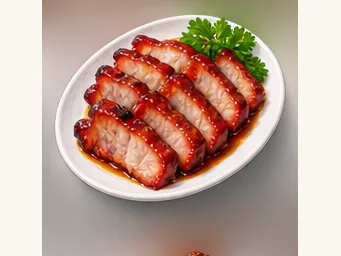
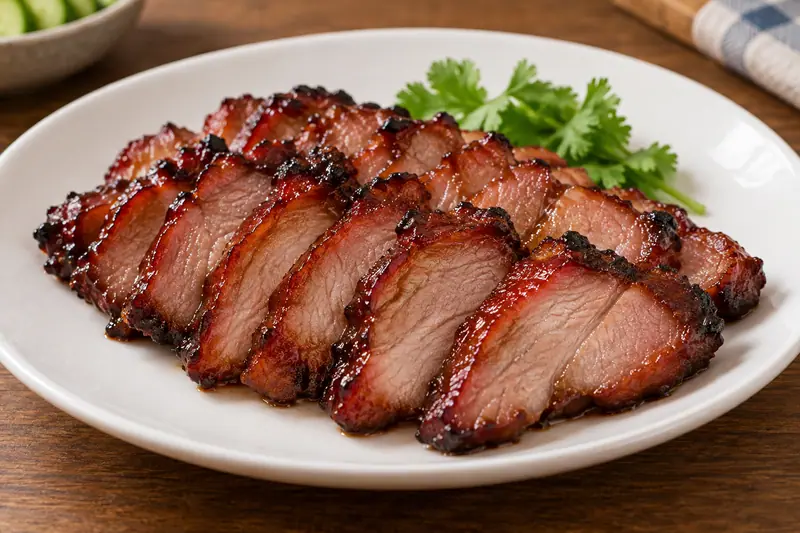
Char Siu Barbecued Pork (叉烧) is Cantonese roast pork glazed with a red, sweet sauce and roasted at high heat; the name means 'fork-roasted', from the traditional method of holding the pork on a fork over a fire. China News Service calls Guangzhou-style char siu a signature dish of the saying "食在广州" ("for food, go to Guangzhou"). In Guangzhou (广州) it is sold from the roast-meat shops (烧腊店) found in almost every food market, where the strips hang in the window.
How it is made
The pork is marinated for several hours, brushed with a special char siu sauce just before roasting, and then roasted for a long time at high heat. The sauce is what gives the meat its brick-red colour; its main ingredients include light soy sauce, crushed garlic, maltose, red fermented bean curd (南乳), five-spice powder and rice wine. One well-known Guangzhou shop, Chenzai (陈仔), marinates shoulder meat with sugar, salt, fennel, star anise, bay leaf, Sichuan pepper and sliced ginger. A coat of maltose syrup or honey glaze goes on the outside, and at one long-running shop the glaze is thick enough to pull into threads.
Cuts and flavour
Guangzhou shops sell two main kinds. Meicha (梅叉), made from loin or from pork shoulder (梅头), is the usual one: loin gives a drier cut with a roasted aroma, while shoulder runs about three parts fat to seven lean and is softer. Huacha (花叉), made from pork belly and also called 'fat char siu', is richer, with alternating fat and lean, salty with some sweetness; roasted in its coat of maltose syrup, it takes on a charred aroma. China News Service describes Guangzhou-style char siu as golden, crisp outside and tender inside, rich without being greasy, and sweet with a salty edge.
How it is eaten
Char siu is eaten on its own as a main dish or over white rice as char siu rice, and the juices that drip from it are spooned over rice. It is also the filling of Cantonese dim sum such as char siu bao (叉烧包), char siu pastry (叉烧酥) and char siu rice noodle rolls, and goes into claypot rice, Yangzhou fried rice and Singapore-style fried rice noodles.
Sources & reading
Written from the linked sources and checked sentence by sentence against quoted extracts by a separate reviewer on 2026-09-23. Recipes and servings vary between kitchens.