

Daojiao Leaf-Wrapped Rice Dumplings 道滘裹蒸粽
Daojiao Leaf-Wrapped Rice Dumplings is featured among the local specialties of Guangdong.
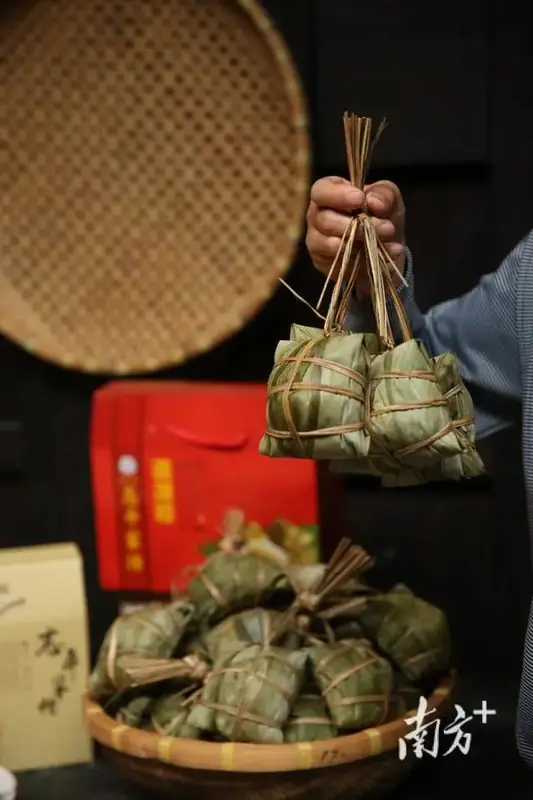
Photo adjustments
EXIF orientation normalized; resized without changing aspect ratio; converted to WebP. No subject edits.
Daojiao Leaf-Wrapped Rice Dumplings (道滘裹蒸粽), known locally simply as Daojiao zongzi (道滘粽), are glutinous rice parcels filled with mung beans, pork belly and salted duck egg yolk, made in Daojiao (道滘), a town in Dongguan (东莞), Guangdong. Their making technique is on Guangdong's provincial list of intangible cultural heritage, and a Nanfang+ (南方+) report carried on the Dongguan government portal calls them the main representative of Dongguan's zongzi.
Ingredients
The main ingredients are late-season glutinous rice, soft hulled mung beans, golden, oily salted duck egg yolks, pork from the back, streaked with fat and lean and rested for 24 hours so that it loses its porky smell, and good Hunan lotus seeds (湘莲). The recipe credited to the dish's founder also seasons the filling with five-spice powder, minced garlic, sand ginger (沙姜), oil, salt and sugar. The wrapping is soaked and washed indocalamus (箬竹) leaves, which give the rice more fragrance when steamed.
How it is made
Two leaves are crossed into a funnel and filled with rice, then mung beans, pork belly and egg yolk, then another layer of mung beans and a top layer of rice. Four more leaves are folded round the sides, and the parcel is tied tight with Dongguan's own rush grass (莞草). A skilled wrapper turns out at least 400 to 500 a day, and the fastest up to 800. The maker Li Zhiping (李志平) holds that machines can hardly replace hand wrapping.
Where it comes from
In the 1930s Ye Chao (叶潮), at his Chaoji zongzi stall on Xinglong Street (兴隆街) in Daojiao, reworked the ingredients and seasoning into the recipe the town is known for. In the early 1950s Li Shaoji (李绍基), who ran the neighbouring stall, studied the recipe and began selling his own; in the 1980s his son Li Zhiping set up Daojiao's first private zongzi business of the reform era.
Once a Dragon Boat Festival food, Daojiao zongzi are now eaten on any day of the year, including at breakfast, and also make a good gift. Besides the original single-yolk version, makers now offer sweet, savoury and unfilled kinds and flavours such as cheese, dried tangerine peel and curry. The technique became a Guangdong provincial heritage item in 2012, and in 2024 the dumplings were among the first 80 products chosen for Guangdong's geographical-indication development list. The Daojiao Zongzi Culture Hall (道滘裹蒸粽文化馆), in the former Daojiao food factory in Yongqing village (永庆村), opened in June 2024.
Sources & reading
Written from the linked sources and checked sentence by sentence against quoted extracts by a separate reviewer on 2026-09-23. Recipes and servings vary between kitchens.