

Enping Pressed Rice Noodles 恩平濑粉
Enping Pressed Rice Noodles is featured among the local specialties of Guangdong.
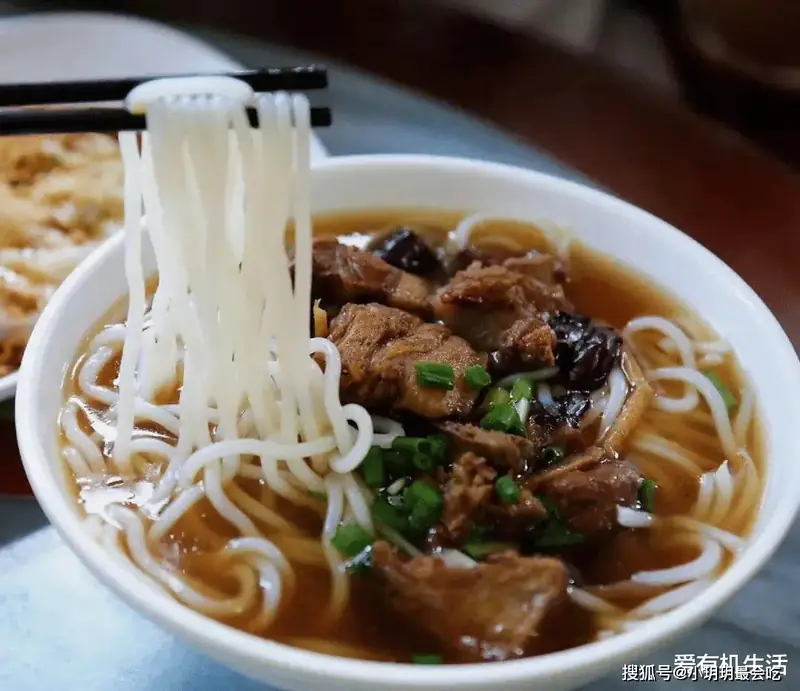
Image notes
Resized for the web; the photo itself has not been edited.
Enping Pressed Rice Noodles (恩平濑粉) are round-ended rice noodles made by squeezing rice batter through holes straight into boiling water, a speciality of Enping (恩平) in Jiangmen (江门), Guangdong. In Enping they are also called lifen (礼粉), "gift noodles", because many families give them to relatives and friends at the Mid-Autumn Festival.
How it is made
Locally grown rice, above all late-season rice, is soaked and ground on a millstone into a smooth batter. For the key step the batter is poured into a container with holes in its base, traditionally a coconut shell, and pressed out evenly over a pot of boiling water, so that it drops in threads and sets as it cooks. Locals call this squeezing lai (濑), which gives the noodle its name. The cooked noodles are plunged into cold water, known as guo leng he (过冷河), "crossing the cold river", to make them smoother and springier. Today workshops and factories in Enping make them by machine and sun-dry them for sale loose, in bags and in gift boxes.
How it is eaten
A bowl of laifen in a slow-simmered pork-tail soup is a common Enping breakfast. Noodle shops blanch the noodles, pour broth over them and add toppings such as lotus root and pork bone, pork trotters, beef brisket, old duck or fish balls; many broths are cooked with Chinese medicinal herbs. A Jiangmen shopkeeper from Enping describes the home style as salty, with a strong herbal note in the stock. Texture is the point: the noodles should come out soft, slippery and separate, and they are best eaten as soon as they are made.
Where it comes from
Laifen is not unique to Enping. A Jiangmen reference work dates its invention to 1850 in Xiangshan County (香山县, now Zhongshan), and a Wuyi folk-customs book records that northern Enping ate it as the staple at the Mid-Autumn Festival; villagers once made their own for moon-viewing. The making technique entered Jiangmen's seventh municipal intangible heritage list in 2019. Enping laifen gained national geographical-indication registration in 2020, and in 2025 the China National Intellectual Property Administration recognised it as a geographical-indication product.
Sources & reading
Written from the linked sources and fact-checked against them on 2026-09-23. Recipes and servings vary between kitchens.