

Hengqin Oysters 横琴蚝
Hengqin Oysters (横琴蚝, Hengqin Hao) are Zhuhai’s brackish-water “bowl oysters”: plump oysters associated with the tidal flats around Hengqin Island, known locally for a small head, a large belly, white flesh, and a tender, crisp bite. Their production technique is part of Zhuhai’s municipal intangible cultural heritage, while the ingredient itself appears in many preparations rather than one fixed recipe.
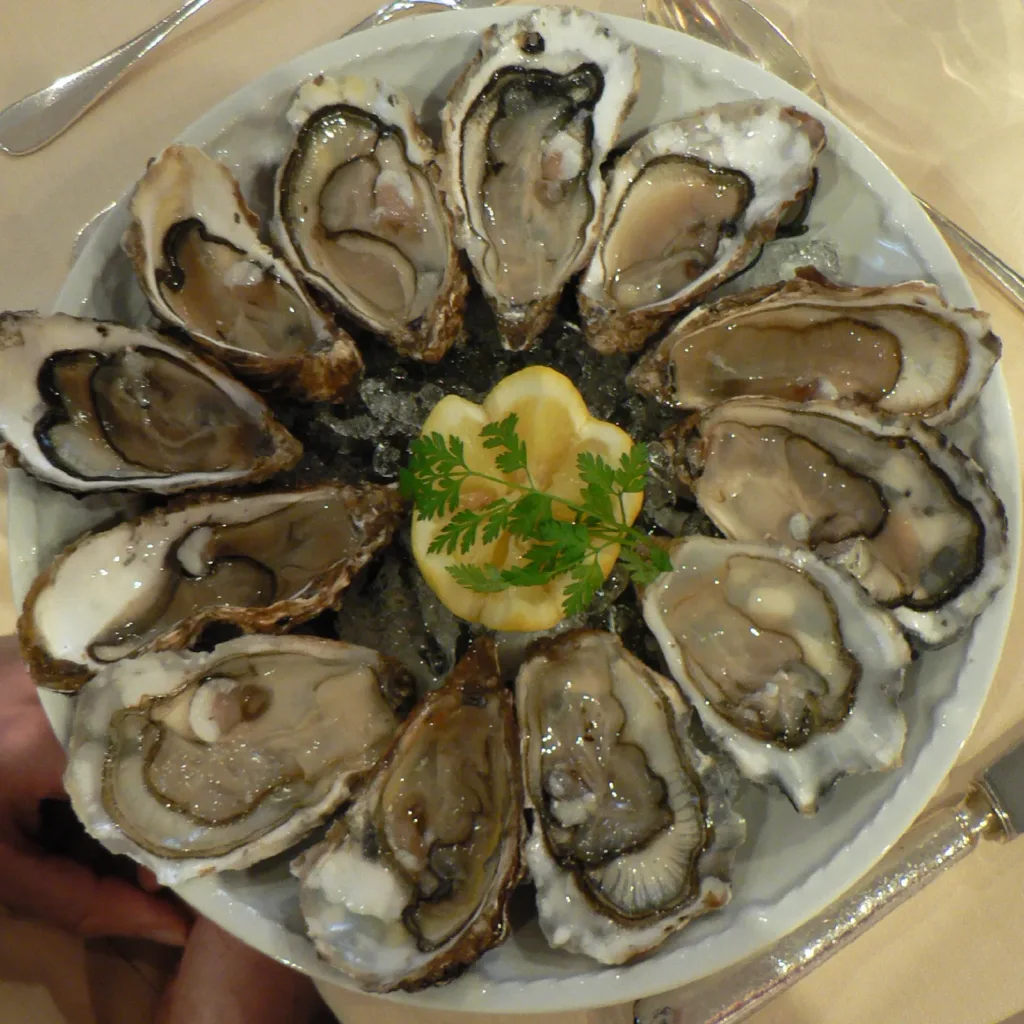
The name belongs to a place as much as to a flavour. Hengqin sits at the Pearl River estuary, where tidal flow, sandy mud, calmer water, and the meeting of salt and fresh water have supported oyster farming. The food is a way to taste the island’s working coast, not a promise of one particular restaurant or farm visit.
Where the name comes from
Official Hengqin material places the best traditional oyster grounds from Shilanzhou (石栏洲) in the south towards Sanzhouzai (三洲仔) in the east. It describes the water as well-flushed and productive, with sandy-mud flats that suit oyster growth. The Zhuhai Museum’s longer account places oyster gathering on Hengqin in the Qing Yongzheng period (1723–1735), when settler families worked the mudflats by tide.
The production story then changes with the coast. Oyster farmers moved from collecting wild oysters to placing shells and stones for young oysters to attach, later using cement strips and, from the 1980s, suspended ropes and racks in deeper water. That shift explains why “Hengqin oysters” can carry both a heritage story and a modern aquaculture one. In May 2016, Hengqin oyster production technique entered Zhuhai’s ninth batch of municipal intangible cultural heritage.
What to look for and how to eat it
The local nickname “bowl oyster” (碗仔蚝) points to the shape described by the Hengqin government: a relatively small head with a broad, full body. Look for the contrast of white flesh, plumpness, and a firm-tender texture rather than assuming that every large oyster sold in Zhuhai is from Hengqin.
The museum records winter and spring as the traditional prime season, expressed in the saying “from the winter solstice to Qingming, the oyster meat is fat and glistening.” It also lists charcoal grilling, steaming with chopped chilli, foil baking, pan-frying, stir-frying, pancakes, soup, and other preparations; oysters may also be dried as 蚝豉 or made into oyster sauce. Recipes and service styles vary by kitchen, so ask for 横琴蚝 and choose the preparation that suits you.
Oysters are shellfish: anyone with a shellfish allergy should avoid them or ask the venue about cross-contact. If raw oysters are offered, use a reputable food venue and do not treat local identity or freshness as a safety guarantee.
Where to eat it
You can find Hengqin Oysters all over Guangdong, so there is no need to seek out one particular restaurant. To find one near you, search for “横琴蚝” in Meituan (美团) or Amap (高德地图) and check recent reviews, distance and opening hours.
Sources & reading
Image credits & notes (1)
- A representative plate of oysters served on the half shell. The source does not identify the oysters as Hengqin oysters or give a Zhuhai origin; this is a general visual reference for the ingredient, not proof of local sourcing. Photo: Claude Covo-FarchiPhoto: CC BY-SA 2.0