

Lianshan Big Glutinous Rice Dumplings 连山大汤糍
Lianshan Big Glutinous Rice Dumplings is featured among the local specialties of Guangdong.
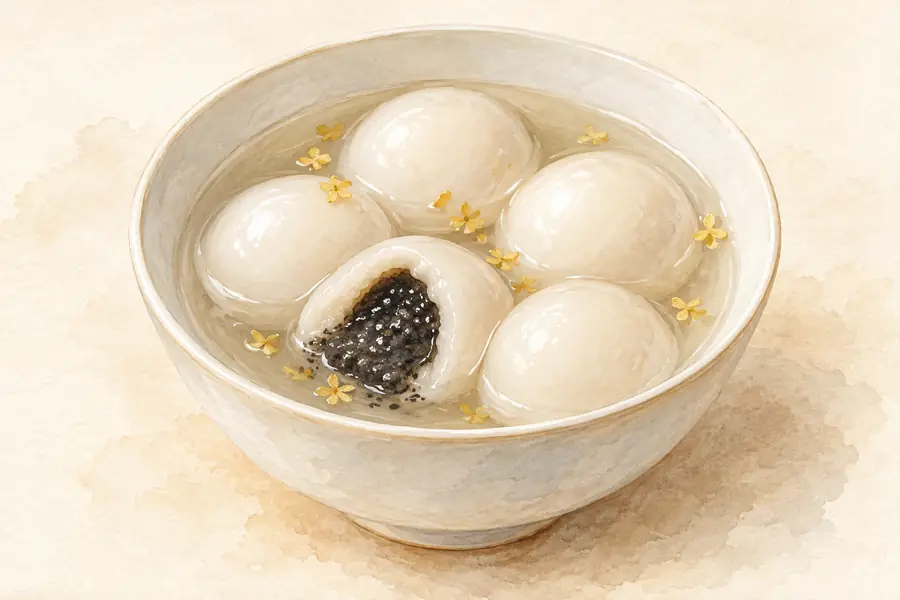
Lianshan Big Glutinous Rice Dumplings (连山大汤糍) are dumplings of glutinous-rice dough wrapped round a savoury or sweet filling, made in Lianshan Zhuang and Yao Autonomous County (连山壮族瑶族自治县) in Qingyuan (清远), Guangdong. The county government calls them an essential festival food for Lianshan people, smooth without being sticky, with a thin skin and a fragrant filling.
How it is made
The skin is made from freshly ground glutinous rice flour. A Guangdong gazetteer text republished by the China Local Chronicles Office (中国地方志工作办公室) says the rice is soaked and then ground either with leaves of the tangli tree (糖梨子树) or after soaking in yellow gardenia (黄栀子) water, and the flour is kneaded with boiling water. The dough is shaped into a round, wrapped round a filling that has already been steamed or fried, sealed and rolled smooth.
The Lianshan Fabu (连山发布) account on Nanfang+ (南方+) shows the filling cooked in a pot over a wood fire before wrapping. For the dumplings, a little oil goes into the pot first, the dumplings are stirred gently so they do not stick to the bottom, and they simmer over low heat until they float. The gazetteer text notes they can also be steamed.
Ingredients
Savoury fillings listed in the gazetteer include spring-onion whites or chives, pork, preserved mustard root, water chestnut or lotus root, fish maw, dried shrimp, dried bamboo shoots, cured pork, cured duck gizzard and fried tofu. Sweet fillings use red beans, peanuts, sesame and brown sugar. Lianshan Fabu tells the two kinds apart by shape. The county government notes that towns add different kinds of ash water (灰水) to the dough: Futang (福堂镇) makes yellow dumplings, Taibao (太保镇) green ones and Hedong (禾洞镇) white ones.
How it is eaten
The gazetteer text names the second day of the second lunar month, the third day of the third month and the sixteenth day of the tenth month as festivals when the dumplings are made, and describes them as a gift that guests eat and then take home. Lianshan Fabu warns that the hot filling can spill its juices when you bite in.
Sources & reading
Written from the linked sources and fact-checked against them on 2026-09-23. Recipes and servings vary between kitchens.