

Water Chestnut Cake 马蹄糕
Water Chestnut Cake is featured among the local specialties of Guangdong.
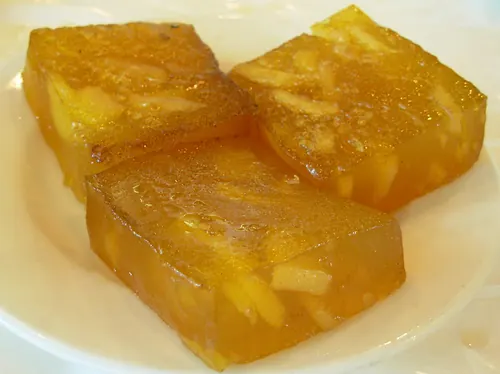

Photo adjustments
Resized and WebP compressed; subject not altered.
Water Chestnut Cake (马蹄糕) is a steamed cake made from water chestnut, either ground to a slurry or used as dried water chestnut flour, mixed with water and sugar. The Guangzhou (广州) city government calls it one of the morning snacks Guangzhou people like, and says the best has historically been made with flour from Pantang (泮塘), the old Lychee Bay (荔枝湾) area by the Panxi Restaurant (泮溪酒家).
How it is made
For the Pantang version made by the chef Luo Kun (罗坤), the water chestnut flour batter is strained and a sugar syrup is boiled; the boiling syrup is then poured into the batter and stirred into a paste, which is steamed until set. Li Kaifan (李凯帆), a Pantang villager, says the flour must be fresh, not old, for the cake to hold together and keep the scent of water chestnut. The water chestnuts grown for Pantang flour are small and starchy.
Flavour and texture
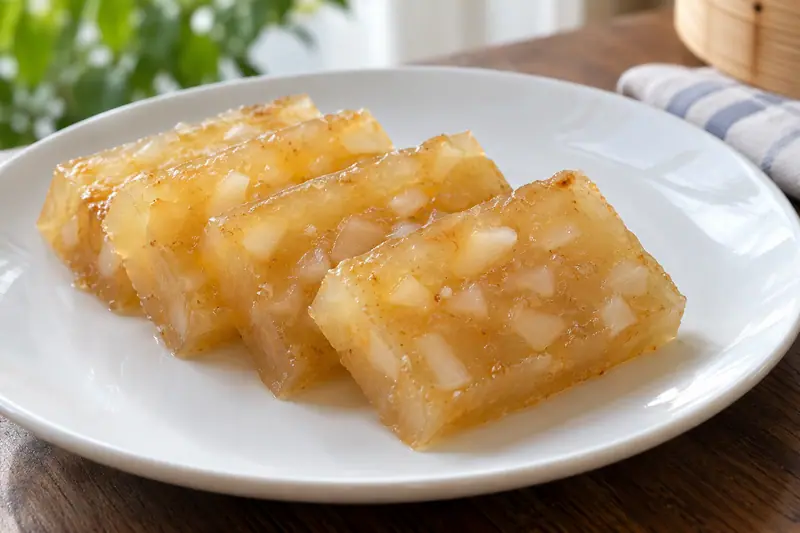
The cake is glassy and translucent, smooth and lightly sweet, with a faint fragrance of water chestnut. The city government lists several kinds: clear water chestnut cake, cake made from freshly ground water chestnut, pan-fried water chestnut cake, two-tone 'mandarin duck' cake and three-colour cake. One or two pieces after tea or a meal is the usual way to eat it.
Where it comes from
Water chestnut is one of the 'five treasures of Pantang' (泮塘五秀), with lotus root, water caltrop, wild rice stem and arrowhead. Villagers once grew it in their own fields, milled the flour by hand and sold water chestnut cake. The fields are gone, but the variety is now grown around Guangzhou, and a few households in Pantang village still run old shops making it by hand; one family steams it in their ancestral house beside the Lychee Bay canal (荔枝湾涌).
Steaming water chestnut cake is part of Lunar New Year in old Xiguan (西关). Steaming (蒸) the cake is itself the good omen, through the idiom zhengzheng rishang (蒸蒸日上, 'rising day by day'). On the 28th day of the twelfth lunar month, Pantang families and neighbours, sometimes more than ten households, used to pool money and steam cakes together. Cakes are kept for New Year's Eve, for offerings to gods and ancestors afterwards, and as gifts for relatives.
Sources & reading
Written from the linked sources and checked sentence by sentence against quoted extracts by a separate reviewer on 2026-09-26. Recipes and servings vary between kitchens.