

Charcoal-Grilled Oysters 炭烧生蚝
Charcoal-Grilled Oysters is featured among the local specialties of Guangdong.
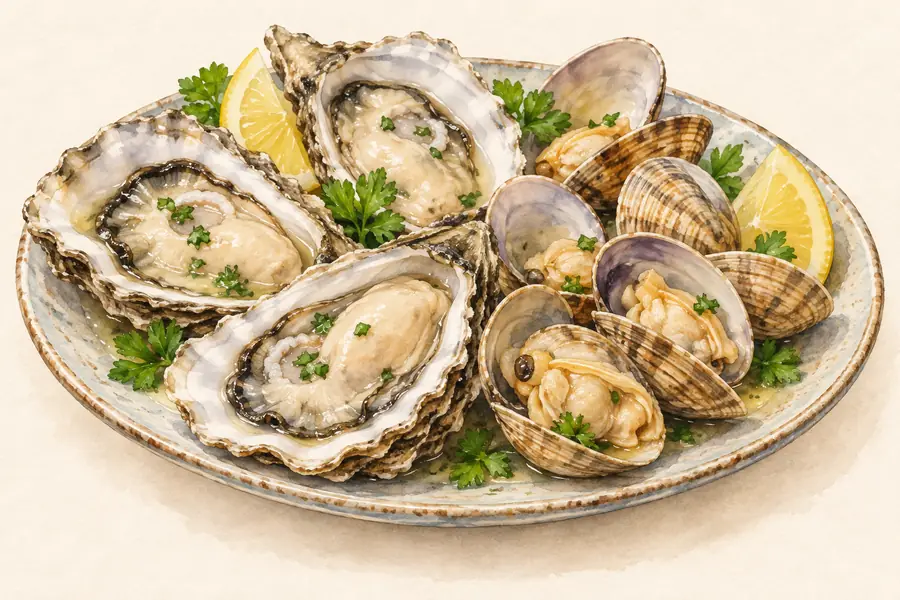
Charcoal-Grilled Oysters (炭烧生蚝) are fresh oysters opened, topped with minced garlic and grilled in the shell over charcoal, a dish sold at street stalls across Zhanjiang (湛江), Guangdong. In 2024 the Zhanjiang Municipal Bureau of Commerce placed the dish second on its list of the city's ten traditional dishes, chosen by online vote and expert review.
How it is made
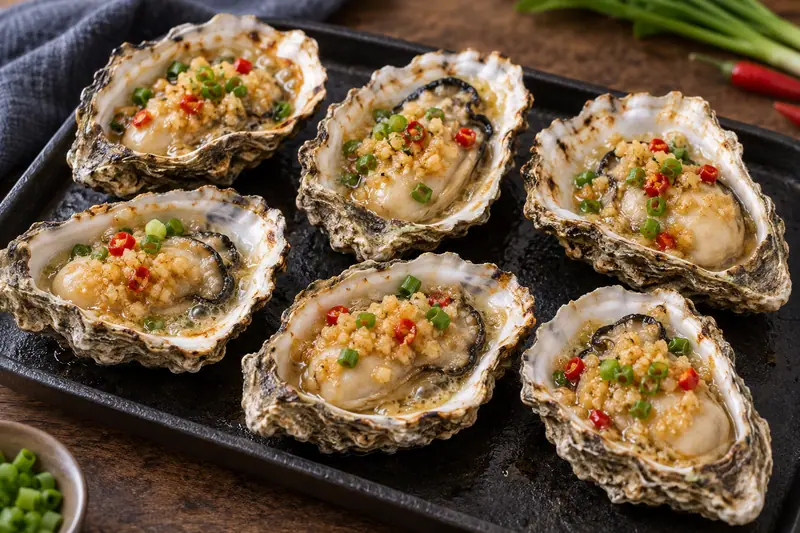
The Xiashan District (霞山区) government describes a simple method: minced garlic, sauce and other seasonings go straight into the freshly prised-open oyster, which is then set directly on the fire until cooked. The garlic takes away the raw, fishy smell of the oyster. On Zhanjiang's streets, Zhanjiang Daily (湛江日报) reports, grilled-oyster stalls light their charcoal in the early evening and spread garlic and small bird's-eye chillies over the oyster meat as it sizzles.
Flavour and texture
According to China News Service, the traditional charcoal method draws out the oyster's natural savour and keeps as much of it as possible, while garlic and chilli complement it; the flesh ends up rich and fine, with some bite. The Xiashan government adds that grilling gives the oyster a rustic, outdoor taste, and describes Zhanjiang oysters as tender, sweet, smooth and free of grit.
Where it comes from
Zhanjiang's oysters are raised hanging in the sea. China News Service dates local oyster farming to the 1950s and notes that Zhanjiang oysters became a national geographical-indication product in 2019. Farming families in Guandu (官渡) in Potou District (坡头区), Taiping (太平) in Mazhang District (麻章区) and Beitan (北潭) in Suixi County (遂溪县) are mostly in their third or fourth generation of oyster farming. Oysters start to fatten towards the end of October, which China News Service gives as the start of the best eating season.
Sources & reading
Written from the linked sources and checked sentence by sentence against quoted extracts by a separate reviewer on 2026-09-23. Recipes and servings vary between kitchens.