

Xinxing Sixth Patriarch Vegetarian Dish 新兴六祖斋菜
Xinxing Sixth Patriarch Vegetarian Dish is featured among the local specialties of Guangdong.
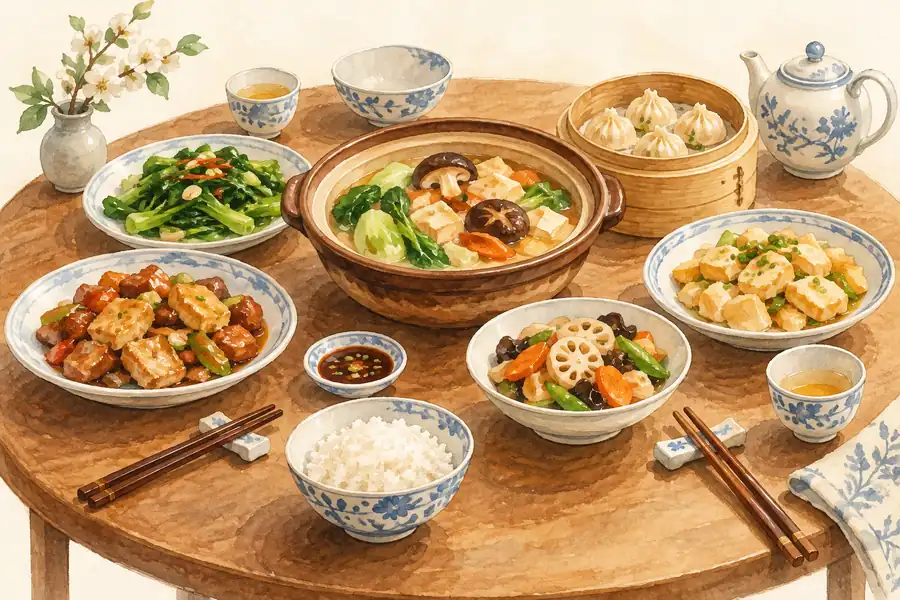
Xinxing Sixth Patriarch Vegetarian Dish (新兴六祖斋菜) is the Buddhist vegetarian cooking of Xinxing County (新兴县) in Yunfu (云浮), Guangdong, the home town of Huineng (惠能), the Sixth Patriarch of Chan Buddhism. Its best-known dish is luohan zhai (罗汉斋), a braise of eighteen vegetarian ingredients that counts among the ten famous dishes of Yunfu. Mushrooms, bamboo fungus and tofu skin are its staples, and a strong note of red fermented bean curd runs through it.
Where it comes from
Xinxing is home to Guoen Temple (国恩寺), a temple more than a thousand years old and a national key cultural relics protection unit. A Yunfu Media Center (云浮融媒中心) report carried by Nanfang+ (南方+) suggests that local skill with vegetarian food may come from the temple. Chen Tianrong (陈添荣), a chef at the Yuegang Hotel (悦港酒店) in Xinxing, says vegetarian dishes first caught on at Guoen Temple: pilgrims from the county and beyond who come to Xinxing to worship eat vegetarian food. The dish type itself is old: luohan zhai is first recorded in Pingzhou Ketan (萍洲可谈), written by Zhu Yu (朱彧) in the Song dynasty, where it names meals that merchants in Guangzhou (广州) provided for monks.
Ingredients
Luohan zhai takes its name from the eighteen arhats (十八罗汉) of Buddhism, and eighteen ingredients go into it. Five are mushrooms: shiitake, seafood mushrooms, straw mushrooms, enoki and fresh mushrooms. The rest are carrot, ginkgo nuts, baby corn, Chinese cabbage, cloud ear and snow fungus, tofu skin, bamboo fungus (竹笙), fat choy (发菜), glass noodles, a fried ingredient (油炸), dried bamboo shoots and winter bamboo shoots. Celtuce, broccoli and snow peas are laid on as a garnish.
How it is made
Chef Chen Dejun (陈德军) of the Yuegang Hotel first fries ginger and spring onion until fragrant, then stir-fries the other ingredients, seasons them, adds water and braises. The method is not complicated, but every ingredient must be fresh. Besides star anise and other spices, the dishes of Xinxing's Sixth Patriarch vegetarian cooking usually include nanru (南乳, red fermented bean curd), so they are also called nanru zhai (南乳斋). Chen Tianrong treats nanru as a spice for vegetarian cooking that gives a rich aroma, and connects the name with the devout men and women (善男信女) who come to worship.
Flavour and texture
Luohan zhai is brightly coloured, smooth and soft, with a clean fragrance. Yunfu Daily (云浮日报) describes Sixth Patriarch vegetarian dishes as light in the mouth but layered in flavour.
Sources & reading
Written from the linked sources and checked sentence by sentence against quoted extracts by a separate reviewer on 2026-09-23. Recipes and servings vary between kitchens.