

Zhanjiang Fresh Oysters 湛江生蚝
Zhanjiang Fresh Oysters is featured among the local specialties of Guangdong.
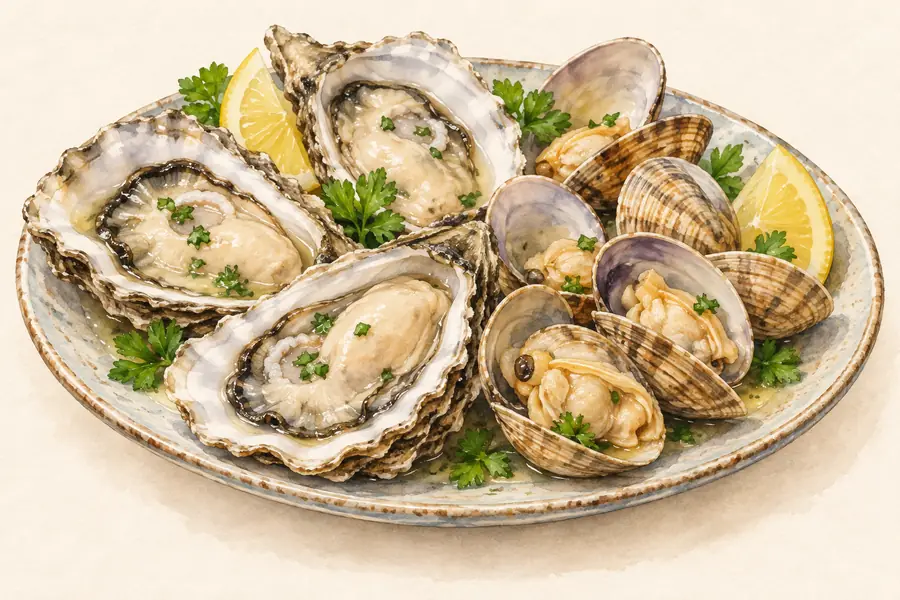
Zhanjiang Fresh Oysters (湛江生蚝) are the oysters farmed along the coast of Zhanjiang (湛江), Guangdong, and traditionally eaten there grilled over charcoal with garlic and chilli. Of all Zhanjiang oysters, those of Guandu (官渡) town in Potou District (坡头区) are the best known.
Where it comes from
The Guandu town government identifies its oysters as the Jinjiang oyster (近江牡蛎), which lives in low-salinity inner bays near river mouths and feeds by filtering plankton. Guandu lies where river meets sea, in water rich in microorganisms and not very salty. Chen Zhisong (陈智崧), a professor at Lingnan Normal University (岭南师范学院), names Guandu oysters and Beitan (北潭) oysters from Jiepao town (界炮镇), Suixi County (遂溪县), as standouts among Zhanjiang's white oysters; both places sit where river meets sea, with stands of mangroves.
Villagers in Xincun (新村), Guandu, have made a living from oysters since the 1950s. In 2018 a Zhanjiang producers' association was authorised to register 'Zhanjiang oyster' (湛江蚝) as a geographical-indication certification mark, and the Zhanjiang Oyster Industry Association told China News Service in 2022 that Zhanjiang oysters became a national geographical indication product in 2019.
How it is farmed
Early farmers stuck oyster spat to cement slabs on the seabed and dived to collect them. From the turn of the century they began hanging oysters from cement posts driven into the seabed, and also from floating rafts of planks and bamboo poles. Raft oysters stay at a fixed depth below the surface whatever the tide and grow fatter, while posts stand up better to storms; Guandu farmers usually combine the two. According to Dou Zhimin (窦志敏), Party secretary of Xincun village, a Guandu oyster takes at least three years and moves through three waters: a nursery in nearer waters, rafts further out, then fattening grounds off Nansan Island (南三岛), Donghai Island (东海岛) or further away before it is brought back for harvest.
How it is eaten
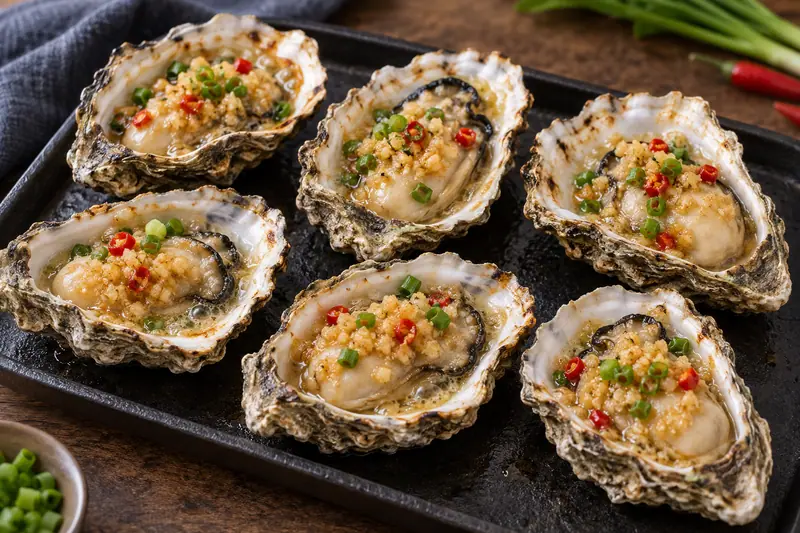
The traditional Zhanjiang method, as China News Service describes it, is to cook the oysters over charcoal to draw out their natural flavour and top them with minced garlic and chilli; the result is plump, fine-textured and chewy. People stop at Zhanjiang's late-night barbecue stalls for them, and the oysters are also cooked with garlic, baked in oil, deep-fried, cooked in congee or steamed. Food lovers remember Guandu oysters as fat, crisp, smooth and sweet.
Zhanjiang people expect fresh oysters at festivals and banquets, and the oysters grow plump from the end of October, the start of the best eating season.
Where to eat it
You can find Zhanjiang Fresh Oysters all over Guangdong, so there is no need to seek out one particular restaurant. To find one near you, search for “湛江生蚝” in Meituan (美团) or Amap (高德地图) and check recent reviews, distance and opening hours.
Sources & reading
Written from the linked sources and fact-checked against them on 2026-09-23. Recipes and servings vary between kitchens.