

Zhaoqing Leaf-Wrapped Rice Dumplings 肇庆裹蒸粽
Zhaoqing Leaf-Wrapped Rice Dumplings is featured among the local specialties of Guangdong.
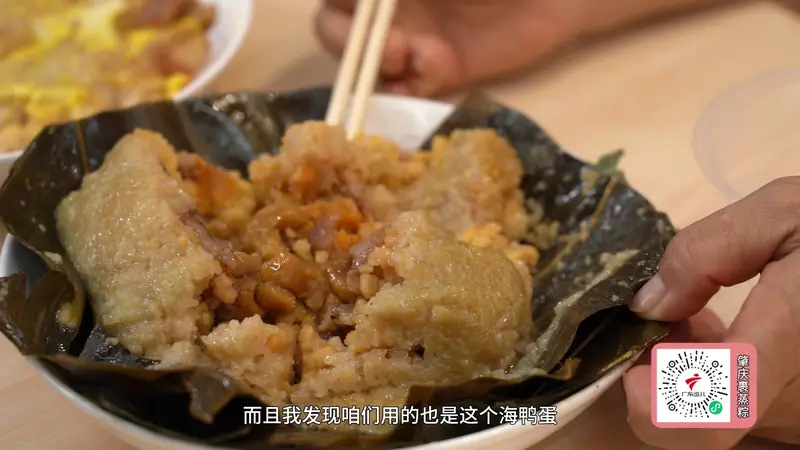
Photo adjustments
EXIF orientation normalized; resized without changing aspect ratio; converted to WebP. No subject edits.
Zhaoqing Leaf-Wrapped Rice Dumplings (肇庆裹蒸粽) are large parcels of glutinous rice, skinned mung beans and part-fat pork wrapped in dongye (冬叶) leaves and boiled, made in Zhaoqing (肇庆) above all for the Spring Festival. In Zhaoqing they are simply called guozheng (裹蒸), and, according to the Guangdong Provincial Cultural Centre (广东省文化馆), nobody there calls them zong (粽), the word for ordinary rice dumplings.
Where it comes from
The cultural centre traces the custom of wrapping guozheng for the Spring Festival along both banks of the West River (西江) back to the Han dynasty. The Daoguang-era gazetteer of Zhaoqing prefecture (肇庆府志) describes villagers at the year's end selling new glutinous rice, grinding new mung beans, taking pork for the filling and wrapping it all in dongye leaves. They built brick stoves in front of their houses and cooked through the night over pine roots; at dawn the children tasted the new parcels, and at New Year they were carried as gifts on visits.
In the 1980s most Zhaoqing families built stoves before the festival to make their own; today guozheng is also made commercially, and black glutinous rice has joined the traditional ingredients. The making technique, put forward by Duanzhou District (端州区), appears on Guangdong's provincial intangible cultural heritage list, with a listing date of 2009 given by Wikipedia.
How it is made
The traditional steps are soaking and washing the dongye leaves, washing the glutinous rice, removing the mung-bean skins, marinating the pork filling, wrapping, and boiling. The five-spice marinade for the pork, made from salt, qu liquor (曲酒), peanut oil, white sesame and five-spice powder, directly affects how the parcel tastes. Each one is wrapped into a pillow shape with pointed ends and boiled over a strong fire; Wikipedia notes that their size means more than eight hours in hot water.
Dongye, also written zhongye (柊叶), is described by the cultural centre as a plant peculiar to the Zhaoqing area. The book Guangdong Xinyu (广东新语) likens it to a banana leaf and says that in the southern heat, where things spoil easily, only dongye lasts. Wikipedia lists salted egg yolk, roast duck and char siu (叉烧) among newer fillings.
How it is eaten
Guozheng can be eaten as soon as it is boiled, or dressed with chopped coriander, spring onion, toasted sesame powder, a little peanut oil and soy sauce. Another way is to dip it in beaten egg and fry it golden in lard.
Sources & reading
Written from the linked sources and checked sentence by sentence against quoted extracts by a separate reviewer on 2026-09-23. Recipes and servings vary between kitchens.