

Heshan Stuffed Tofu 合山豆腐酿
Heshan Stuffed Tofu is featured among the local specialties of Guangxi.
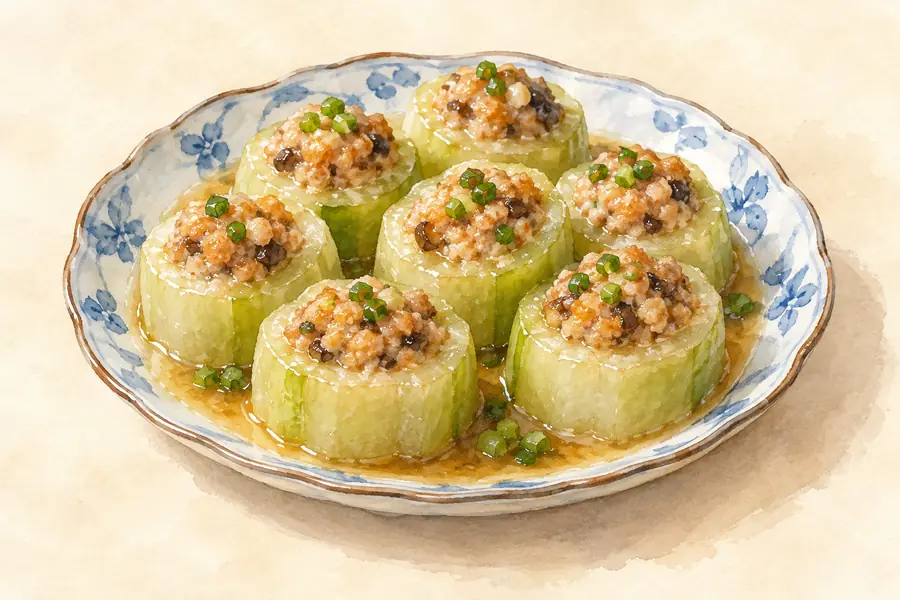
Heshan Stuffed Tofu (合山豆腐酿) is a stuffed tofu dish recorded for Heshan in Laibin, Guangxi, made in the Hakka 酿 style: filling tucked into tofu before cooking.
How it is made
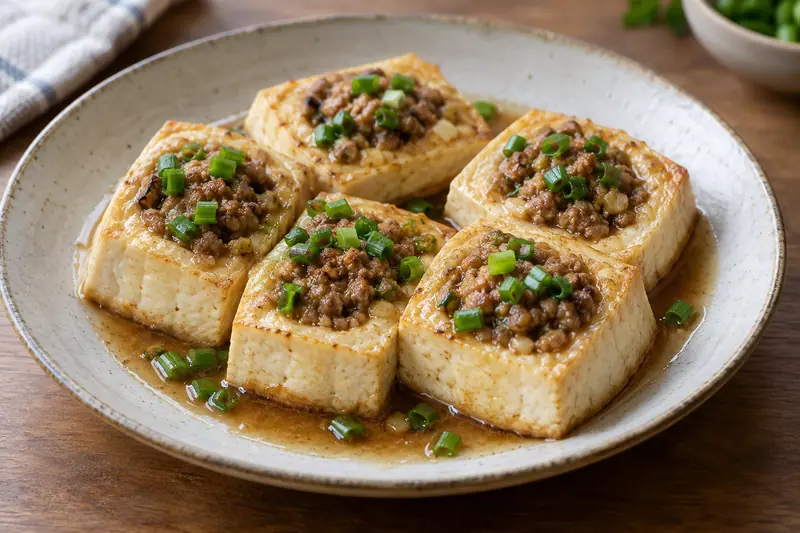
The encyclopedia entry explains the word at the heart of the dish: 酿 is a Hakka verb meaning to insert or embed a filling, so 酿豆腐 means tofu with a meat filling. In practice a block of firm tofu is cut into thick rectangles or triangles, a slit or hollow is made in one side, and a spoonful of seasoned minced pork — sometimes with dried shrimp, mushroom or taro — is pressed in. The pieces are then pan-fried filling-side down to seal, and finished by simmering in stock or steaming, which is what keeps the tofu from breaking apart.
Flavour and texture
Expect a soft, mild tofu shell around a savoury, juicy centre, with the contrast between the two textures being the point of the dish. Frying the filled side gives a faint golden crust and holds the filling in; the simmer afterwards lets the tofu soak up the sauce, so a plate usually arrives with a little gravy that is good over rice. Seasoning comes from the filling and the braise rather than from the tofu itself, and coriander or spring onion is often scattered over the top.
Local roots
The dish belongs to Heshan, a county-level city under Laibin in central Guangxi, where 酿 dishes — tofu, bitter melon, aubergine, chilli — are everyday home cooking with roots in Hakka settlement across the province. What is on record is the name and the city rather than a recipe, so the filling a particular kitchen uses and whether it finishes the dish in a clay pot or a wok are what vary. It is normally ordered as one of several dishes in a shared meal.
Ingredients and dietary questions
The tofu is soy based, but the filling is usually minced pork, so the dish is not vegetarian by default; dried shrimp, mushroom, taro or water chestnut are common additions, and the braise may use soy sauce (wheat) or oyster sauce. Ask 是素的吗 (is it vegetarian), 有虾米吗 (is there dried shrimp), 有蚝油吗 (is there oyster sauce) and 有花生吗 (are there peanuts) if those matter, and note that a vegetarian version needs both a different filling and a different sauce.
How to order
Order 一份豆腐酿 (one portion) and ask how it is finished: 是煎的还是蒸的 (pan-fried or steamed), 有没有汤 (does it come with sauce), 辣不辣 (is it spicy) and 可以少油吗 (less oil, please). Useful vocabulary includes 加米饭 (with rice), 多一点汁 (more sauce) and 打包 (take-away). Portions are usually counted in pieces, so ask 一份几个 (how many pieces in a portion) if you are ordering for a group.
How to eat it and plan a meal
Eat each piece in one or two bites so the filling does not spill, and spoon a little of the sauce over rice. Four to six pieces with rice and a green vegetable makes a full meal for one person; in a shared meal, the dish sits beside a soup and a stir-fry as the tofu element. It reheats well the next day in a covered pan with a splash of water, though the crust softens.
More dishes to compare
Explore related local specialties and compare their names, preparation notes and ordering guidance.
Huangyao Stuffed Tofu 黄姚豆腐酿 →
Huangyao Stuffed Tofu (黄姚豆腐酿) is the directory's other Guangxi entry for stuffed tofu, recorded for the old town of Huangyao. Compared with 合山豆腐酿, the technique is shared — hollow the tofu, press in the filling, fry and then braise — so the difference a visitor tastes comes from the local tofu and the filling each kitchen chooses.
Questions before you order
What does 酿 mean in a dish name?
It is a Hakka verb for inserting a filling. 酿豆腐 therefore means tofu with a stuffing pressed into it, and the same word is used for stuffed bitter melon, aubergine and chilli.
Can it be vegetarian?
Sometimes, with a mushroom or taro filling and a soy-based sauce, but the classic version uses minced pork and may include dried shrimp. Ask 是素的吗 before ordering.
Source introduction: Wikipedia contributors: 客家酿豆腐(维基百科条目原文,API 抓取) · CC BY-SA 4.0. English guide adapted from the cited material, with additional preparation and ordering guidance.
Sources & reading
The supplied food list supports this name and regional association. The culinary terms below are explained as menu vocabulary; a local recipe, origin story and venue availability have not been independently verified.