

Wuzhou Cured Meats 梧州腊味
Wuzhou Cured Meats is featured among the local specialties of Guangxi.
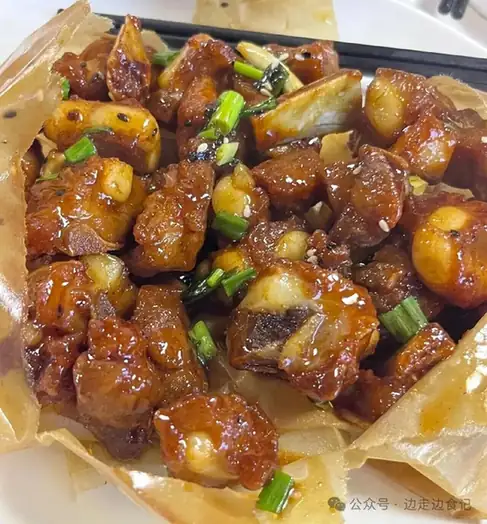
Image notes
Resized for the web; the photo itself has not been edited.
Wuzhou Cured Meats (梧州腊味) are the sausages, cured pork and dried meat slices of Wuzhou (梧州), Guangxi. Their centrepiece in the Guangxi commerce department's account is Wuzhou sausage (梧州腊肠), a national geographical-indication protected product since 2008.
Where it comes from
"When the autumn wind rises, eat cured meats" (秋风起,吃腊味) is a popular saying in Wuzhou. After the Beginning of Autumn (立秋) the weather cools, and pork sausages and other cured meats become a favourite accompaniment to meals in eastern Guangxi. Wuzhou today makes more than 50 kinds of these products, including dried meat slices (肉脯), and the commerce department lists it as the source of the most varieties of cured products in the region.
In 1901 the Liangtian (良田) cured-meat shop opened in Wuzhou, and its sausages were the most famous of their day; older residents still remember its slogan, "famous across Guangdong and Guangxi, Liangtian cured meats". Its successor, Wuzhou Rijing Food Co. (梧州日晶食品有限公司), was named a Guangxi time-honoured brand (广西老字号) in November 2013. In 1985 the Wuzhou meat products factory developed an artificial protein casing, and from then on sausages could be made in every season. On 27 August 2008 Wuzhou sausage passed review by the national quality inspection authority (国家质量监督检验检疫总局) and became a geographical-indication protected product.
How it is made
The quality of the pork comes first, and the commerce department names boars of the Luchuan (陆川) breed, described as having "a lion's head, leopard's eyes and bamboo-tube legs", as the best choice. Fresh leg and rump meat is trimmed of skin, bone and sinew, cut into 1-centimetre cubes, mixed well with liquor and soy sauce and left to marinate for two to four hours.
The washed and drained casing is fitted over a bamboo tube and filled, with the meat pressed tight to push out as much air as possible, and tied off with string every 12 to 15 centimetres. The sausages are then dried over a wood fire at about 50°C, usually for one or two days and nights. The heat is watched closely: too low and the sausage ferments and spoils, too high and the fat melts and the lean cooks.
In the Republican era most Wuzhou sausage was seasoned with first-draw soy sauce from a well-known soy shop, Longtiao'an (龙调安), with rock sugar and cassia bark added. The liquor is mainly Sanhua (三花酒), Liaoxi and northeastern sorghum liquors, all strong and aromatic, blended together to give the sausage a jujube-red colour and a strong cured aroma. The commerce department states that Wuzhou sausage contains no colouring, starch, bean flour, blood powder or other fillers.
Flavour and texture
Wuzhou sausage looks different from other sausages: long and thin, deeply wrinkled on the outside and clearly red and white in the cut. It is slightly salty rather than very sweet and grows more aromatic the longer you chew; the casing is crisp, the meat springy, and it is sweet and savoury without being greasy. Steamed, it turns soft and fine in texture.
How it is eaten
The sausage can be steamed, stir-fried, pan-fried or deep-fried, and it goes with both rice and drink. One home recipe published by the commerce department steams two Wuzhou sausages and half a strip of skinless cured pork, cuts them into small pieces and mixes them with vegetables, among them celery and red chilli, stir-fried with salt and sugar.
Sources & reading
Written from the linked sources and fact-checked against them on 2026-09-24. Recipes and servings vary between kitchens.