

Guilin steamed rice sponge cake 松糕
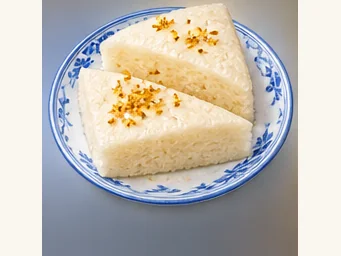
A gently sweet, steamed rice-flour cake associated with Guilin, traditionally made from glutinous and japonica rice and sometimes scented with Lipu taro.
Tap any red Chinese text to hear it in Mandarin.
Songgao is a traditional Guilin rice cake, not a single restaurant dish or a recipe with one fixed formula. One documented family craft lineage traces its method to Daxu Town in Lingchuan County, within Guilin: a local report describes the maker’s family tradition there, while an English Guilin food guide also records the cake as a celebratory gift. This is evidence of a local tradition, not proof that the cake originated only in Guilin or is sold everywhere in the city.
The traditional base combines glutinous rice and japonica rice, ground into flour. The flour is moistened with sweetened water—often yellow or brown sugar water—until damp and loose, then sprinkled in layers into a steamer and cooked through. It is steamed rice flour rather than a stretchy, pounded sticky-rice dough. The finished crumb is soft and tender, with a faintly grainy, airy feel and a warm rice fragrance; sugar brings a mild sweetness.
Some versions include diced Lipu taro, whose fragrance and starchy, earthy richness contrast with the sweet rice cake. Other recipes omit it, so do not assume every songgao contains taro. Sugar type, sweetness, grain balance, and the amount or placement of taro vary by maker; there is no single citywide standard.
Try a plain bite first to notice the rice aroma and crumb, then eat it in small pieces if the cake is dense or freshly steamed. The sources describe it as a food given for birthdays, a new baby, moving into a new home, and other celebrations. Portioning and whether it is served warm depend on the seller; no particular dip or topping is required.
When you see it offered, ask: 请问这是桂林松糕吗?里面有荔浦芋头吗? Qǐngwèn zhè shì Guìlín sōnggāo ma? Lǐmiàn yǒu Lìpǔ yùtou ma? (“Is this Guilin songgao? Does it contain Lipu taro?”).
Where to eat it
You can find Guilin steamed rice sponge cake all over Guilin, so there is no need to seek out one particular restaurant. To find one near you, search for “松糕” in Meituan (美团) or Amap (高德地图) and check recent reviews, distance and opening hours.
More dishes to compare
Explore related local specialties and compare their names, preparation notes and ordering guidance.
Guilin shuiciba rice balls 水糍粑 →
Glutinous rice is worked into a smooth dough and wrapped around a sweet filling. Sesame, peanuts and sugar are traditional choices, while shops also make softer paste fillings and newer variations. The white wrapper is supple, sticky and finely textured, with either a nutty crunch or a smooth center depending on the filling. Small bites make its dense chew easier to enjoy.
Guilin Sanhua rice spirit 桂林三花酒 →
Rice is fermented and distilled to produce a clear spirit, then bottled at a stated alcohol strength. It is poured in small measures rather than served like a soft rice drink. The flavor is clean, grain-derived and aromatic, with a warming alcoholic finish. Different bottles vary in strength and maturity, so the label matters.
Sources & reading
Recipes and servings vary between kitchens.