

Tongren Sour Fermented Fish 铜仁酸扎鱼
Tongren Sour Fermented Fish is featured among the local specialties of Guizhou.
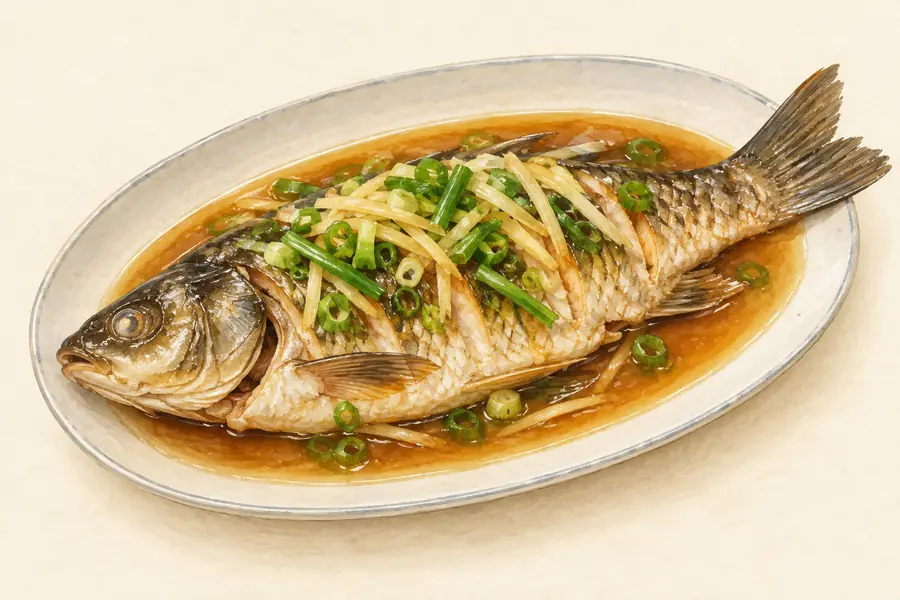
Tongren Sour Fermented Fish (铜仁酸扎鱼) is a whole fish cured with salt and chilli and then fermented in earthenware jars, a dish of the Tujia (土家) people of Yinjiang Tujia and Miao Autonomous County (印江土家族苗族自治县) in Tongren (铜仁), Guizhou. The county lies on the western side of Mount Fanjing (梵净山). Tongren's city news site calls the jar-fermented version a celebrated Yinjiang dish, handed down through generations, that Tujia families serve to honoured guests.
How it is made
Fish are cured in two rounds a year. The first, in May and June, uses farm fish that have just spawned and have been raised in mountain ponds or fish farms for more than a year, weighing one to three jin (斤, half a kilo each). The second comes in September and October: after the rice harvest, farmers drain the paddies and catch rice-field carp stocked about six months earlier.
The scales stay on; during curing they soften completely and give the cooked fish a particular aroma. The fish is opened from the back, leaving the belly uncut so that it can hold the cure. After bleeding and gutting, every part is rubbed with salt and fermented chilli (糟辣椒), and the fish rest in a tub for three days.
At the Banshan village (板山村) workshop in Xinzhai town (新寨镇), the salted fish are then hung to lose about 30 percent of their water and baked for an hour, which removes about 80 percent. For the second cure they are packed into airtight clay jars in alternating layers of cure, seasoning and fish, with more than ten curing materials that include wheat bran, rice flour and dried palm leaves. The jars ferment for two months.
Flavour and texture
The finished fish is lightly sour and fragrant, neither too wet nor too dry, and sharp with sourness, chilli heat and aroma. Tongren's city news site describes it as a taste that livens the palate and sharpens the appetite.
Where it comes from
Zhang Zhuhai (张著海), who runs the Banshan workshop, traces the habit to a time when the village river was full of fish: older villagers salted what they could not eat to keep it longer, liked the result and kept making it. Banshan cures mainly farmed bighead carp, grass carp and common carp, and in 2022 it turned its unused village school into a processing room.
Sources & reading
Written from the linked sources and checked sentence by sentence against quoted extracts by a separate reviewer on 2026-09-23. Recipes and servings vary between kitchens.