

Yinjiang Mung Bean Noodles 印江绿豆粉
Yinjiang Mung Bean Noodles is featured among the local specialties of Guizhou.
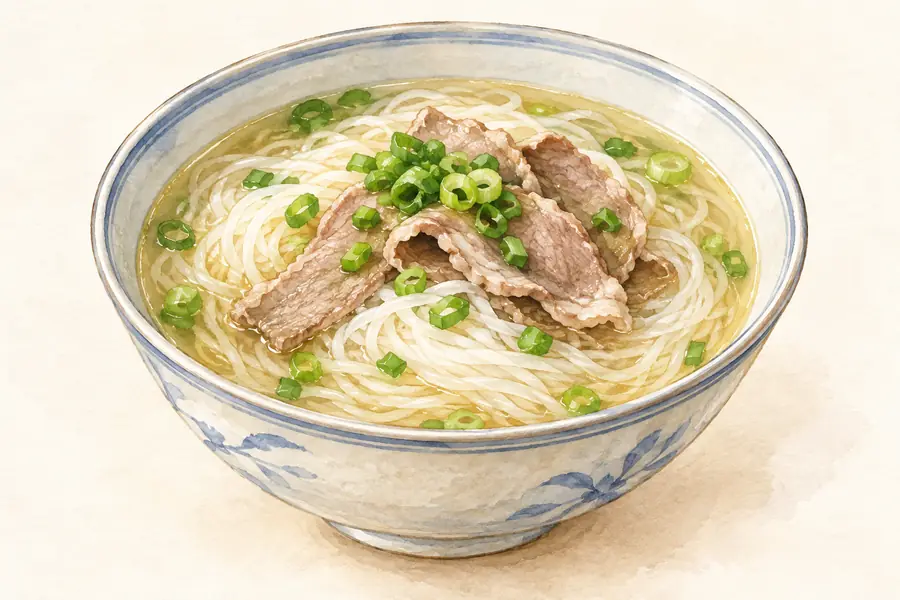
Yinjiang Mung Bean Noodles (印江绿豆粉) are strips cut from thin sheets of cooked rice-and-mung-bean batter, a traditional food of Yinjiang Tujia and Miao Autonomous County (印江土家族苗族自治县) in Tongren (铜仁), Guizhou. An 82-year-old resident quoted by Yinjiang county media calls them Tujia food that generations have loved.
How it is made
The usual mix is four parts rice (nianmi, 黏米) to one part mung beans; some makers use fewer mung beans and add a little soybean. The proportion matters: with too few mung beans the noodles have no flavour, and with too many they lose their chew. The rice and beans are soaked in clear water, and the mung beans are rubbed to remove their skins and rinsed. Once the grains have softened, they are ground on a large stone mill, fed in by the wooden spoonful, until a milky batter runs out between the stones.
The sheets are cooked on an old-style stove whose iron wok is about a metre across. The wok is heated well and wiped with rapeseed oil, and the batter is poured around it in near-concentric circles and spread with a semicircular wooden scraper. A wooden lid goes on for about half a minute. When the round sheet turns from white to bean green, it is turned, lifted off and hung over bamboo poles. Once it is completely cold, it is folded, rolled and cut into strips.
Flavour and texture
Yinjiang county media describe well-made sheets as even in thickness and soft yet tough, so they cut into unbroken strips. In the pot the strips turn soft, with a fragrant, rich taste.
Where it comes from
A writer on the Yinjiang county news site remembers being taken for a bowl by their parents on market days as a child, which they called "having shaowu" (吃少午) or "a bowl of fen'r" (吃碗粉儿), both meaning these noodles. People returning to Yinjiang from elsewhere go for a freshly cooked bowl, and only after eating it do they feel they are really home. At Spring Festival, families back home make the noodles together.
Sources & reading
Written from the linked sources and fact-checked against them on 2026-09-24. Recipes and servings vary between kitchens.