

Sea Urchin Steamed Egg 海胆蒸蛋
Sea Urchin Steamed Egg is featured among the local specialties of Hainan.
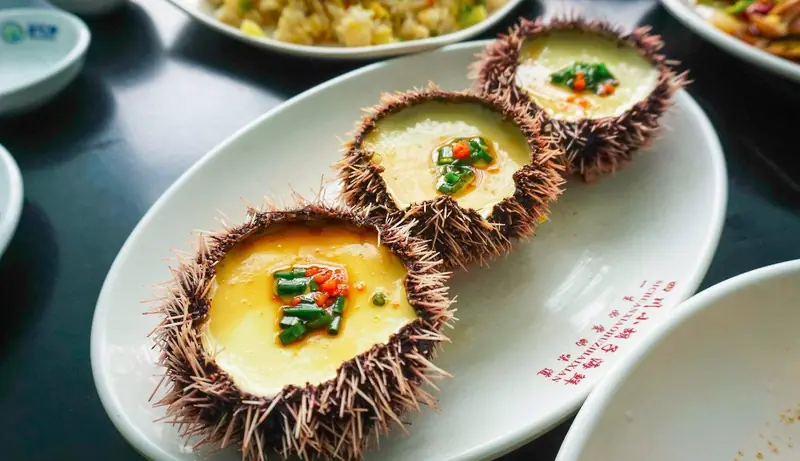
Image notes
Resized for the web; the photo itself has not been edited.
Sea Urchin Steamed Egg (海胆蒸蛋) is sea urchin steamed with egg, listed among the specialities of Sansha in Hainan and made in coastal kitchens wherever urchins are landed.
Urchin, steam, egg
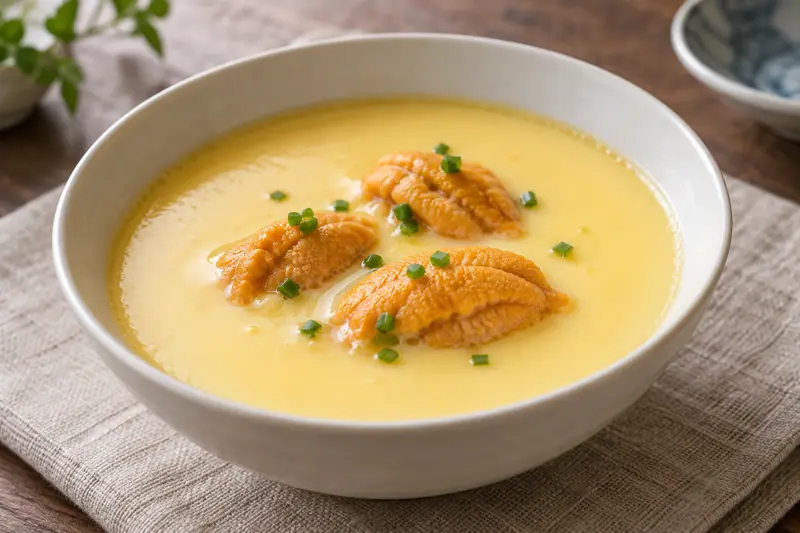
The name is literal: 海胆 is sea urchin, 蒸 is steaming, 蛋 is egg. The egg is beaten, usually with water or stock so that it sets softly, and the edible part of the urchin is added so that it cooks into the custard.
A provincial food feature on the Wenchang coast lists 海胆蒸蛋 among the standard ways local urchins are prepared there, alongside plain steaming, fried rice and a seaweed soup.
A mild, slippery custard
Sea urchin is sweet and faintly briny, with a soft, almost creamy texture; steamed with egg it becomes lighter than a sauced seafood dish. The provincial account says cooks at Longlou add no salt at all, on the grounds that the urchin already carries it, and choose the day's catch for the plate.
The result is a mild custard rather than a strongly seasoned one.
Sansha listing, Longlou documentation
海胆蒸蛋 is one of the specialities of Sansha, on Hainan's island city territory, and the dish itself belongs wherever urchins are landed along the coast.
Hainan's own food writing documents it most fully at Longlou, at the foot of Tonggu Ling in Wenchang, where 海胆 is named first among the four products the town is known for, together with abalone, lobster and a local clam.
What varies in the bowl
Two ingredients, several variables: how much water or stock goes into the egg, whether the urchin is folded through or laid on top, and whether anything is added at the table. Sea urchin is a marine product, so raise shellfish sensitivity before ordering.
The provincial account notes that around the first lunar month rough seas make diving difficult and restaurants fall back on frozen urchin, so it is fair to ask whether the urchin is fresh.
How to ask for it
Ask for 海胆蒸蛋, or for 海胆 alone if you want it steamed plainly. Because quality is judged by the day's catch, asking whether the urchin came in fresh is a normal question rather than an awkward one.
It is a small shared plate rather than a main course, and in seafood restaurants it is often what a kitchen suggests for a table that wants something delicate rather than rich.
At the table
It arrives as a soft custard, usually in a small bowl, and is eaten with a spoon while hot. Because the flavour is mild, order a second, stronger seafood dish alongside rather than expecting this plate to carry a meal.
At Longlou the setting is part of the dish: the seafood places there face the bay and serve the urchin close to where it was landed.
More dishes to compare
Explore related local specialties and compare their names, preparation notes and ordering guidance.
Steamed Hele crab 和乐蟹 →
Steamed Hele crab (和乐蟹) is cooked the way its Chinese name says: 蒸, steamed, with little interference. Both 海胆蒸蛋 and the crab depend on a fresh marine ingredient and a short cooking time rather than on seasoning, which is why both are ordered for the ingredient itself.
Questions before you order
What is 海胆蒸蛋?
Sea urchin steamed with beaten egg so that the roe sets into a soft, savoury custard; the name is simply urchin, steamed, egg.
Where is it eaten in Hainan?
It is made along the coast; it stands with the specialities of Sansha, and provincial food writing documents the version at Longlou in Wenchang.
Sources & reading
The supplied food list supports this name and regional association. The culinary terms below are explained as menu vocabulary; a local recipe, origin story and venue availability have not been independently verified.