

Laoba Tea and Snacks 老爸茶
Laoba cha is Haikou’s open-ended tea-shop custom: tea or coffee, a refill pot, and a changing spread of handmade buns and savoury or sweet snacks shared around the table.
Tap any red Chinese text to hear it in Mandarin.
In Haikou, 老爸茶 (laoba cha) is less a single recipe than a way of using a neighbourhood tea shop. A pot of tea—or, in some shops, black coffee—comes with small dishes to choose from and enough time to talk. The custom is associated with Haikou and the wider northern Hainan area, but it is not limited to one restaurant or one fixed menu.
What you are tasting
The drinks can be sweet and strong. Black coffee may be served with condensed milk, while tea is often ordered as a pot rather than a single cup. The food counter changes from shop to shop, but handmade steamed buns and other small savoury or sweet pastries are central to the experience. Some shops also serve local snacks such as shrimp dumplings, rice-flour items or pandan-flavoured pastries.
This is a grazing meal rather than a plated speciality. Point to what looks fresh, order a few pieces, and add more if you are still hungry. Recipes and fillings are not fixed across Hainan, so ask what an unfamiliar item contains. A golden crust or a green colour is not proof that a snack is vegetarian, and visitors with allergies should ask before eating.
The refill pot
One of the most recognisable objects is the cha er (茶二), a small second pot used to adjust the strength or sweetness of tea and to refill cups. A similar kafei er (咖啡二) serves coffee. Older white ceramic versions are often broad-bellied and may have no lid: shopkeepers found that an open pot made topping up and refilling quicker. This small piece of equipment turns a quick drink into an unhurried table ritual.
Why it belongs to Haikou
Historical accounts connect the custom’s local form with Hainanese people returning from Southeast Asia. Western-style tea shops appeared in Haikou’s trading streets around the late Qing and early Republican period, and the practice later moved through state-run and private shops. The streets around Zhongshan Road, Changdi Road and Deshengsha Road are named in local historical accounts as early Haikou settings for these shops.
Today, the point is not to recreate a single historical scene. Tea shops are part of everyday neighbourhood life, and the customers now include younger people and visitors as well as long-time regulars. In January 2024, Hainan formally placed the Hainan laoba tea custom on its sixth provincial list of representative intangible cultural-heritage projects. That status recognises a living social practice—not a single protected recipe or a chain of approved restaurants.
How to try it in Haikou
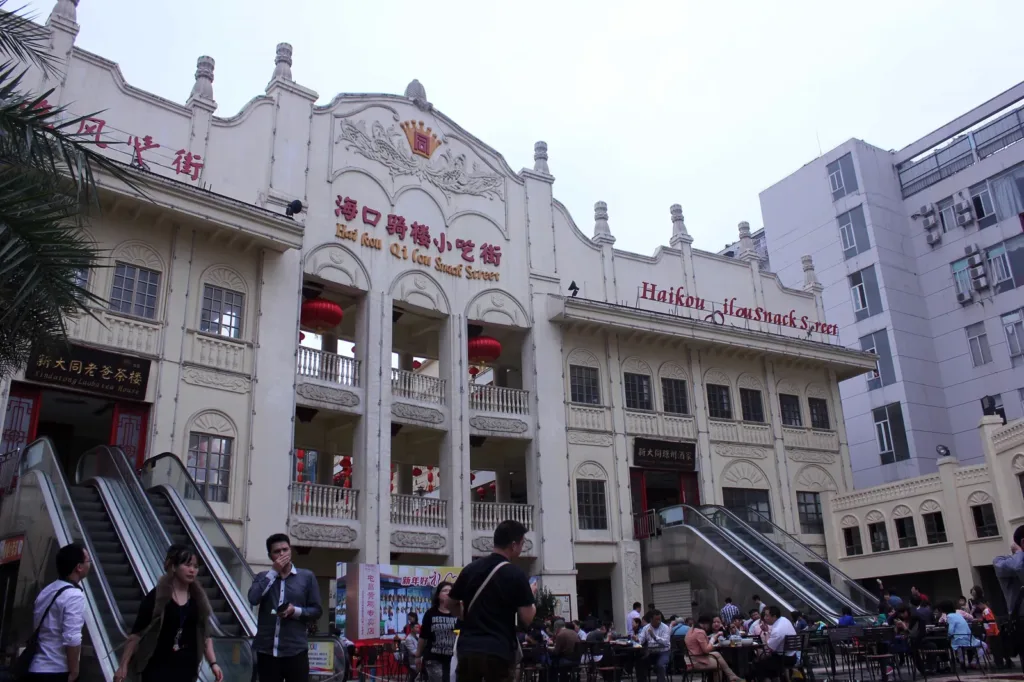
Choose a tea shop first rather than searching for a ticketed attraction called Laoba Tea. Keep 老爸茶 Lǎobà Chá ready to show a driver, map app or shop sign, then look at the counter and ask which items were made that day. The historic Qilou and old-city streets are a natural setting because the custom grew alongside Haikou’s old commercial districts, but shops also operate elsewhere in the city.
There is no single entrance, station, timetable or return route for this food tradition. Once you have selected a current shop, use its exact Chinese name and address in a ride-hailing or map app; a generic “Haikou” pin will not take you to a tea table. Confirm the shop’s opening hours, payment options and current menu on the day, since these are venue-specific. Sit for a while, refill slowly, and treat the surrounding regulars as people having their own time—not as a performance for visitors.
Sources & reading
Image credits & notes (1)
- A modern plaza named Haikou Qilou Snack Street on Datong Road near Jiefang Road, with a visible “Xindatong Laoba Tea House” sign at lower left and diners below; a contextual Haikou laoba-cha scene, not a claim about current shop operations. Photo: Zhangmoon618Photo: CC BY-SA 3.0