

Qionghai Wenquan Goose 琼海温泉鹅
Qionghai Wenquan Goose is featured among the local specialties of Hainan.
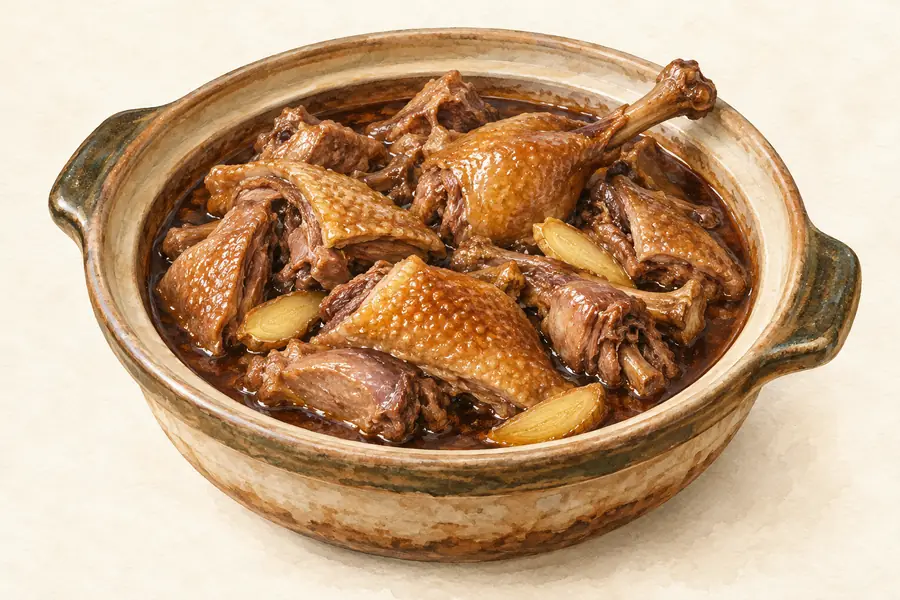
Qionghai Wenquan Goose (琼海温泉鹅) is goose from Qionghai (琼海), Hainan, traditionally served white-cut: simmered whole and eaten with a dip of its own broth, sour citrus juice and garlic. The birds are a local crossbred white-feathered goose raised along the middle and lower reaches of the Wanquan River (万泉河). Hainan Daily calls it the dish people know as "Hainan's fifth famous dish", after the island's four established classics.
Ingredients
The goslings range freely on the sandbanks of the Wanquan River, eating wild grasses, including one called gosling grass (鹅仔草), topped up with broken rice, radish seedlings and sweet-potato leaves from the farm. Once their feathers are grown they are penned and fed a cooked mix of rice, peanut cake, sweet potato and rice bran before slaughter. Hainan Daily puts the rearing period at about 100 days, and Qionghai has drawn up its own technical standards for feeding and managing the birds.
How it is made
For the traditional white-cut version the goose is fully bled, plucked and cleaned, then put whole into a large pot with ginger, garlic and salt and simmered in barely boiling water until a chopstick passes easily through the leg. The dip starts from the cooking broth, seasoned with the juice of a sour local citrus (酸桔) or rice vinegar, minced ginger, garlic, chilli and salt. Charcoal-roasted goose with crisp skin is another common way to cook it, and Hainan Daily names goose hotpot among newer ways of serving it.
Flavour and texture
The meat has fine fibres and an even spread of fat and lean without thick layers of fat. Hainan Daily describes the skin as smooth and the bones as tender. The Qionghai city government lists the condiments served with it as wild Hainan tangerines, chilli, garlic paste, ginger juice and aged vinegar.
Where it comes from
Li Haixing (李海星), a native of Wenquan (温泉) in Jiaji town (嘉积镇), began selling goose meat in his home town in the mid-1980s, by the portion as "goose gongdao" (鹅肉公道) with goose-rice balls on the side. In 1994 he registered the trademark "Wenquan Haixing" (温泉海星). Hainan Daily links the goose's wider fame to the 1990s, when the eastern expressway brought tourism to the Guantang (官塘) area. In 2020 the Qionghai commerce bureau co-organised the city's second Wenquan goose cooking contest, where chefs created new goose dishes; a bureau official said the aim was to make the goose Hainan's fifth famous dish.
Sources & reading
Written from the linked sources and fact-checked against them on 2026-09-23. Recipes and servings vary between kitchens.