

Sour Dressed Rice Noodles 酸粉
Sour Dressed Rice Noodles is featured among the local specialties of Hainan.
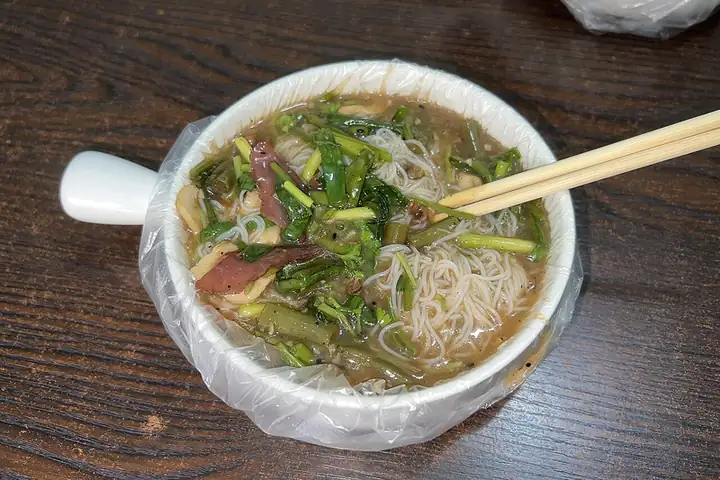
Sour Dressed Rice Noodles (酸粉) is Hainan's sour dressed noodle, and the version that gave the style its name comes from Lingshui, in the island's south-east; it is a cold-tossed rice noodle built on vinegar, seafood and the local yellow lantern chilli.
How it is made
The noodles are the base. 360 Baike describes them as made by local people from local rice into a kind of thin noodle, like mainland rice noodles but not the same, dropped briefly into boiling water and then drained. Around them comes a dressing, and this is where the Lingshui version departs from plain Hainan noodles: vinegar and a sweet component are both required, and the sauce is finished with seafood and a strong local chilli paste.
The account of the dish's development says it began with a man surnamed Hu in Anma village in Lingshui, passing in the second generation to a family named Wang, who added dried sand worm, fish cake, small salted fish and shredded squid to the Hainan-noodle toppings and put vinegar into the dressing, together with Lingshui's yellow lantern chilli. Beef jerky, the same source notes, is treated as indispensable.
Flavour and texture
The three words the source returns to are sour, hot and sweet — 酸、辣、甜 — with the sweetness coming from a thick red sauce built on garlic paste and tomato rather than from sugar alone. Sand worm is the traditional savoury note, and the entry notes that it has become expensive and is now rarely used, which makes the fish cake, salted fish and squid do more of the work. The chilli paste supplied on the side is described as the hottest of the hot.
Where the name comes from
Lingshui is a county on Hainan's south-east coast, and 酸粉 travelled from there across the island, with Wanning and Yacheng also known for their versions. The name stuck to the Lingshui original because it is the one most people consider the standard. The dish is also framed as a relative of Hainan noodles: same eating method, different dressing, with the vinegar being what separates one from the other.
Ingredients and dietary checks
Rice noodles, vinegar, garlic paste, tomato-based sweet sauce, fish cake, small salted fish, shredded squid, peanuts or sesame in some versions, coriander, and a yellow lantern chilli paste on the side. The seafood is not a garnish but part of the seasoning, so ask 有海鲜吗 and 放沙虫吗 (is sand worm used) if that matters, and ask 有花生吗 if nuts do. Because the dressing is mixed at the stall, ask for 不要辣 (no chilli) rather than assuming the bowl comes plain.
How to order it
Point at 酸粉 or say 陵水酸粉, then ask 大碗还是小碗 (large or small bowl), 要辣吗 (with chilli) and 可以少放醋吗 (less vinegar). If you eat at a street stall, 打包 (to take away) is the usual way to carry it. Because the dressing is what defines the dish, 多放点卤 (a little more dressing) is the request that changes the bowl most.
How to eat it and plan a meal
Suan fen is a snack or a light meal rather than a main course, and it is tossed together before eating so the dressing reaches every strand. Order one bowl per person with something small alongside — a soup or a grilled item — rather than treating it as a shared dish. Eaten in the morning or as a mid-afternoon stop is how 360 Baike describes local habit.
More dishes to compare
Explore related local specialties and compare their names, preparation notes and ordering guidance.
Lingshui sour noodles 陵水酸粉 →
Lingshui sour noodles (陵水酸粉) is the county-specific name for the bowl described here, and the two entries overlap by design: the general 酸粉 is the family, while the Lingshui version is the one credited with the vinegar dressing, the seafood toppings and the yellow lantern chilli. Read the Lingshui page when you want the recognised original, and this page for the wider family of Hainan sour noodles.
Questions before you order
Is 酸粉 the same as Hainan noodles?
They share the same eating method and a rice-noodle base, but 360 Baike records that the sour version adds vinegar to the dressing together with seafood toppings and chilli, which makes the flavour quite different.
Why is it called Lingshui sour noodles?
Because Lingshui county's version is treated as the original and the best known, even though the dish spread across the island and other places now make their own.
Sources & reading
The supplied food list supports this name and regional association. The culinary terms below are explained as menu vocabulary; a local recipe, origin story and venue availability have not been independently verified.
Image credits & notes (1)
- A common version of Sour Dressed Rice Noodles · 酸粉常见做法参考照片。Photo: N509FZ · CC BY-SA 4.0Resized for the web; the photo itself has not been edited.
