

Coconut Glutinous Rice Balls 椰香糯米糍
Coconut Glutinous Rice Balls is featured among the local specialties of Hainan.
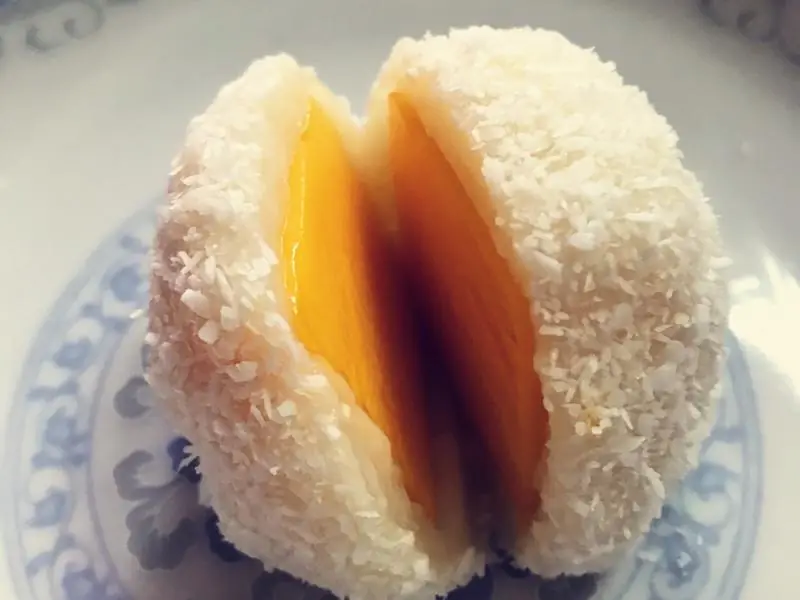
Image notes
Resized for the web; the photo itself has not been edited.
Coconut Glutinous Rice Balls (椰香糯米糍) is a Hainan coconut-scented glutinous rice sweet: a soft steamed dough wrapped or rolled in grated coconut and eaten in small pieces.
How it is made
糯米糍 in the southern Chinese sense is a soft, pliable dough rather than a ball of loose rice. Glutinous rice flour is usually mixed with water — often part of it with hot water, so the starch gelatinises and the dough holds together — then steamed and kneaded while warm, or cooked directly into a stiff paste. The dough is then divided, filled or left plain, and rolled in grated or desiccated coconut, which is the step that the word 椰香 in this name points to. Because the dough is sticky rather than elastic, it is shaped by hand and dusted or rolled to stop it adhering.
What it tastes like
The texture is the whole point: soft, stretchy and slightly chewy, with none of the graininess of a flour cake. Coconut on the outside adds a dry, fibrous coating that keeps the pieces from sticking to each other and to the fingers, and its fat makes the sweetness taste rounder. Filled versions usually use sweetened coconut, peanut, sesame or bean paste, and a filled ball tastes distinctly sweeter than a plain one.
Where it belongs
椰香糯米糍 is associated with Wanning in eastern Hainan. Coconut and glutinous rice are the two staples of the island's snack counters, and coconut-flavoured rice sweets of this kind appear throughout Hainan food writing alongside 椰子饭 and 椰丝糯米卷. Nothing read here documents a specific Wanning version, its history or a named maker, so the local association rests on the name and the rest is the general practice around southern Chinese glutinous rice sweets.
Ingredients and dietary questions
Expect glutinous rice flour, water, sugar and coconut; peanut, sesame or mung-bean paste turn up in filled versions. The dough itself is wheat-free, but coating powders and shared equipment can still carry traces of other flours and nuts. Coconut is high in fat and often handled next to peanuts and sesame at market counters. Glutinous rice is heavy and slow to digest, which is worth knowing if you are eating several pieces in a row.
Ordering it
Ask for 糯米糍 or 椰香糯米糍, and say 一个 for one piece. Useful phrases at a counter: 有馅吗 (is there a filling), 什么馅 (what filling), 现做吗 (freshly made), 打包 to take away and 多少钱一斤 for the price per catty. If you want it less sweet, 少糖 is understood even when the pieces are pre-made.
How it is eaten
These are two-bite sweets, eaten with tea or as a snack between meals rather than as dessert after a banquet. Freshly made pieces are soft and best on the day; chilled ones firm up and are usually better brought back to room temperature first. Serve them with something astringent or unsweetened to cut the richness.
More dishes to compare
Explore related local specialties and compare their names, preparation notes and ordering guidance.
Baoting Rambutan Glutinous Rice Balls 保亭红毛丹糯米糍 →
Baoting Rambutan Glutinous Rice Balls (保亭红毛丹糯米糍) is the Baoting version of the same sweet dough, flavoured with rambutan, a fruit the county is known for; 椰香糯米糍 takes its flavour from coconut. Both are soft glutinous rice sweets rolled or filled, and the difference is which local crop the maker folds in. Reading them together shows how Hainan snack counters vary one dough by season and by county rather than by technique.
Questions before you order
Is 糯米糍 the same as mochi?
The family is close: both are soft sweets built on glutinous rice, but 糯米糍 is usually a flour-and-water dough that is steamed and rolled in coconut, and it may be filled, so the texture differs from freshly pounded mochi.
Does it contain wheat or nuts?
The dough is wheat-free unless it has been blended, but peanut and sesame fillings or coatings are common, so ask what is inside and what the pieces were rolled in.
Sources & reading
The supplied food list supports this name and regional association. The culinary terms below are explained as menu vocabulary; a local recipe, origin story and venue availability have not been independently verified.