

Steamed Coconut Pot 椰子蛊
Steamed Coconut Pot is featured among the local specialties of Hainan.
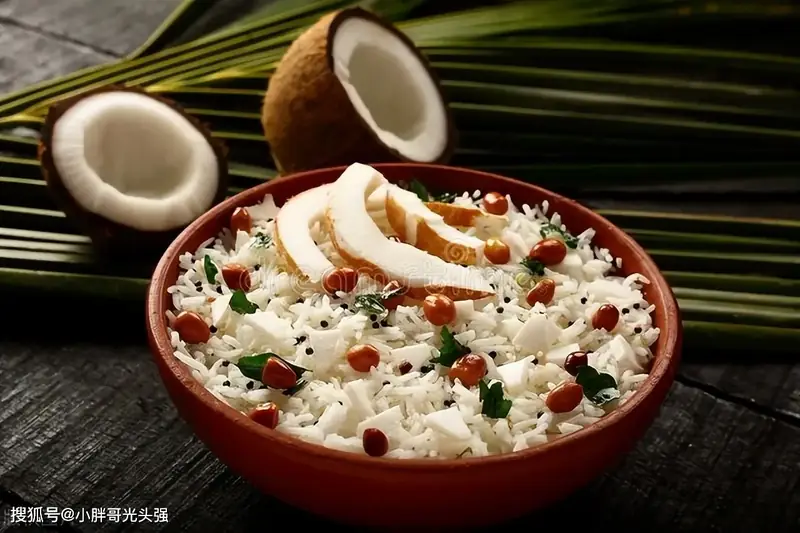
Image notes
Resized for the web; the photo itself has not been edited.
Steamed Coconut Pot (椰子蛊) is Hainan's coconut-pot dish: a young coconut opened at the top, filled with soup or a savoury mixture, and steamed so the coconut flesh sweetens what is inside.
How it is made
The dish is built inside its own container. A coconut is cut open, some of the water is kept, and the cavity is filled with the prepared mixture — the classic version on the provincial list is 椰子鸡, chicken with the coconut water and flesh — then the whole coconut is steamed or simmered so that the flesh releases its fat and aroma into the liquid. Because the vessel is sealed by its own lid, the cooking is gentle and the loss of moisture is small, which is why the result is a clear, sweet broth rather than a reduced one. Some restaurants serve the same idea as a soup ladled into a coconut-shaped bowl; the provincial list calls the traditional form 椰子(鸡)盅.
What it tastes like
Coconut water is faintly sweet and slightly saline, and when it is heated with chicken or pork it reads as a light, clean broth rather than a heavy soup. The cooked flesh along the inside of the shell turns soft and is scraped out with the spoon as the meal goes on; that is where the second, richer coconut flavour comes from. Hainan cooking is described in the same provincial feature as favouring freshness and original flavour over heavy seasoning, and this dish is the clearest example of it.
Where it belongs
The provincial government portal, drawing on Hainan Daily, records 琼州椰子蛊 among the coconut-flavoured dishes that Hainan chefs developed — a list that also includes 海南椰奶鸡, 象生椰子果 and 椰香千层酥 — and states that in 2012 海南椰子(鸡)盅 was named one of Hainan's ten famous dishes by an assessment of city and county authorities, public voting, industry associations and chefs. The same feature places 椰子盅 in the coconut belt around Wenchang on the round-island drive, and a 南海网 feature on琼菜 documents 印象椰子盅 being served at the Hainan Consumer Products Expo.
Ingredients and dietary questions
The core is coconut — its water and its flesh — plus the filling, most often chicken, sometimes pork, seafood or a vegetarian mix. Coconut water is high in potassium and the broth is naturally sweet without added sugar; if the kitchen uses chicken stock cubes or MSG, that is an addition to ask about. Shellfish and peanut can appear in seafood or mixed versions, and anyone avoiding them should ask what has gone into the pot rather than ordering by the dish name alone.
Ordering it
Show the characters 椰子蛊, or use 椰子盅 and 椰子鸡, both of which are common on menus; 椰子鸡 is the version with chicken and is usually the one a kitchen will understand first. Ask 整只椰子吗 (is it served in a whole coconut) to be sure you are getting the steamed-in-shell version rather than a soup served in a bowl, and 几位份 (how many people is it for) when ordering, since one coconut pot is normally shared. 不要味精 for no MSG.
How it is eaten
The pot comes to the table hot and is shared: the broth is ladled out first and drunk like a soup, then the filling is taken out, and the soft flesh is scraped from the inside of the shell at the end. Rice is the usual accompaniment, and the pot works well as the light centre of a meal that has stronger dishes around it. It is sweet enough that a finishing dessert is unnecessary.
More dishes to compare
Explore related local specialties and compare their names, preparation notes and ordering guidance.
Hainan Quanjiafu Assorted Claypot 海南全家福煲 →
Hainan Quanjiafu Assorted Claypot (海南全家福煲) is a mixed-ingredient Hainan casserole, the generous table pot that gathers several meats and vegetables, while 椰子蛊 is a single vessel of coconut and its filling, cooked and served inside the shell. Both are shared dishes and both belong to the Hainan way of eating, but the logic is opposite: one builds flavour by adding many ingredients, the other by letting one ingredient, coconut, hold the whole dish.
Questions before you order
Is 椰子蛊 the same as 椰子鸡?
The traditional 蛊 or 盅 form is a whole coconut steamed with its filling; 椰子鸡 names the chicken version of that pot, and it is the name most restaurants will recognise immediately.
Is the coconut flesh eaten too?
Yes. After the broth and filling, the softened flesh is scraped from inside the shell — that is where a large part of the dish's second, richer coconut flavour comes from.
Sources & reading
The supplied food list supports this name and regional association. The culinary terms below are explained as menu vocabulary; a local recipe, origin story and venue availability have not been independently verified.