

Hand-torn noodle soup 尕面片
Hand-torn noodle soup is featured among the local specialties of Qinghai.
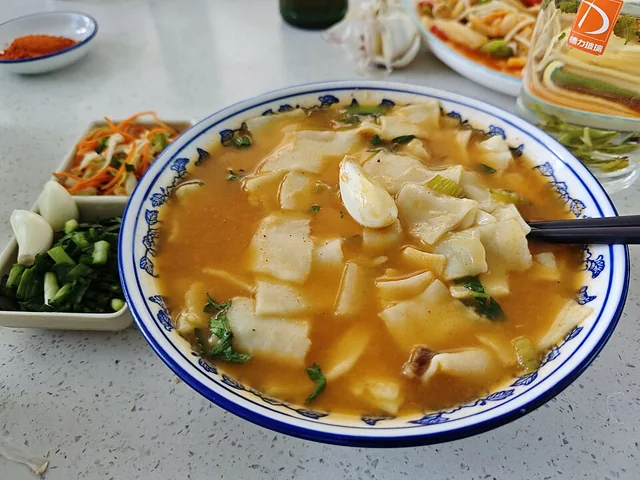

Photo adjustments
EXIF orientation applied where present; resized proportionally to at most 640 px on the long edge and encoded as WebP. No crop, retouching, recoloring or subject changes.
Small pieces of dough make a satisfying soup or mixed noodle dish. In the Hehuang area, ask about the day's meat, vegetables and broth.
How it is made
A sheet or strip of wheat dough is torn or pinched by hand into small pieces and dropped into hot broth. Meat and vegetables may be cooked in the same pot or added as toppings.
Flavour & texture
The irregular pieces have tender edges and slightly thicker, chewy centers. They carry the broth well and make a satisfying spoon-and-chopstick meal.
Local roots & traditions
Gamianpian is familiar in Qinghai's Hehuang food culture and neighboring northwestern regions.
Ingredients & dietary needs
Small pieces of wheat dough cook in a soup with vegetables and often lamb or beef. Tomato, potato, greens and other additions vary. Ask about both broth and visible meat; removing the topping does not turn an animal-stock soup into a vegetarian dish.
How to order Hand-torn noodle soup
Ask which meat and vegetables are in the day's soup. Choose the meat and portion if options are offered, and state chilli preferences early. Allow the thicker pieces to cool on the spoon. A redder soup may reflect tomato rather than strong chilli, so ask about heat instead of judging by colour alone.
How to eat it & plan a meal
Use a spoon as well as chopsticks to enjoy the small dough pieces and vegetables together. A single bowl can be a full meal. If a large communal bowl is offered, confirm how many people it is intended for before adding another starch-heavy main.
Names & local variations
Ga mianpian describes small hand-torn dough pieces, distinct from long pulled noodles and uniformly machine-cut pasta. Thickness and size vary, giving different bites within one bowl. It is also different from dry fried dough pieces, even when an English menu translates both as noodle bits.
More dishes to compare
Explore related local specialties and compare their names, preparation notes and ordering guidance.
Menyuan barley noodles 青稞长面 →
Barley-based flour is worked into a noodle dough, shaped into long strands and boiled before being served with the chosen broth or topping. The proportion of other flour can differ by maker. The noodles have a substantial bite and a more pronounced grain character than a very refined wheat noodle.
Firecracker noodles 炮仗面 →
Wheat dough is formed into short, thick noodle pieces and cooked before being stir-fried with vegetables and a savory meat mixture. Their small stubby shape gives the dish its firecracker name. The noodles are chewy and substantial, with browned, sauce-coated surfaces and a fragrant spicy finish. Vegetable pieces keep the texture varied.
Questions before you order
What name should I show when ordering?
Show 尕面片 for Hand-torn noodle soup.
Sources & reading
Recipes and servings vary between kitchens.