

Hangzhou cat-ear pasta soup 杭州猫耳朵
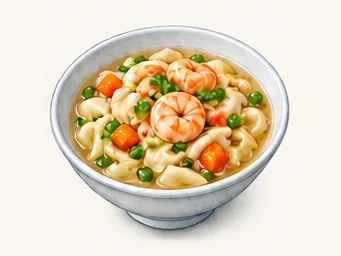
A Hangzhou-style bowl of tiny, thumb-curled wheat-dough pieces in savory broth, often served with shrimp, chicken, ham, mushrooms or bamboo shoots.
Tap any red Chinese text to hear it in Mandarin.
In Hangzhou, mao’erduo (猫耳朵, literally “cat ears”) means small wheat-dough pieces curled into ear-like cups and served in soup. The name describes their shape; there is no cat in the dish. Hangzhou’s English-language city education site calls it “Cat-ear Shaped Noodles.” Similar ear-shaped dough foods are found elsewhere in China, so this is best understood as a Hangzhou-style local specialty, not a shape or preparation unique to the city.
A traditional method starts with flour and water kneaded into dough. The dough is rolled into a rope, cut into small pieces, then pressed and pushed forward with a thumb so each piece curls into a shallow hollow. The pieces cook in broth. A Hangzhou tourism recipe describes chicken stock with shrimp, dried scallop, diced chicken and ham, shiitake mushrooms and bamboo shoots; leafy greens and a little chicken fat finish the bowl. Recipes are not a fixed citywide formula: kitchens may vary the additions, and some descriptions include peas.
Expect small ivory-colored pieces with a tender surface and a pleasantly springy bite. Their little hollows catch the broth, so a spoonful brings together dough and the soup’s savory, umami-rich flavor. Shrimp and chicken add sweetness; ham, mushrooms and dried scallop deepen the savoriness, while bamboo shoots add a crisp contrast when included. The colorful toppings—often pink shrimp, red ham and green vegetables or peas—make the pale curled pieces easy to spot. It is eaten as a hot, spoonable noodle soup rather than as a dry pasta dish.
The story linking the snack to the Qianlong emperor’s visits to Hangzhou is a popular legend, not a verified origin account. Order by showing 杭州猫耳朵 Hángzhōu māo’ěrduo or asking 请问有没有猫耳朵?汤里有什么配料? Qǐngwèn yǒu méiyǒu māo’ěrduo? Tāng lǐ yǒu shénme pèiliào? (“Do you have cat-ear noodles? What is in the soup?”). Check the ingredients with the restaurant, especially if you avoid seafood, meat or particular allergens.
Where to eat it
You can find Hangzhou cat-ear pasta soup all over Hangzhou, so there is no need to seek out one particular restaurant. To find one near you, search for “杭州猫耳朵” in Meituan (美团) or Amap (高德地图) and check recent reviews, distance and opening hours.
More dishes to compare
Explore related local specialties and compare their names, preparation notes and ordering guidance.
Cong bao hui scallion wrap 葱包桧 →
Fried dough and scallions are enclosed in a thin pancake, then pressed on a hot surface until the outside crisps. Sweet bean sauce, chili sauce or both can be added. The wrapper becomes crisp and chewy around softer fried dough, with scallion fragrance and a savory-sweet finish.
Longjing shrimp 龙井虾仁 →
Shelled shrimp are lightly seasoned and quickly cooked with brewed Longjing tea or tea leaves. Careful timing keeps the shrimp tender while allowing a restrained tea aroma to come through. The shrimp are springy and gently sweet, with a light grassy fragrance rather than a strongly bitter tea sauce.
Sources & reading
Recipes and servings vary between kitchens.