

Anguo Medicinal Herb Cuisine 安国药膳
Anguo Medicinal Herb Cuisine is featured among the local specialties of Hebei.
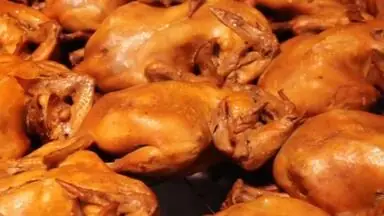
Photo adjustments
EXIF orientation normalized; resized without changing aspect ratio; converted to WebP. No subject edits.
Anguo Medicinal Herb Cuisine (安国药膳) is the herbal cooking of Anguo (安国) in Baoding (保定), Hebei, a city long called the "medicine capital" (药都). Xinhua describes Anguo as the country's largest distribution and export base for Chinese medicinal materials. The cuisine works those herbs into everyday dishes, and it was entered on Hebei's provincial intangible cultural heritage list in 2013.
How it is made
Liu Peng (刘朋), head of the Anguo Medicinal Cuisine Research Institute (安国药膳研究所), describes the cuisine as blending Chinese medicinal herbs into daily food through cooking methods such as pan-frying, stir-frying, deep-frying, steaming, boiling, simmering and stewing. Zhang Yu (张宇), head chef at the Anguo Hotel (安国宾馆), told Great Wall Net that the dishes rest mainly on vegetables and meat with a moderate amount of herbs: the food should taste first of the dish and only in the aftertaste of the medicine.
His squid with ophiopogon (麦冬鲜鱿) takes more than two hours. The ophiopogon root soaks for half an hour; pig's ear and squid are diced and steamed for over 20 minutes; the mixture sets in the fridge and is then sliced. He pairs lamb with angelica (当归) and red dates, and cooks to the season.
Where it comes from
Great Wall Net traces the cuisine to Pi Tong (邳彤), honoured as the Medicine King (药王), who served as an official in his home region under Emperor Guangwu of the Eastern Han. Food remedies attributed to him are still handed down among local people, including purslane porridge, dandelion tea, sophora-flower rice cake and mung bean and lotus leaf soup. Great Wall Net counted more than 200 Anguo herbal dishes in seven groups in 2020, from tonics to medicinal wines and teas.
How it is eaten
The Hebei government notes that the cuisine was once largely confined to banquets and star-rated hotels. At the Nandajie (南大街) community canteen, one of two herbal-cuisine canteens the research institute runs in Anguo, herbal steamed buns are mixed with gardenia and dendrobium powder and eaten with pickles cured in tangerine-peel water. At Qishanfang (祁膳坊), the menu changes each season, with 66 dishes per season; one is braised pork cooked with tangerine peel and dried persimmon (柿柿如意红烧肉), where the fruit flavour comes through in the meat.
Sources & reading
Written from the linked sources and checked sentence by sentence against quoted extracts by a separate reviewer on 2026-09-24. Recipes and servings vary between kitchens.