

Manchu Eight-Bowl Banquet 满族八大碗
Manchu Eight-Bowl Banquet is featured among the local specialties of Hebei.
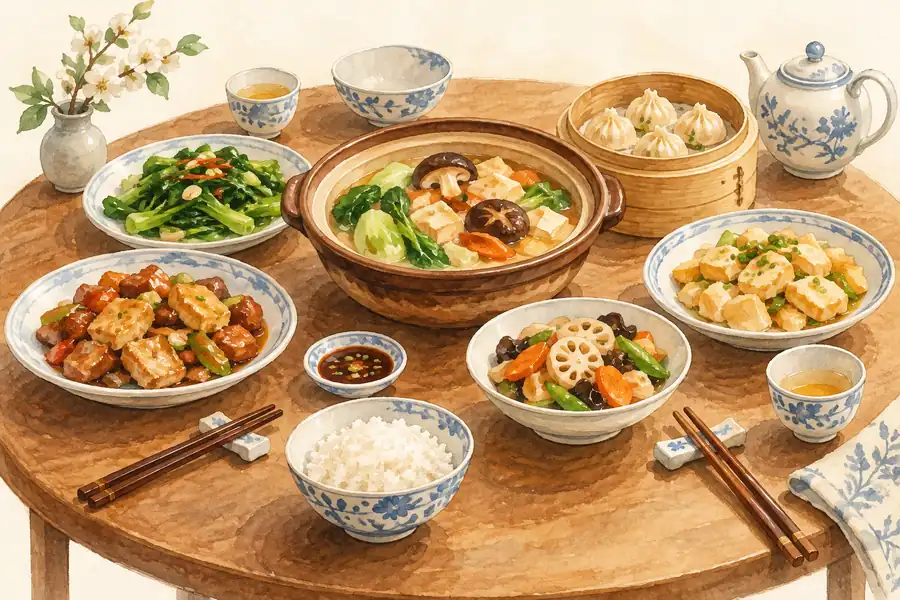
Manchu Eight-Bowl Banquet (满族八大碗) is a set of eight dishes served together in large matching bowls. In Chengde (承德) it is on the intangible cultural heritage list of Fengning Manchu Autonomous County (丰宁满族自治县), and people there still entertain guests with it at festivals and on other important occasions.
Where it comes from
China Taiwan Network (中国台湾网) cites the Manchu Bannermen's Sacrificial Rites (满族旗人祭礼考), which records that banquets used five ding vessels and eight bowls, commonly called the eight big bowls, and that wealthy families served them at New Year, festivals, celebrations, welcomes, farewells and weddings. The same site describes the eight bowls as the lowest of the three tiers of delicacies in the Manchu-Han Imperial Feast (满汉全席) and as everyday fare in Manchu homes. The cooking methods it brings together include braising, stewing, stir-frying, steaming and liu, a quick fry finished in a thickened sauce. People's Daily's China City News (中国城市报) counts it among 410 imperial-cuisine dishes that are popular in Chengde.
What goes in the bowls
The Ministry of Culture and Tourism lists the eight dishes as pickled xuecai greens stir-fried with xiao doufu (小豆腐), tofu and egg with shrimp sauce, braised pig's trotters, blanched frog, chicken with zhenmo mushrooms and glass noodles, New Year pork stew, yufu chunyu (御府椿鱼) and amazun pork (阿玛尊肉). China Taiwan Network calls amazun pork, also known as Nurhaci's golden pork, the most representative dish and says it has been handed down since the time of Nurhaci (努尔哈赤). The same site describes a Chengde version built on local ingredients, including free-range chicken stewed with mushrooms, lamb in white broth, pork stewed with dried green beans, stewed beef, stewed hairtail and winter melon in white broth, all cooked in black iron pots over mountain firewood.
How it is eaten
The dishes come to the table in identical large bowls. China Taiwan Network describes the banquet format as eight people to a table and eight dishes, set out in an octagon. The Ministry of Culture and Tourism puts the eight bowls on a rural food route through Weichang (围场), Fengning, Shuangluan (双滦区) and Pingquan (平泉), and names it among the dishes visitors can eat along the National No. 1 Scenic Road (国家一号风景大道), which runs 180 kilometres from Saihanba (塞罕坝) in Weichang to Datan (大滩镇) in Fengning.
Sources & reading
Written from the linked sources and checked sentence by sentence against quoted extracts by a separate reviewer on 2026-09-24. Recipes and servings vary between kitchens.