

Suning Wobei Sausage 肃宁窝北香肠
Suning Wobei Sausage is featured among the local specialties of Hebei.
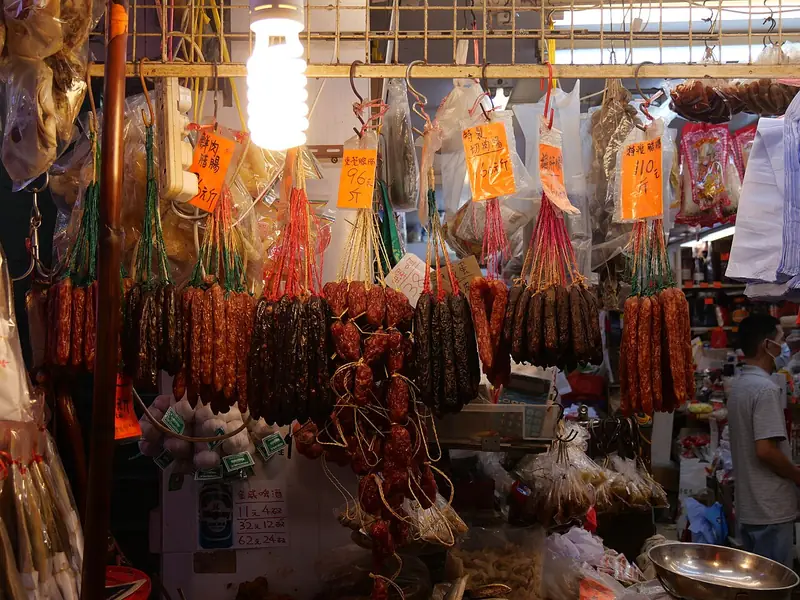
Suning Wobei Sausage (肃宁窝北香肠) is the sausage style of Wobei town in Suning county, Cangzhou, Hebei, where sausage making is the local food industry.
How the sausage is made
A 香肠 in the Chinese sense is meat preserved in a casing: meat is minced, seasoned and stuffed into a natural or manufactured casing, then cooked, smoked or dried so that it keeps. The Chinese Wikipedia article describes the technique as one of the oldest ways of preserving meat, and notes that modern sausages commonly contain preservatives such as nitrite. Wobei's sausage is a traditional local type, and the town's food-processing trade grew up around products of this kind.
Fragrant without being greasy
The local description is 香而不腻, which in practice means a savoury, lightly spiced, fairly firm slice rather than a soft, fatty one. Cured sausage is salty and concentrated, and the seasoning can run from plain salt and spice to a sweeter or smokier profile, so a first purchase is best made in a small amount. It is a cold cut and a cooking ingredient rather than something eaten on its own in quantity.
A town, not just a county
Wobei is a town of Suning county under Cangzhou, and food processing is its traditional industry, with the sausage named as its best-known product. The county profile puts the tradition at more than a hundred years and treats the sausage as a festival gift as well as an everyday food, which is why it is sold both by weight and in gift packs. The dish name keeps the town rather than the county, so it points to a specific place inside Suning.
Ingredients and what to check
Pork is the usual base, with salt, spices and often a curing salt, packed into casing and then smoked or dried. Cured sausage is high in salt and fat, so a little goes a long way, and anyone watching sodium should treat it as a seasoning rather than as a main protein. Sliced cold, it needs no further cooking; firmer versions are usually steamed or stir-fried before serving.
How to buy it
Ask for 肃宁窝北香肠 or simply 窝北香肠, and specify 真空 if you want a vacuum pack for travel. 肥瘦 asks about the fat-to-lean balance, 辣不辣 covers chilli, and 怎么吃 asks whether the shop recommends slicing it cold or cooking it. Buying by weight at a food shop usually gives a fresher slice than a pre-packed gift box, and a vacuum pack travels far better than a loose piece.
How it is eaten
Slice it thin and serve it cold with bread or steamed buns, or warm the slices briefly in a steamer so the fat softens. It also works as a flavouring ingredient: a few slices stirred through fried rice, a vegetable stir-fry or a bowl of noodles give the whole dish a cured, savoury depth. Because it is salty, pair it with plain rice or a mild vegetable dish rather than with another cured meat.
More dishes to compare
Explore related local specialties and compare their names, preparation notes and ordering guidance.
Daming Wubaiju Sausage 大名五百居香肠 →
Daming Wubaiju Sausage (大名五百居香肠) is a sausage from Daming in Handan sold under a long-standing shop name. Like 肃宁窝北香肠 it is a Hebei cured sausage sliced cold and bought as a gift, but the Wobei name points to a town and its food-processing trade rather than to one historic shop, so the two sit close in style and differ in what the name promises.
Questions before you order
Does 香肠 mean the same thing as sausage in English?
Broadly, yes: it is meat stuffed into a casing. The Chinese Wikipedia article notes that in parts of China 香肠 refers specifically to 腊肠, the cured sausage dried for the winter, which is the style sold here.
How should 肃宁窝北香肠 be stored?
A vacuum-packed cured sausage keeps for a long time in a cool place. Once it is opened, keep it chilled and use it within a reasonable period; a piece bought loose should be treated as fresh and eaten soon.
Source introduction: Wikipedia contributors: 香肠 · CC BY-SA 4.0. English guide adapted from the cited material, with additional preparation and ordering guidance.
Sources & reading
The supplied food list supports this name and regional association. The culinary terms below are explained as menu vocabulary; a local recipe, origin story and venue availability have not been independently verified.
Image credits & notes (1)
- Reference photo of a similar dish · 同类菜品参考照片A similar preparation is pictured; the local version may differ. 同类菜品参考照片,当地做法可能不同。Photo: Peachyeung316 · CC BY-SA 4.0Resized for the web; the photo itself has not been edited. Thumbnails may show a cropped view.
