

Tangshan Shrimp Paste 唐山虾酱
Tangshan Shrimp Paste is featured among the local specialties of Hebei.
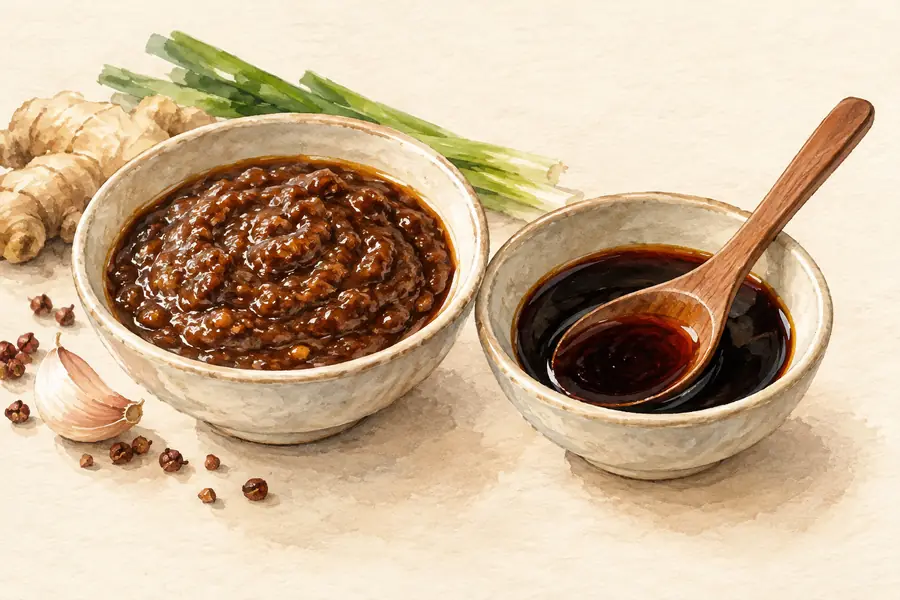
Tangshan Shrimp Paste (唐山虾酱) includes the fermented coastal pastes made in Luannan (滦南) and Leting (乐亭). In the Luannan tradition described by Tangshan Labour Daily, fresh wu shrimp (乌虾) are mixed with sun-dried salt and aged in earthenware vats. The finished paste has a reddish colour and a full, rich flavour.
Fermenting in the sun
Production begins between the Qingming (清明) and Xiaoman (小满) seasonal markers, when fresh shrimp are abundant. Shrimp and salt are put into ceramic vats with conical lids. Selecting shrimp, filling the vats, pounding and exposing them to the sun are successive stages before the long fermentation is complete. Tangshan Labour Daily describes the paste coming out of the vats around October of the following year.
Flavour and use
The flavour is strongly savoury and salty without harsh astringency. In Changwangzhuang (常旺庄), a little shrimp paste is eaten alongside millet porridge. Shrimp paste also belongs to the everyday cooking traditions of the coastal villages, where it is used through the seasons.
Sources & reading
Written from the linked sources and checked sentence by sentence against quoted extracts by a separate reviewer on 2026-09-26. Recipes and servings vary between kitchens.