

Slow-Simmered Pork Hock 煨肘子
Slow-Simmered Pork Hock is featured among the local specialties of Hebei.
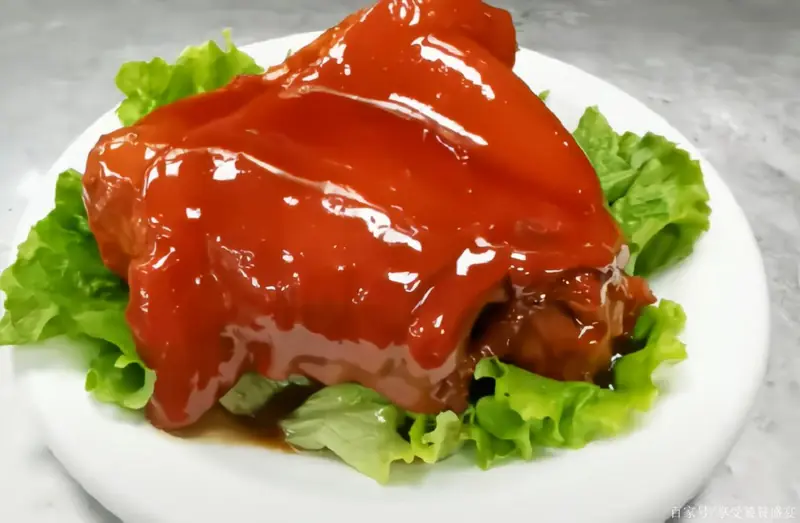
Image notes
Resized for the web; the photo itself has not been edited.
Slow-Simmered Pork Hock (煨肘子) is a braised pork hock from Tangshan (唐山) in eastern Hebei. China.com.cn describes it as a signature dish of the coastal cooking of eastern Hebei, and in 2018 the China Cuisine Association (中国烹饪协会) put it among Hebei's ten classic dishes in its Chinese Cuisine (中国菜) list of regional dishes and banquets.
How it is made
The cook starts with a pork hock chosen for an even balance of fat and lean and plenty of gelatin. Hebei News Network lists the stages as blanching, frying in oil, boiling, steaming, reducing the sauce and shaping. China.com.cn adds cleaning off the bristles and removing the gamey smell, then several hours of slow simmering so that the sauce and spices work into the meat. The aim, in its words, is a hock that is tender without falling apart and rich without being greasy.
Where it comes from
The version Tangshan is best known for is Hongyan pork hock (鸿宴肘子), from the Hongyan Restaurant (鸿宴饭庄). According to China.com.cn, the restaurant opened in 1937 and the chef Wang Xuehui (王学会) drew on local folk techniques to fix the recipe, which was printed in the Tangshan Cookbook (唐山菜谱) in 1973. In the late 1980s and early 1990s the chef Jing Sanyuan (靖三元) replaced the old method of steaming the hock in a bowl and turning it out with finishing it in the wok to reduce the sauce. In the late 1990s He Baoliang (何宝良) standardised the ingredients and steps.
The dish was named a Chinese famous dish in 1999 and recognised as a century-old dish of a China Time-honoured Brand in 2009. It was also on the Chongli menu for the 2022 Winter Olympics and Paralympics.
How it is eaten
In Tangshan it is a standard dish at festivals and when entertaining guests. China.com.cn describes it served on a white plate with green vegetables beside the glossy red hock. The meat is soft enough to divide into pieces with chopsticks: the skin is soft and sticky and the lean meat loose and tender, in a thick, shiny sauce.
Sources & reading
Written from the linked sources and fact-checked against them on 2026-09-24. Recipes and servings vary between kitchens.