

Xuanhua Steamed Naked-Oat Rolls 宣化油面窝窝
Xuanhua Steamed Naked-Oat Rolls is featured among the local specialties of Hebei.
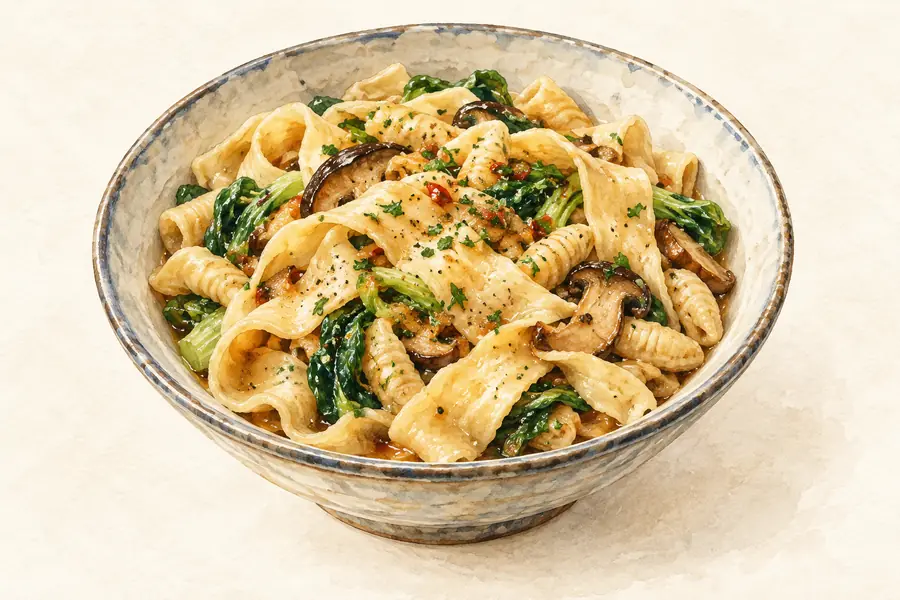
Xuanhua Steamed Naked-Oat Rolls (宣化油面窝窝) are small hand-rolled pieces of naked-oat flour, steamed in steamer baskets and dipped in a mushroom sauce, from Xuanhua (宣化), a district of Zhangjiakou (张家口) in Hebei. CCTV writes the name of the Xuanhua dish with the character for naked-oat flour, as youmian wowo (莜面窝窝).
How it is made
The flour is milled from naked oats (莜麦). Chinese Wikipedia lists youmai (油麦) among the other names of the grain, and describes dough rolled by hand into small rolls or little cup shapes, set out in a steamer basket and steamed. The Beijing culture and tourism bureau's travel site gives the Zhangjiakou method: the oat flour is mixed with warm water, small pieces are pinched off, and each is pushed with the thumb across a small stone slab into a roll. Arranged in the steamer, the rolls look, in its words, like a work of art.
How it is eaten
A 2013 article carried by Hong Kong Commercial Daily described a meal at a coarse-grain restaurant in Xuanhua: four steamer baskets of the rolls, pinched together by hand with four openings facing up like the mouth of a pomegranate. The dipping sauce was thickened, with diced mutton, diced mushroom and daylily. Picked up with chopsticks and dipped in the mushroom sauce, the rolls were crisp, fresh and chewy. They came to the table with Zhangbei mutton hotpot (张北羊肉锅) and a plate of fried diced mushrooms.
The 2021 Xuanhua episode of CCTV-10's food programme Weidao (味道) paired the oat-flour rolls with koumo mushrooms (口蘑), presenting them together with mutton and koumo soup.
Where it comes from
Naked-oat flour is the staple of the Bashang (坝上) area of Zhangjiakou, where the Beijing culture and tourism site says the crop has been grown for two thousand years and its processing is on the Hebei intangible cultural heritage list. In Xuanhua the same flour is made into other shapes too; the Hong Kong Commercial Daily piece names cat's ears (猫耳朵), steamed boyu (蒸拨鱼) and scalded-dough dumplings.

Sources & reading
Written from the linked sources and fact-checked against them on 2026-09-24. Recipes and servings vary between kitchens.