

Red-Braised Mutton 红焖羊肉
Red-Braised Mutton is featured among the local specialties of Henan.
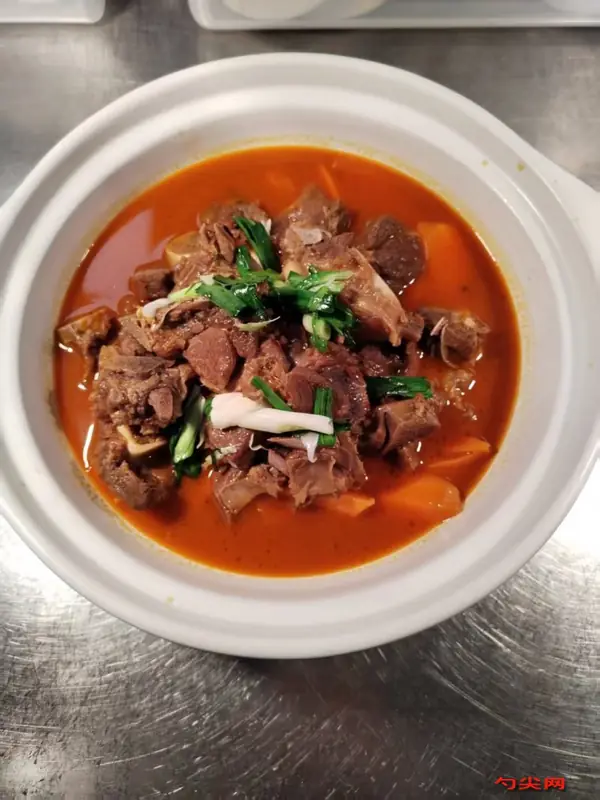
Image notes
Resized for the web; the photo itself has not been edited.
Red-Braised Mutton (红焖羊肉) is a hotpot of braised mutton from Xinxiang (新乡), Henan. The mutton is braised in advance with more than 20 spices, seasoned with Sichuan bean paste, then brought to the table with its broth in a copper hotpot. Xinxiang Daily (新乡日报) dates the dish to 1988, when Li Wuqing (李武卿) first served it in the city.
How it is made
The method Li Wuqing laid down has three stages: the mutton is stir-fried raw, then stewed hard, then simmered slowly over low heat until the sauce thickens and clings to the pot. His grandson Li Chenyang (李晨洋), the third generation to cook it, starts by melting rock sugar in hot oil until it turns amber before the mutton goes in. Pixian chilli bean paste (郫县豆瓣酱) is fried separately and mixed with the braising stock, and meat and broth go into a copper hotpot together. Xinxiang Daily names mutton from sheep raised on the Yellow River flats and more than 20 spices in the original pot.
Flavour and texture
Xinxiang Daily describes it as spicy without being harsh, with a rich broth and meat braised soft. Henan TV's Daxiang News (大象新闻) credits the red colour to the bean paste and says the meat is fatty without being greasy and free of a mutton smell, with mild heat and a savoury bean-paste note.
How it is eaten
The pot is kept hot on the table. Diners eat the mutton first, then cook other ingredients in the broth left in the pot, hotpot style.
Where it comes from
Li Wuqing, born in 1937, had retired from a factory and was running a small casserole-meat restaurant at a lane entrance on Guangming Street (光明街). He set out to combine the Beijing instant-boiled mutton he ate at Donglaishun (东来顺) with the Sichuan and Chongqing hotpot he tasted while serving in Sichuan. The name was fixed in 1995. His restaurant, Changlaishun (常来顺), keeps its old shop on Yiheng Street (一横街), and its making technique entered Xinxiang's municipal intangible cultural heritage list in 2022. Other Xinxiang houses such as Geji (葛记) and Laocheng (老城) serve their own versions. In the mid to late 1990s the dish spread to Zhengzhou (郑州), where by one incomplete count more than a hundred restaurants once sold it. In 2023 Xinxiang's market regulator registered a project to draw up a local standard for cooking it.
Sources & reading
Written from the linked sources and fact-checked against them on 2026-09-24. Recipes and servings vary between kitchens.