

Hutu Thick-Soup Noodles 糊涂面
Hutu Thick-Soup Noodles is featured among the local specialties of Henan.
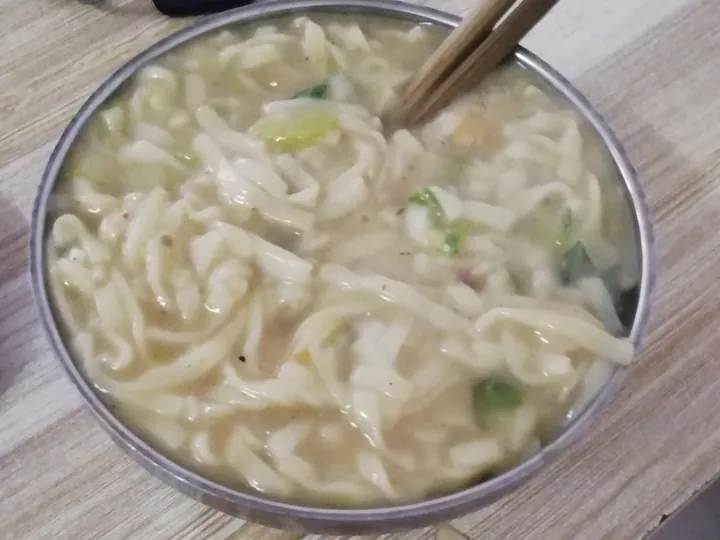

Photo adjustments
Full frame retained; proportionally resized and converted to WebP. No retouching or changes to the photographed subject. Card displays may crop the view.
Hutu Thick-Soup Noodles (糊涂面) are a Henan (河南) dish of noodles cooked in a thick pot of corn grits with beans and greens. In the western Henan village version recalled in Luoyang Daily (洛阳日报), the corn grits are boiled first and the noodles go in once the grits are cooked, so that grits, greens and noodles end up in one thick bowl.
How it is made
The 2026 essay describes the 1980s version from a poor village in western Henan, where it was called hutu fan (糊涂饭). Water was brought to the boil and a generous amount of corn grits went in. While the grits cooked, noodles were rolled from black-soybean flour mixed with an even smaller amount of wheat flour and cut thin. When the noodles were nearly done, a bowl of chopped suan huangcai (酸黄菜, soured yellow greens) went in with a little salt. There was no oil at all, and grits and pickle outweighed the noodles.
The pickle was made from radish tops and cabbage leaves packed into a vat, weighted with a stone and covered with boiling water; in three to five days the greens turned yellow and sour.
How it is eaten
The same writer's preferred modern bowl cooks the corn grits with soaked peanuts and soybeans, adds the finest dried noodles, uses seasonal greens such as celery leaves when there is no pickle, and finishes with scallion and coriander and little salt. The writer eats it with green chilli pounded with salt in a garlic mortar, or with chilli oil, and does not object to youtiao (油条, fried dough sticks) or braised meat on the side.
Where it comes from
Chinese Wikipedia notes that the method differs from place to place and from period to period within Henan, and that in the countryside it is served at both weddings and funerals. People's Daily reported in 2020 that the Laojun Mountain (老君山) scenic area in Luoyang has served a lunch halfway up the mountain since 2017, because packed food goes cold once October arrives, and that its staple was local corn hutu noodles.
Sources & reading
Written from the linked sources and checked sentence by sentence against quoted extracts by a separate reviewer on 2026-09-24. Recipes and servings vary between kitchens.