

Lushan Sheep Offal Soup 鲁山羊杂汤
Lushan Sheep Offal Soup is featured among the local specialties of Henan.
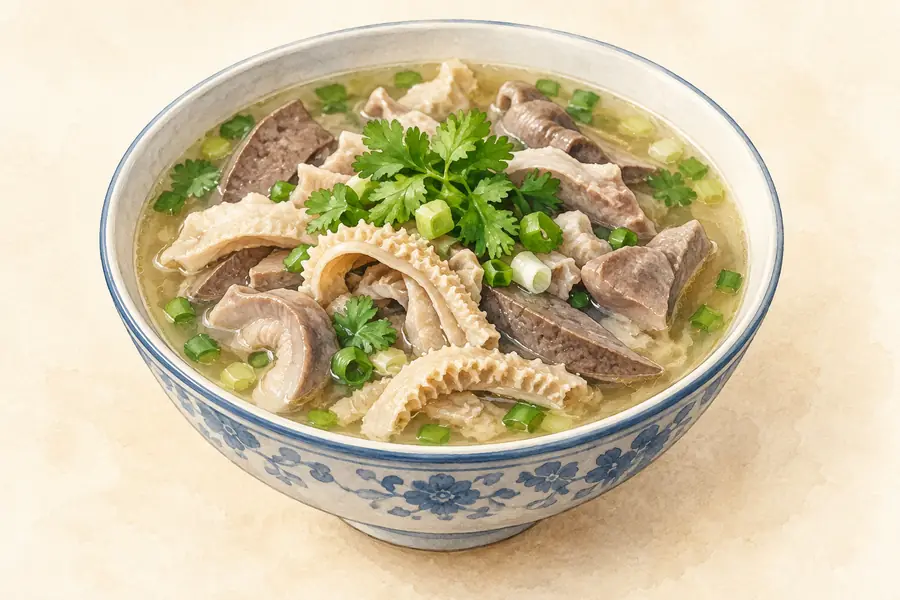
Lushan Sheep Offal Soup (鲁山羊杂汤) is the offal soup of 鲁山县 in Pingdingshan, Henan, made from sheep offal cooked and sliced cold, then finished with hot broth in one of two styles.
How it is made
The offal comes first. A contributor article on The Paper describes the selection as sheep face, liver, intestine, lung and tripe, all boiled, then cooled, then sliced or shredded, which is the same basic order of work used across northern China. Cooling before slicing is the practical detail: warm offal tears, cold offal cuts into even pieces that hold their shape in the bowl.
The same article separates the town into two finishing styles. In 冲汤羊杂可 the cooked, sliced offal goes straight into the bowl and hot stock is poured over it. In 炝锅羊杂可 the offal is stir-fried again first, then stock is added and the soup is thickened with starch. That second version is closer to a quick braise than to a poured soup, and it is the reason two bowls from the same town can taste quite different.
Flavour and texture
The flavour is set by the broth. The local speciality entry says the stock is made from pork bones instead of mutton so the soup comes out milky and fresh rather than heavy, and it names 霉干菜, preserved mustard greens, and coriander as the additions that lift it. That combination gives a savoury, slightly sour edge to balance the richness of the offal.
Texture is the other half of the order. The same entry picks intestine and tripe as the best and most chewy parts, so if you want the bowl with more bite, say so; if you prefer a softer bowl, liver and lung behave differently in the mouth and are worth asking about.
Local roots
鲁山县 sits in Pingdingshan prefecture in central Henan, and the bowl is described as one of the county's speciality snacks rather than as a restaurant dish. The naming is local: the article on The Paper uses 羊杂可 for the two styles, a phrase you may not hear outside this part of the province, while the directory entry keeps the more standard 羊杂汤.
The dish belongs to the same breakfast-and-lunch pattern as mutton soups across Henan, eaten warm with bread and often with chilli. The sources read here do not date the tradition or tie it to a particular shop, so treat claims about a founding family or an origin date as unverified.
Ingredients and dietary needs
The bowl is offal: intestine, tripe and, depending on the shop, liver, lung and sheep face. The stock is described as made with pork bones, which means an offal soup can still carry pork, so ask 汤是什么汤 if that matters to you. Preserved mustard greens are salted, coriander is added at the end, and chilli is usually offered; if you avoid coriander, ask for 不要香菜, and for a plain bowl 不要辣.
How to order Lushan Sheep Offal Soup
Say 一碗羊杂汤 or the local 羊杂可, then ask the question that matters most here: 是冲汤的还是炝锅的, whether the bowl is stock-poured or fried and thickened. Add 要不要辣 for chilli, 加不加馍 for bread, and 有没有肝 if you want liver included rather than left out. For a first visit, one bowl with bread is enough for one person.
How to eat it and plan a meal
Start with the broth, then eat the offal with a spoon rather than chopsticks alone, since the pieces are slippery. Dip bread into the soup, or ask for it broken in, which is common in Henan. The 炝锅 version is the heavier of the two, so if you are eating before a long day, the stock-poured bowl is the easier start. Ask for the chilli on the side and add it gradually, because the broth is the part worth tasting first.
More dishes to compare
Explore related local specialties and compare their names, preparation notes and ordering guidance.
Luoshan pork-intestine soup 罗山大肠汤 →
Luoshan pork-intestine soup (罗山大肠汤) is the other offal soup carried in the same Henan catalogue, built on pork intestine rather than sheep. Set beside it, 鲁山羊杂汤 shows how Henan handles innards twice over: one town thickens and fries, the other cooks the intestine down, and both serve the bowl with bread and chilli. Trying them in the same trip is the clearest way to see how much a soup's character comes from the animal and how much from the local finishing step.
Questions before you order
What is the difference between the two versions?
In 冲汤羊杂可 the sliced cooked offal is put in the bowl and hot stock is poured over it; in 炝锅羊杂可 the offal is stir-fried again, then stock is added and thickened with starch.
Is the broth made from mutton?
The local speciality entry says pork bones are used so the soup stays milky and avoids a heavy mutton taste. Ask 汤是什么汤 at the shop if this matters to you.
