

Pizha Steamed Starch Loaf 皮渣
Pizha Steamed Starch Loaf is featured among the local specialties of Henan.
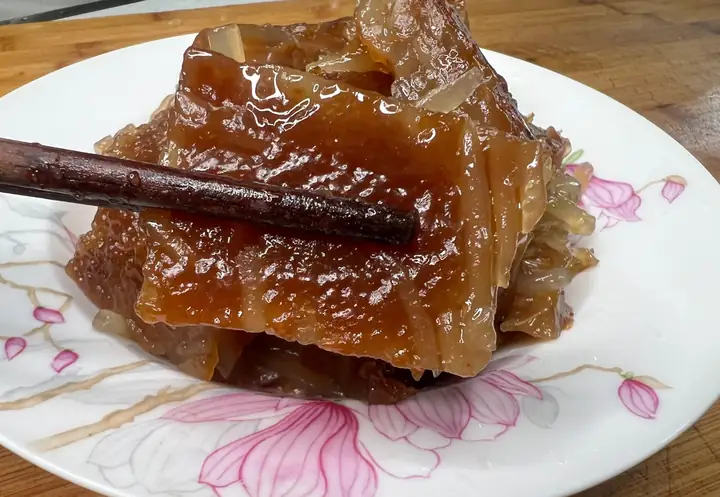
Image notes
Resized for the web; the photo itself has not been edited.
Pizha Steamed Starch Loaf (皮渣) is a steamed loaf of noodles bound with sweet-potato starch, made in Anyang (安阳) in northern Henan. The Henan newspaper Yiyao Weisheng Bao (医药卫生报) says it is counted among Anyang's 'three treasures' (三大宝) of local food and describes it as a New Year's Eve dish.
How it is made
The same paper describes a method it says nearly every household in the Anyang area knows. Noodles are boiled over high heat for about five minutes, lifted out and left to cool, then mixed with sweet-potato starch, animal fat (荤油) and salt. The mixture is put into bowls and steamed over high heat for about 30 minutes. Scallions, garlic and small dried shrimp (虾皮) go in as well. The Ministry of Culture and Tourism, describing the food of Linzhou (林州), says seasonings are added while the sweet-potato noodles are being processed and the mixture is set in moulds.
Flavour and texture
The finished loaf has a faint green tinge and is semi-translucent. Its texture is smooth and chewy, crisp outside and tender inside. The ministry calls it chewy and fragrant without being greasy, with a lingering aftertaste.
How it is eaten
Pizha can be stir-fried, steamed, pan-fried or braised. People's Daily lists pan-fried pizha (煎皮渣) among the foods visitors meet in Anyang. It also forms the base of steamed upturned bowls (扣碗): the cook lays meat such as chicken or crisp-fried pork in the bowl, covers it with pieces of pizha, steams it and turns the bowl out so the meat sits on top. In Linzhou it goes into the big braised stew (大烩菜) served to guests, with pork, ribs, meatballs, tofu and cabbage.
Where it comes from
In January 2026 Tangyin County (汤阴县) put the Kang family's pizha-making technique (康氏皮渣制作技艺) on its sixth county list of intangible cultural heritage. The county describes pizha as a traditional sweet-potato food that grew up after sweet potatoes spread across northern China in the Ming and Qing periods, and as especially popular around Anyang. In leaner times, pizha filled out the upturned bowls cooked for festivals and guests.
Sources & reading
Written from the linked sources and fact-checked against them on 2026-09-24. Recipes and servings vary between kitchens.