

Shanzhou Fermented-Grain Preserved Eggs 陕州糟蛋
Shanzhou Fermented-Grain Preserved Eggs is featured among the local specialties of Henan.
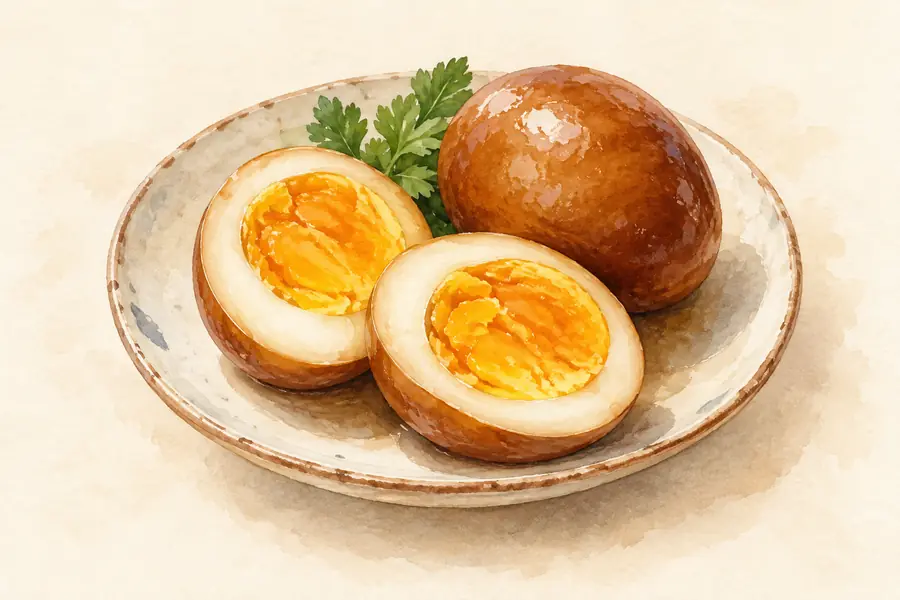
Shanzhou Fermented-Grain Preserved Eggs (陕州糟蛋) are cured eggs sold as a speciality of Sanmenxia (三门峡), Henan. They take their name from Shanzhou (陕州), the city where, by the Henan Provincial Tourism Bureau information centre's account, they were first made and sold about a century ago.
Flavour and texture
The tourism bureau describes the flavour as distinctive and mellow, with a smell of wine. In the origin story below, the first eggs turned out, once peeled, to be a red-yellow paste with a long aftertaste.
Where it comes from
The story told for the eggs is set in 1901, the 27th year of the Guangxu reign (光绪) of the Qing dynasty. Xiangying (香英), a maid in the household of a rich merchant from Shanxi called Zhang Shixiu (张诗秀), took a few eggs from the kitchen and put them in water with salt and seasonings to cure for herself. When her master walked in as she was about to peel them, she hid them in plant ash. Days later she found them coated in ash; washed and peeled, they had turned into a red-yellow paste with a lasting flavour. Because they looked dirty, they were called zaodan (糟蛋).
Zhang Shixiu saw a business in them and had them made and sold at the Xiangtai (祥太号) pickle shop inside Shanzhou city. Other traders sought the method, and it spread. In 1940 the eggs won a medal at a national fair of agricultural and industrial products, and they became known across Henan and in neighbouring Shaanxi and Shanxi.
In 2015 Henan put a poultry-egg processing technique (禽蛋加工技艺) covering Shanzhou zaodan and wrapped-thread eggs (缠丝鸡蛋) on its fourth provincial list of intangible cultural heritage, under Sanmenxia's Hubin District (湖滨区) and Zhumadian's Yicheng District (驿城区).
Sources & reading
Written from the linked sources and checked sentence by sentence against quoted extracts by a separate reviewer on 2026-09-24. Recipes and servings vary between kitchens.