

Shangcheng Bamboo-Tube Cured Fish 商城筒鲜鱼
Shangcheng Bamboo-Tube Cured Fish is featured among the local specialties of Henan.
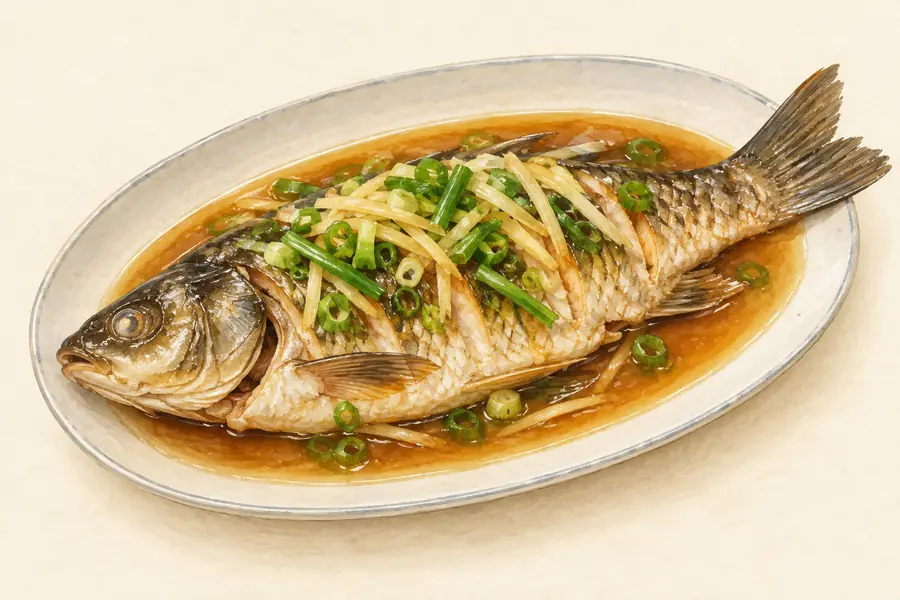
Shangcheng Bamboo-Tube Cured Fish (商城筒鲜鱼) is bighead carp that is salted and left to ferment in sealed bamboo tubes, then cooked as a stew. CCTV calls it a well-known local dish of Shangcheng County (商城县) in Xinyang (信阳), Henan, long eaten in ordinary homes. The Shangcheng county government describes Shangcheng as China's 'home of stews' (中国炖菜之乡) and the fish as one of its most representative stews.
How it is made
According to CCTV, fresh bighead carp (花鲢) is washed, drained and cut into chunks, mixed with salt and dried chillies, packed into fresh moso bamboo tubes (毛竹筒) and sealed to ferment. The Xinyang Evening News (信阳晚报) gives the curing time by season: five to seven days in winter, two to four in spring and autumn, and a single day in summer. A 2022 article in the same paper describes fish of over 1 kg, scaled and gutted, sealed in the tubes in a cool place for half a month. It says the authentic method uses bamboo tubes, and that jars or crocks stand in where there is no bamboo.
How it is eaten
The cured fish is the base for several dishes; the Xinyang Evening News names a hotpot of it (筒鲜鱼火锅) as the most common. The 2022 article describes two home methods. For a clear stew, the rinsed fish is fried with red chillies and ginger until lightly golden, then simmered in spring water with Chinese cabbage and other vegetables. For a red-braised version, it is pan-fried, seasoned with ginger, cooking wine and light and dark soy sauce, and stir-fried with chillies, wood-ear fungus and bamboo shoot slices. The same writer recalls the dish being saved for the New Year's Eve dinner, for the wish of 'fish (surplus) every year'.
Flavour and texture
The Xinyang Evening News describes the flesh as fresh and fragrant, growing more tender the longer it cooks. Its 2022 article adds a bamboo scent alongside the fish, a firm, springy bite that is neither mushy nor hard, a faint sweetness on the tongue, and flesh that has largely come away from the bones during curing.
Where it comes from
The Xinyang Evening News calls it a historical dish of Shangcheng County. It retells a legend recorded in the Shangcheng Gazetteer (《商城志》): in the Warring States period, people fled war into the mountains. When defeated soldiers raided the area, one villager hid his salted fish in a freshly cut bamboo tube. Half a month later it smelled odd, but he washed and ate it and found it delicious. Since 2024, part of the silver carp catch from the county's Nianyushan (鲇鱼山) and Tiefosi (铁佛寺) reservoirs has gone to a fish-processing project brought into Shangcheng, whose leading product is the cured fish.
Sources & reading
Written from the linked sources and checked sentence by sentence against quoted extracts by a separate reviewer on 2026-09-24. Recipes and servings vary between kitchens.