

Shuangmiao Cold Starch Jelly 双庙凉粉
Shuangmiao Cold Starch Jelly is featured among the local specialties of Henan.
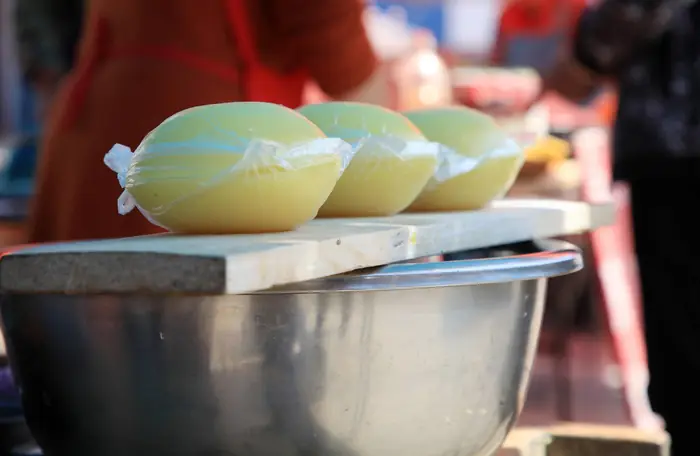
Photo adjustments
EXIF orientation normalized; resized without changing aspect ratio; converted to WebP. No subject edits.
Shuangmiao Cold Starch Jelly (双庙凉粉) is a chilled starch-jelly specialty listed for Puyang in Henan; 双庙 is a place name and 凉粉 names a set jelly eaten cold or cut into strips.
Setting starch into a block
凉粉 is made by cooking starch with water until it thickens, then pouring it into a tray to set. Once cool, the block is firm enough to cut into fine strips, flat slices or rough shards, depending on the seller. The starch decides the texture: mung bean gives the most translucent, springy jelly, while sweet potato and pea starches give a softer, more opaque block. No fat and no leavening are involved, so the whole character of the dish comes from the starch, the cut and the dressing poured over it.
Cool, slippery and dressed to order
The jelly itself is almost tasteless and cool, with a slippery, slightly bouncy bite. Everything you notice comes from the dressing — vinegar, garlic water, chilli oil, sesame paste, soy sauce, coriander and sometimes a little sugar — and from the cut. Fine strips hold more dressing per mouthful; thick shards stay crunchy-chewy in the middle. The same jelly can also be fried or simmered hot, where it softens and takes on sauce in a completely different way, so temperature is part of the dish rather than a detail.
A local name on an ordinary food
双庙 is a place label, and 凉粉 is the ordinary northern term for starch jelly, so the name identifies a local way of making and serving a common food rather than a rare one. In Henan the jelly is sold from trays and small shops, especially in warm weather, dressed cold as a snack between meals. The place in the name is what distinguishes one version from another, and the real differences sit in the cut, the starch and the dressing, all of which are the maker's own decisions rather than a fixed standard.
Ingredients and dietary checks
Starch and water are the base. Mung bean starch is the cleanest and most elastic; pea, potato and sweet potato starches are also used, and buckwheat gives a darker jelly with a stronger taste. The dressing is where restrictions matter: soy sauce contains wheat, sesame paste and chilli oil are common, and garlic and coriander are usually included unless you ask otherwise. Ask 什么粉 (which starch), 有蒜吗 (is there garlic), 有香菜吗 (is there coriander) and 有芝麻酱吗 (is there sesame paste).
How to order 双庙凉粉
Show 双庙凉粉 and ask 怎么拌 (how is it dressed) and 辣不辣 (how spicy), then 一份多大 (how big a portion) and 多少钱 (the price). Sold from a tray, it is usually priced by portion or by weight, so ask 怎么卖 (how is it sold) if there is no menu. If you would rather have it hot, ask 能炒吗 (can it be fried); plenty of shops sell both versions, and the fried one is a different dish made from the same base.
How it is eaten
Cold jelly is a snack or a light appetiser rather than a main course, and it is at its best in hot weather and before heavier food. Mix the dressing through from the bottom of the bowl before the first bite, or the top layer tastes of plain starch. Pair it with a plain steamed bread or a bowl of rice if you want a fuller meal. Avoid ordering two vinegar-heavy cold dishes at once, because they compete and the second one tastes like a repeat.
More dishes to compare
Explore related local specialties and compare their names, preparation notes and ordering guidance.
Pan-Fried Starch Jelly 炒凉粉 →
Pan-Fried Starch Jelly (炒凉粉) is the same jelly in a different role: the block is cut and fried or simmered hot with sauce, so it softens, browns and takes on a savoury coating. Ordered together, one dish shows the cold dressed version and the other the hot pan-cooked one.
Questions before you order
Is 凉粉 a kind of noodle?
It is a set starch jelly cut into strips, so it looks like a noodle but is not made from dough and contains no wheat. Ask 什么粉 (which starch) to find out whether it is mung bean, pea or sweet potato.
Can I order it hot?
Often yes. The same block is frequently sold fried as 炒凉粉, a savoury hot dish rather than a cold snack. Ask 能炒吗 (can it be fried) and confirm the price, since the two versions are usually charged separately.
Sources & reading
The supplied food list supports this name and regional association. The culinary terms below are explained as menu vocabulary; a local recipe, origin story and venue availability have not been independently verified.