

Fried Leavened Dough Bites 油馍头
Fried Leavened Dough Bites is featured among the local specialties of Henan.
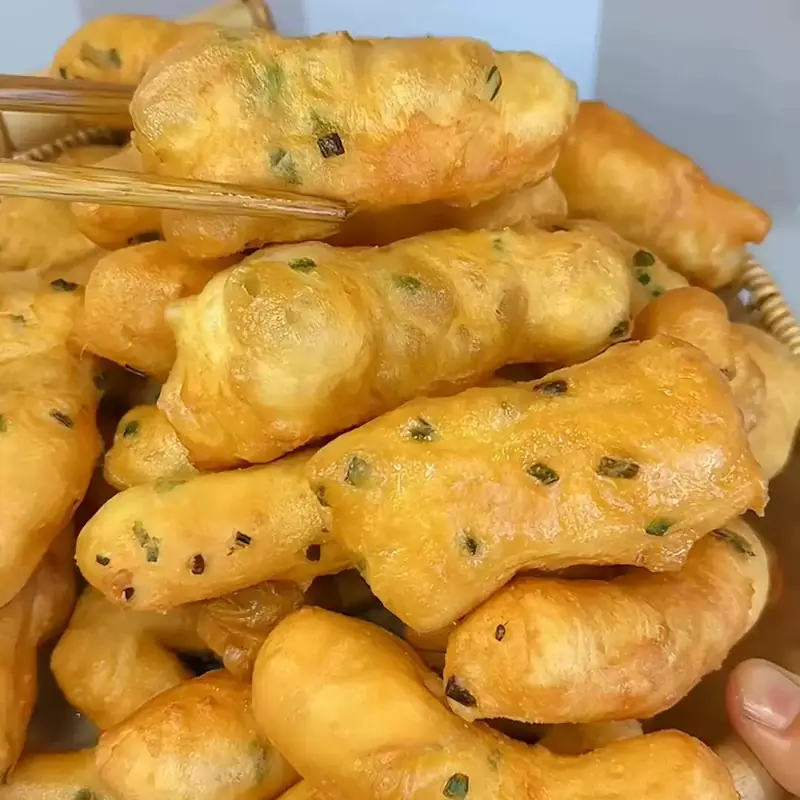
Image notes
Resized for the web; the photo itself has not been edited.
Fried Leavened Dough Bites (油馍头) is a fried dough snack listed for Zhengzhou in Henan, where 油馍头 names small pieces of leavened dough dropped into hot oil and eaten freshly fried.
Wet dough, hot oil, one minute
The dough is a soft leavened wheat dough, often mixed the night before so it develops flavour, then pinched or cut into small pieces and dropped into hot oil. Each piece puffs and browns within a minute. The dough is wetter than a bread dough, which is what makes the inside airy and the outside crisp. Oil temperature is the maker's main control: too cool and the pieces soak up oil, too hot and they darken before the centre cooks.
Crisp, airy and deliberately plain
The pieces are crisp outside and soft, slightly chewy inside, with the plain, faintly sweet taste of fried wheat dough. There is no filling and usually no strong seasoning, so it is a neutral snack that works best with something salty or liquid beside it — a bowl of congee, soy milk, or the peppery soup it is often served with. Because it is deep-fried it is rich, and two or three pieces per person are usually enough.
A morning snack in several places
油馍头 is a street snack rather than a banquet dish, sold across Henan and neighbouring provinces in the morning, which is why the name appears under several places. The version listed for Zhengzhou is one local expression of a common snack rather than a unique recipe. The name describes the food — small pieces of fried dough bread — rather than claiming a technique that only one city has.
Ingredients and dietary checks
Wheat flour, so the snack contains gluten, plus water, yeast or a starter, salt and frying oil; some makers add a little sugar or a pinch of alkali. There is no filling in the classic version, though flavoured or stuffed variants exist elsewhere under other names. Ask 有馅吗 (is there a filling), 咸的还是甜的 (savoury or sweet) and 用什么油炸的 (which oil is used for frying) if any of that matters.
How to order 油馍头
Show 油馍头 and ask 怎么卖 (how it is sold) — by weight, by the bag or by the piece — and 多少钱一斤 (price per jin) when it is sold loose. Ask 刚炸的吗 (freshly fried) if you intend to eat it straight away, and 能放多久 (how long does it keep) if you want it later. Because it is fried in batches through the morning, ask 要等多久 (how long is the wait) at busy times.
Dipped, not eaten plain
Eat it hot and by hand, usually dipped into congee, soy milk or a bowl of peppery soup rather than eaten on its own. It also works as a plain accompaniment to a salty breakfast dish. Because it is oily and airy it goes stale quickly and becomes heavy once cold, so buy only what you will finish in one sitting.
More dishes to compare
Explore related local specialties and compare their names, preparation notes and ordering guidance.
Xincai Dungang Pan-Fried Flatbread 新蔡顿岗油馍 →
Xincai Dungang Pan-Fried Flatbread (新蔡顿岗油馍) is the neighbouring member of the same family, but shaped as a large layered flatbread rather than as small pieces. Comparing them shows how much shape changes a fried wheat bread: layers and slices in one case, individual airy puffs in the other.
Questions before you order
Is 油馍头 the same as a doughnut?
It is fried dough, but the dough is a savoury wheat dough rather than a sweet batter, and there is no sugar coating. It is eaten with congee or soup, not as a dessert.
Can I buy it in advance?
You can, but it is at its best within the hour. Ask 刚炸的吗 (freshly fried) if you want it crisp, and expect a cold piece to be heavier and softer.
Sources & reading
The supplied food list supports this name and regional association. The culinary terms below are explained as menu vocabulary; a local recipe, origin story and venue availability have not been independently verified.