

Aromatic Coral Trout 飘香东星斑
Aromatic Coral Trout is featured among the local specialties of Hong Kong.
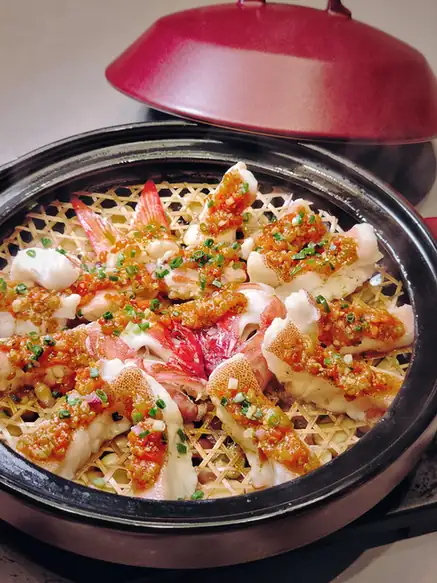
Image notes
Resized for the web; the photo itself has not been edited.
Aromatic Coral Trout (飘香东星斑) is a dish built on the coral trout known in Cantonese as 東星斑, a reef fish prized for its flesh and now classed as near threatened.
The fish, and how it is cut up
The reference identifies 東星斑 as Plectropomus leopardus, the leopard coral grouper, also called 七星斑 — a warm-water coastal fish found from the Indian Ocean to the central Pacific, including the Philippines, Taiwan and the South China Sea islands, living on coral reefs at depths of three to a hundred metres.
In the market the fish is sold cut into pieces, and the article describes how each part is best used: the head for clear soup, the back meat for steaming, and the belly for braising, which it calls the finest treatment. That guidance is the practical core of the dish — the name 飘香 suggests an aromatic preparation, but the source documents the cooking methods by cut rather than a single recipe.
Why it is valued
Coral trout are predatory reef fish, described as brightly coloured and aggressive, feeding on fish, squid, shellfish and prawns. That diet gives the flesh its reputation for firmness and clean taste, which is why the fish is treated as premium and can also be eaten as sashimi.
It is not a fish for heavy sauce. Given the documented division — clear soup for the head, steaming for the back, braising for the belly — the cooking is designed to let the flesh show, and a good piece should be firm enough to lift with chopsticks without breaking.
A premium fish with a conservation problem
The article is direct about the fish's status: over-fishing has caused numbers to decline, it is listed as a protected species in China where fishing is strictly prohibited, and the IUCN assesses it as near threatened. High demand, protected status and a market that still sells it in pieces is what a diner in Hong Kong is looking at when the dish appears.
The record attributes this entry to Hong Kong, where the fish is known by its Cantonese name and appears in banquet seafood lists. The sources read do not establish which stock a given restaurant uses, so the honest position is that the conservation status is part of what is being ordered.
Ingredients and dietary questions
The ingredient is the fish, and reef fish dishes in Cantonese cooking are usually supported by soy sauce, ginger, spring onion and hot oil, with rice wine in the steaming liquid — which means wheat and often alcohol. Shellfish-allergic diners should note that the sauce may include dried scallop or prawn in some kitchens.
The article describes the fish's own diet as including shellfish and prawns, which is a dietary fact about the animal, not an allergen statement about the dish. As always with steamed fish, ask for it cooked through.
Ordering it
Ask for 東星斑, and expect to be quoted a price by weight — premium reef fish is sold that way in Hong Kong, so the number before you agree matters more here than in almost any other order. Ask whether the fish is fresh or chilled, and confirm the weight before it goes into the kitchen.
Useful questions are 幾重 for the weight, 點煮 for the cooking method, and whether the shop can substitute a similar fish if the price is beyond your budget.
How it is eaten
This is a shared banquet dish: a whole or large piece of steamed fish brought to the middle of the table, or a clear soup made from the head, with the belly braised as a separate preparation in generous kitchens.
Because it is a luxury item with a documented conservation concern, the most useful attitude for a visitor is to treat 東星斑 as an occasional order, ask the price by weight, and be willing to accept a different fish when the answer is unfavourable.
More dishes to compare
Explore related local specialties and compare their names, preparation notes and ordering guidance.
Black sesame soup 芝麻糊 →
Black sesame soup (芝麻糊) is the sweet finish to a Cantonese banquet menu. 飘香东星斑 is the kind of premium seafood course that appears well before it: a coral trout, sold by weight, most often steamed so the flesh shows, with the head used for soup and the belly braised. Knowing the two together is useful at the table — the fish is where the money goes, and the sesame soup is usually the signal that the meal is over.
Questions before you order
What fish is 東星斑?
It is Plectropomus leopardus, the leopard coral grouper, also called 七星斑 — a warm-water reef fish of the Indo-Pacific, sold in markets cut into pieces.
How is each part cooked?
The reference describes the head as suited to clear soup, the back meat to steaming and the belly to braising, which it calls the finest use of the fish.
Source introduction: Wikipedia contributors: 鳃棘鲈 · CC BY-SA 4.0 (https://creativecommons.org/licenses/by-sa/4.0/). English guide adapted from the cited material, with additional preparation and ordering guidance.
Sources & reading
The supplied food list supports this name and regional association. The culinary terms below are explained as menu vocabulary; a local recipe, origin story and venue availability have not been independently verified.