

Silk Stocking Milk Tea 丝袜奶茶
Silk Stocking Milk Tea is featured among the local specialties of Hong Kong.
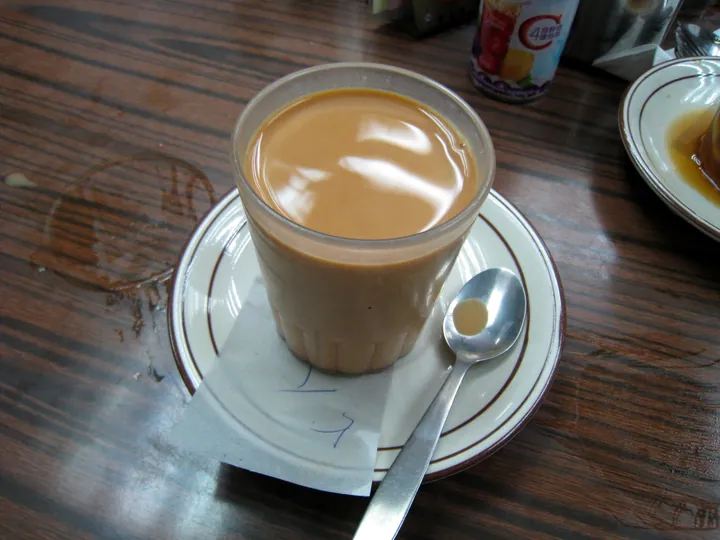

Photo adjustments
Full frame retained; proportionally resized and converted to WebP. No retouching or changes to the photographed subject. Card displays may crop the view.
Silk Stocking Milk Tea (丝袜奶茶) is the popular name for Hong Kong-style milk tea (港式奶茶): strong black tea strained through a cloth bag and poured onto evaporated milk. It is how Hong Kong's cha chaan teng (茶餐厅) cafés make their milk tea, and in 2017 its making technique was among the first items placed on the Representative List of the Intangible Cultural Heritage of Hong Kong.
Where it comes from
Hong Kong's Intangible Cultural Heritage Office describes the drink as British milk tea that changed gradually over about a hundred years into an everyday drink for ordinary Hong Kong people, and sees in it the meeting of Chinese and Western food cultures in the city. Tea drunk with milk and sugar arrived with British rule from the mid-19th century, and Ceylon black tea, shipped in by the British, became popular in the city. Tradition credits Lam Muk-ho (林木河) of the Lan Fong Yuen (兰芳园) café with first brewing tea through a specially made white cloth bag.
The name comes from that bag. Used again and again, the white cloth is stained brown by the tea and ends up looking like a silk stocking; no stocking is involved. In 2023 Hong Kong Post issued a set of stamps showing the steps of making it.
How it is made
The steps named on the heritage list are blending the tea leaves, boiling the tea, steeping it, pouring it through the bag from a height and adding the milk. Cafés usually blend Ceylon highland black teas, coarse and fine, and change the proportions to adjust aroma, colour and strength. The leaves sit in the bag inside a large kettle for a few minutes; the tea is then poured from one kettle to another through the bag several times, which draws more out of the leaves without the bitterness of long soaking. The tea goes into a cup that already holds evaporated milk, with sugar added or left to the customer.
Flavour and texture
A good cup is smooth, with a lingering taste and a thick body that depends mostly on the evaporated milk. When the milk is rich enough, a brown skin forms on the surface and the tea clings to the cup. It is also strong in caffeine: the Hong Kong Science Museum puts a 240-millilitre café milk tea at about 186 milligrams on average, and links this to cafés boiling the leaves in very hot water.
Hong Kong people drink it at breakfast and afternoon tea, often with French toast (西多士) or a pineapple bun (菠萝包). For the iced version, most cafés now add ice cubes, which dilute it; the version called bingzhen (冰镇) instead stands the cup in iced water so the tea stays cold without thinning.
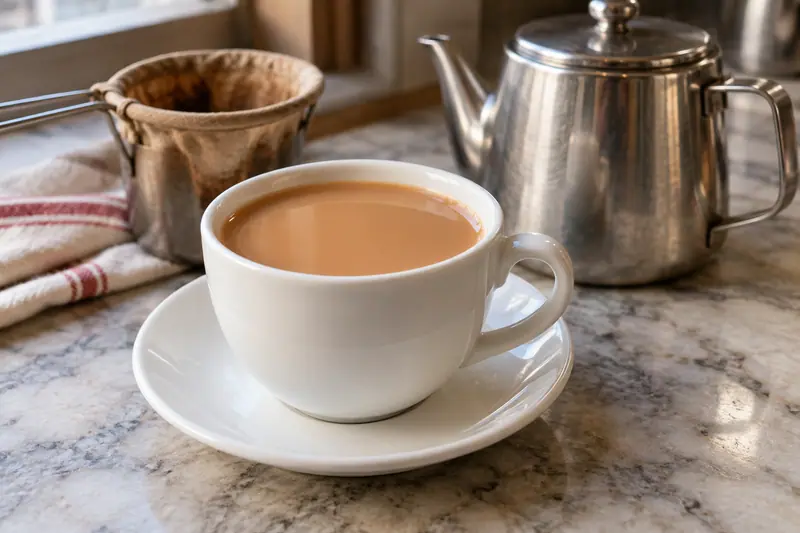
Sources & reading
Written from the linked sources and checked sentence by sentence against quoted extracts by a separate reviewer on 2026-09-24. Recipes and servings vary between kitchens.