

Cheung Chau Fish Balls 长洲鱼蛋
Cheung Chau Fish Balls is featured among the local specialties of Hong Kong.
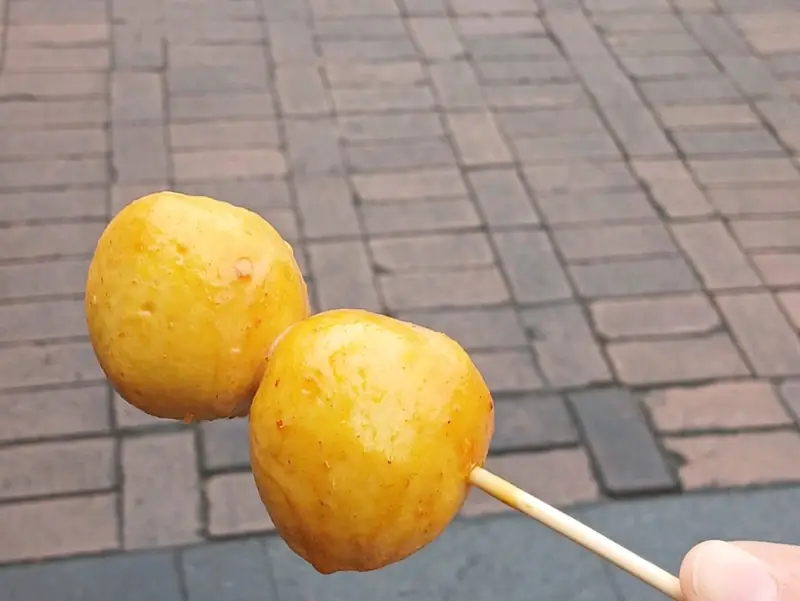
Image notes
Resized for the web; the photo itself has not been edited.
Cheung Chau Fish Balls (长洲鱼蛋) puts an island name in front of fish balls: 长洲 is Cheung Chau and 鱼蛋 names the snack, so the label ties street food to one place.
Set, then finished hot
Fish balls are made from minced fish worked with salt until the paste holds, then shaped and set in hot water. For a skewered snack they are usually poached first and finished on a griddle or in hot oil so the outside firms and colours. The sauce goes on last, keeping the surface dry enough to hold it.
Bounce before sauce
The texture should bounce rather than crumble, with a faint sweetness from the fish and a firm, slightly blistered outside. Skewered versions are eaten with a sauce that is often sweet, spicy or curry based, and that sauce is as much part of the snack as the ball. Cold or overcooked balls taste flat.
What the place name claims
The entry is listed under Hong Kong with the island name 长洲 in front. Naming a snack after a place is how stalls signal a local specialty, and the same characters 鱼蛋 appear in other Hong Kong entries where the sauce or the format differs. The name says nothing about how the balls are made.
Ingredients and dietary checks
Fish paste with starch and seasoning is the base, and sauces may include curry, chilli, soy or a sweet glaze, any of which can carry wheat through soy sauce or a thickener. Fish is the main allergen. Ask 是什么鱼, 什么酱 and 有小麦吗 before the skewer is dressed.
Ordering at a stall
Stalls sell by the skewer, so ask 一串几个 for how many are on it, then 什么酱 for the sauce and 辣不辣 for heat. 加辣 or 不要辣 shifts the dressing, and 打包吗 tells you whether it will be wrapped for taking away.
Street food, eaten standing
One or two skewers between a few people is the usual amount, and it is not a meal. Eat it immediately, because the surface softens once the sauce sits and the balls cool. Keep it away from anything you are carrying, since the sauce transfers easily.
Sauces and finishes
Skewers differ by sauce and by finish. Some stalls serve plain balls with a sweet glaze, others dress them in curry or chilli, and a few grill rather than fry them. Balls can also be bought on a plate for sharing. Asking how they are finished tells you what texture to expect.
More dishes to compare
Explore related local specialties and compare their names, preparation notes and ordering guidance.
Curry fish balls 咖喱鱼蛋 →
Curry fish balls (咖喱鱼蛋) is the neighbouring entry: the same fish-paste balls sold as a dressed snack, described by its sauce rather than by a place. Read beside 长洲鱼蛋, the pair shows how a stall can name the same object after a location or after its dressing.
Questions before you order
Do the balls contain the fish they are named after?
No. 鱼蛋 states only that the ball is made from fish paste. The species is a kitchen decision and cannot be read from the name, so ask 是什么鱼 if it matters.
How many should I order?
One skewer is normally two to four balls, which suits one person as a snack or two people as a taste. Ask 一串几个 to confirm before ordering several.
Sources & reading
The supplied food list supports this name and regional association. The culinary terms below are explained as menu vocabulary; a local recipe, origin story and venue availability have not been independently verified.