

Guangshui Fried and Steamed Pork 广水滑肉
Guangshui Fried and Steamed Pork is featured among the local specialties of Hubei.
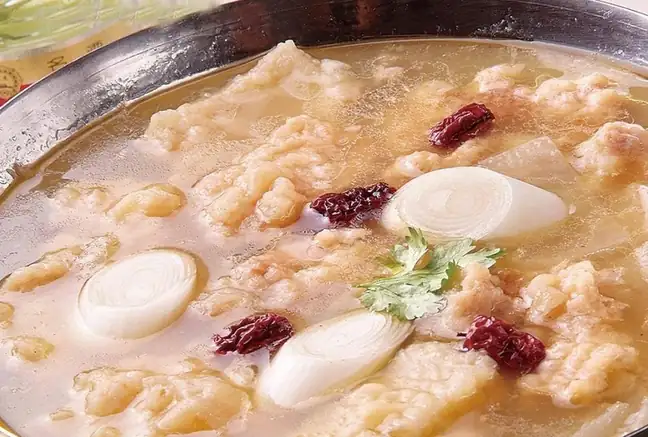
Photo adjustments
EXIF orientation normalized; resized without changing aspect ratio; converted to WebP. No subject edits.
Guangshui Fried and Steamed Pork (广水滑肉), also called Yingshan huarou (应山滑肉), is a dish of fatty pork that is coated, deep-fried and then steamed, from Guangshui (广水) in Suizhou (随州), Hubei. In 2011 the Hubei provincial government placed it on the third batch of the province's intangible cultural heritage list.
How it is made
The Guangshui city government publishes a measured recipe. Its main ingredient is 750 grams of fat pork (猪肥膘肉), with 200 grams of pork stock, wet starch, salt, soy sauce, spring onion, pepper, egg, ginger and vegetable oil for frying. The pork is skinned, cut into 2-centimetre cubes, soaked in clean water for 10 minutes and drained, then mixed with salt, ginger and starch and coated in beaten egg.
The cubes are deep-fried in oil over a high flame for about 10 minutes until golden, drained, left to cool a little and packed into a bowl. The bowl is steamed over high heat for about an hour and turned out onto a deep plate. Pork stock and soy sauce are brought to the boil, thickened lightly, finished with spring onion and pepper and poured over the pork.
A feature on the Suizhou municipal government portal describes the method credited to Zhan Wang: the skinned meat is cut into domino-shaped pieces and soaked in water for a long time with repeated rinsing to reduce the greasiness, then seasoned, marinated, fried and steamed.
Where it comes from
Local tradition credits the dish to Zhan Wang (詹王), revered as the patron ancestor of cooks, and gives it a history of more than 1,300 years. The legend says he cooked it for the ailing Tang emperor Taizong (唐太宗) in the Zhenguan era and was made a king for it. In Guangshui there is a saying that no banquet is complete without huarou, and at weddings, funerals and dinners for guests it is the first dish brought out.
Flavour and texture
The Suizhou feature describes the finished pork as tender, slippery and fragrant, which is where the name huarou (slippery meat) comes from. Tan Yihong (谭义红), a Guangshui-level heritage inheritor who cooks it by the old method, makes a rich sauce and pork that melts in the mouth and is not greasy. She also cooks it in soups with local seasonal vegetables, such as radish, lettuce stem and three-delicacy huarou soups. A breakfast shop in Shili subdistrict (十里街道), Guangshui, serves it as huarou noodles (滑肉面).
More dishes to compare
Explore related local specialties and compare their names, preparation notes and ordering guidance.
Suizhou Stir-Fried Pork with Paopao Greens 随州泡泡青炒肉 →
Another Suizhou pork dish, stir-fried with the local paopao qing greens rather than fried and steamed.
Sources & reading
Written from the linked sources and checked sentence by sentence against quoted extracts by a separate reviewer on 2026-09-25. Recipes and servings vary between kitchens.