

Jinniu Pressed Tofu Sheets 金牛千张
Jinniu Pressed Tofu Sheets is featured among the local specialties of Hubei.
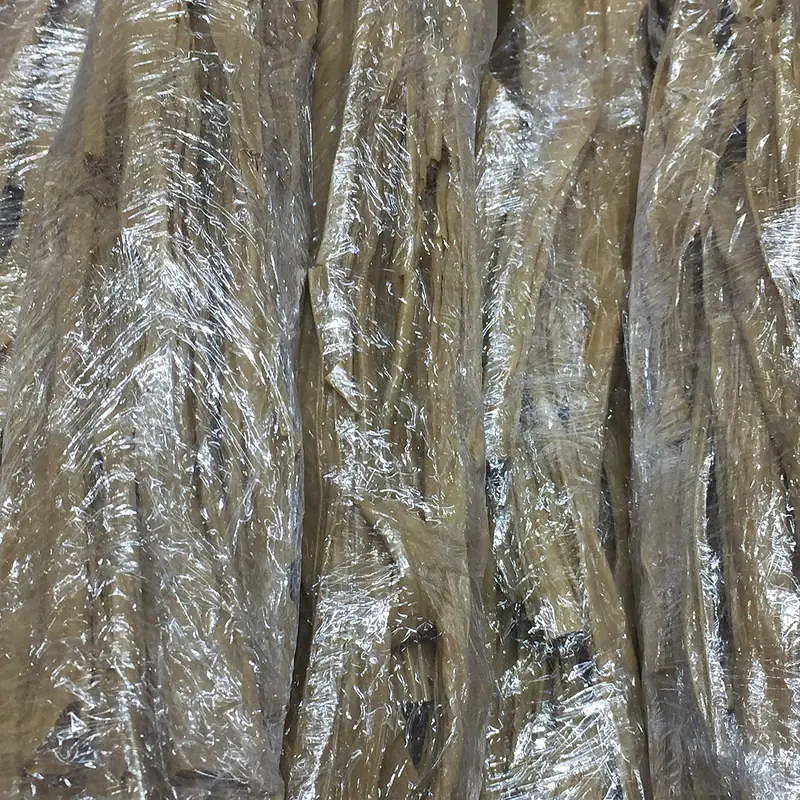

Photo adjustments
Full frame retained; EXIF orientation normalized, proportionally resized to at most 800 pixels and converted to WebP. No generated pixels or subject changes. Cards may crop the display.
Jinniu Pressed Tofu Sheets (金牛千张) are thin soybean sheets from Jinniu (金牛), a town in Daye (大冶), Huangshi (黄石). Almost translucent, they are supple enough to hold together when lifted by a corner. Local names include Jinniu pizi (金牛皮子), literally Jinniu sheets.
How it is made
The Huangshi Mass Art Centre (黄石市群众艺术馆) records a process of washing and soaking soybeans, grinding and filtering the milk, boiling it, adding coagulant, pouring, pressing and peeling away the sheets. It identifies local soybeans and water from the Jinniugang (金牛港) basin as the traditional materials.
In a March 2021 Jimu News (极目新闻) visit, maker Wang Xinli (王新利) added gypsum water to boiled soy milk. His wife Shui Wanying (水晚英) ladled the curds onto cotton cloth and spread them evenly. Wang pressed the layers by hand, then his wife and mother peeled the finished sheets from the cloth.
How it is eaten
The sheets are pale yellow raw, golden when dried and milky white when cooked. They soften in soup without breaking down into it. The art centre describes cutting them into shreds to cook with fresh fish, especially mandarin fish, or into strips about three centimetres wide, knotted and braised with pork.
Sources & reading
Written from the linked sources and checked sentence by sentence against quoted extracts by a separate reviewer on 2026-09-27. Recipes and servings vary between kitchens.